Sterilisation and hygiene products protect patients and staff from infection, but only when the right equipment is used with the right process and the results are checked. This guide is for dental and medical practices, clinics, beauty and tattoo studios, laboratories and hospital departments choosing autoclaves, sterilisation monitoring products and hand hygiene supplies.
1. Define what you need to reprocess
The choice of steriliser depends on your instruments and workload. Before comparing models, list:
- Instrument types: solid instruments, hollow items such as handpieces and cannulas, and porous loads such as textiles.
- Packaging: whether instruments are sterilised unwrapped for immediate use or wrapped and pouched for storage.
- Volume: how many loads you run per day and the size of your largest instrument tray.
- Manufacturer instructions: each reusable instrument’s instructions state how it may be cleaned and sterilised. These should guide your choice.
2. Choosing an autoclave
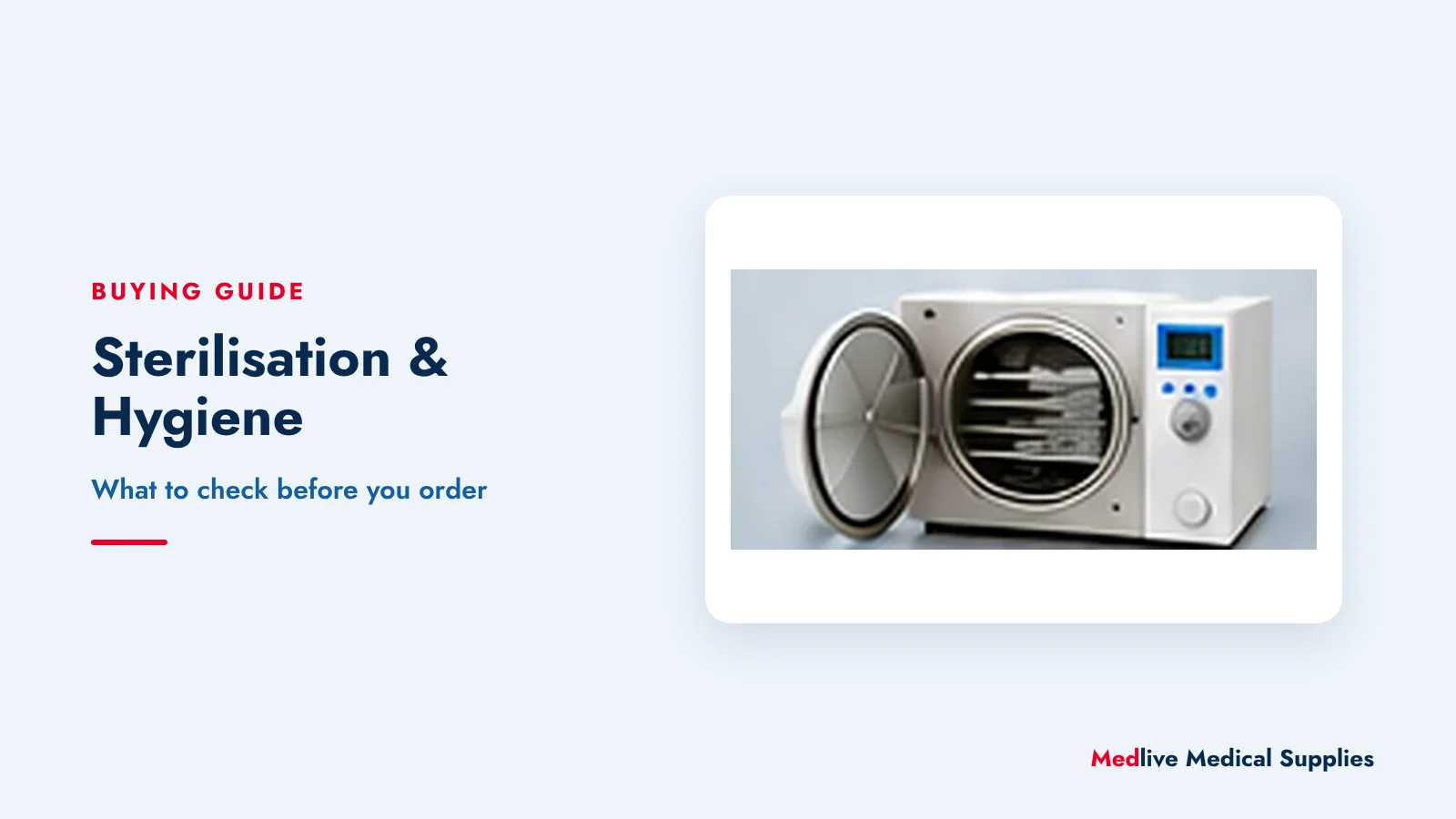
The Autoclaves & Sterilisers category includes table-top units such as the Autoclave SA230FA Fully Automatic Table Top. When comparing autoclaves, look at:
- Chamber size and usable capacity: check that your largest tray or cassette fits, not only the stated litre volume.
- Cycle types: confirm the manufacturer specifies cycles suitable for the loads you process, especially wrapped, hollow or porous items.
- Air removal and drying: wrapped loads need effective air removal and drying so packs leave the steriliser dry.
- Water supply: most table-top autoclaves need a specific grade of water. Check the requirement and how you will supply it.
- Electrical supply and space: confirm the power rating, ventilation needs and bench space.
- Records: a printer or data output makes it easier to keep cycle records for each load.
- Service and validation: ask who will install, service and calibrate the unit, and how spare parts are obtained.
Before any medical device purchase, it is sensible to check the supplier’s regulatory standing. Our guide on how to check a medical device supplier with SAHPRA explains how for South African buyers.
3. Monitoring every cycle
A completed cycle on the display does not by itself show that each pack was sterilised. Monitoring products help you check the process:
- Indicator tape: such as Autoclave Indicator Tape 24mm x 50m, which changes colour when exposed to a sterilisation process. It shows that a pack has been through a cycle; it does not prove sterility on its own.
- Air-removal test packs: such as the Bowie Dick Test Pack – Sterilisation, used with vacuum-type steam sterilisers to check that air is being removed from the chamber.
- Chemical and biological indicators: used inside packs or as periodic checks, according to your facility’s infection control policy.
Follow the steriliser manufacturer’s instructions and your infection control protocol for which tests to run and how often, and keep records of the results.
4. Cleaning and disinfection before sterilisation
Sterilisation only works on instruments that have been properly cleaned first. Instrument disinfectants and cleaning solutions, for example 5L Instrubac – Instrument Steriliser, are used in the reprocessing workflow. Check the product label for the dilution, contact time, compatibility with your instrument materials and how long a made-up solution may be used. Provide suitable protective equipment for staff handling concentrates.
5. Hand hygiene and washroom supplies
The Washroom & Hand Hygiene category covers hand sanitisers, soaps and washroom consumables, for example DERMABAC – Waterless Hand Sanitiser 5L. When buying:
- Format: 5 litre containers suit refilling dispensers; smaller bottles suit point-of-care use. Check that refills fit your dispensers.
- Formulation: check the active ingredient and concentration on the label, and consider skin tolerance for staff who sanitise many times per shift.
- Placement: sanitiser is most effective when it is available where care happens, such as at the bedside, treatment chair and entrance.
For gloves, masks and broader infection control, see the PPE & Infection Control department.
6. Common mistakes to avoid
- Choosing an autoclave by chamber volume alone without checking the cycles against your instruments.
- Treating indicator tape as proof of sterility.
- Running out of test packs, indicators or pouches, which can stop reprocessing.
- Decanting or diluting chemicals without following the label.
- Not budgeting for servicing, water supply and staff training.
How to order from Medlive
Browse the full Sterilisation & Hygiene department. Customers in South Africa see verified ZAR prices including VAT where available and can add items to the cart; customers in other countries see price on request (USD) and can request a quotation. Freight is confirmed for each order, and payment is by EFT once the final total has been confirmed in writing. For regular consumable orders across several sites, use bulk orders or quick order, and for institutional requirements, submit a tender enquiry.