Respiratory equipment covers a wide range, from a home nebuliser to a theatre suction unit or a CPAP device for sleep therapy. The right purchase depends on who will use it, where, and how often. This guide explains the main decisions, what common specifications mean and how to order from Medlive without surprises. It is general purchasing guidance only: clinical choices, settings and prescriptions should follow the treating clinician, your facility’s protocols and the manufacturer’s instructions for use.
1. Start with the setting and the user
Before comparing models, write down where the equipment will be used and by whom.
- Home care: quiet operation, simple controls, portability and easy cleaning matter most. The patient or carer should be able to follow the instructions without training.
- Clinics and GP rooms: devices are shared between many patients, so look at durability, how consumables are replaced between patients and how quickly the unit can be cleaned.
- Wards, theatre and emergency areas: performance under continuous use, alarm behaviour, mains and battery operation, and compatibility with your existing gas outlets and mounting systems become the priorities.
2. Nebulisers and suction units
Our Nebulisers & Suction range includes compressor nebulisers and portable or mobile suction units, for example the Suction Unit – Askir 20.
For nebulisers, compare noise level, treatment time stated by the manufacturer, whether adult and paediatric masks are included, and the availability of replacement kits. Shared clinic units need a reliable supply of single-patient consumables.
For suction units, check the maximum vacuum and flow rate, collection jar volume, whether there is overflow protection and a bacterial filter, and whether the unit runs on mains only or also on a battery. Ambulance and home-care users usually need portability and battery operation; theatre and ward users often need higher capacity and continuous-duty operation. Confirm which tubing, catheters and jars are compatible before you order in volume.
3. Oxygen therapy
The Oxygen Therapy category covers regulators, flowmeters, masks, nasal cannulas and related accessories, for example the Oxygen Regulator Pin Index 0–25 L/min.
- Match the valve connection. Cylinder valves and regulators come in different connection types, such as pin-index and bullnose. A regulator that does not match your cylinders cannot be used, so confirm the valve type with your gas supplier first.
- Check the flow range. A regulator’s stated range (for example 0–25 L/min) should cover the flows your clinicians use. Low-flow paediatric use may need finer graduations.
- Plan the consumables. Masks, cannulas and tubing are single-patient items. Order adult and paediatric sizes in realistic proportions.
Oxygen is a medical gas and the cylinders themselves are normally supplied by your gas provider. Follow your facility’s oxygen safety procedures and the manufacturer’s instructions for every component.
4. Ventilators and CPAP
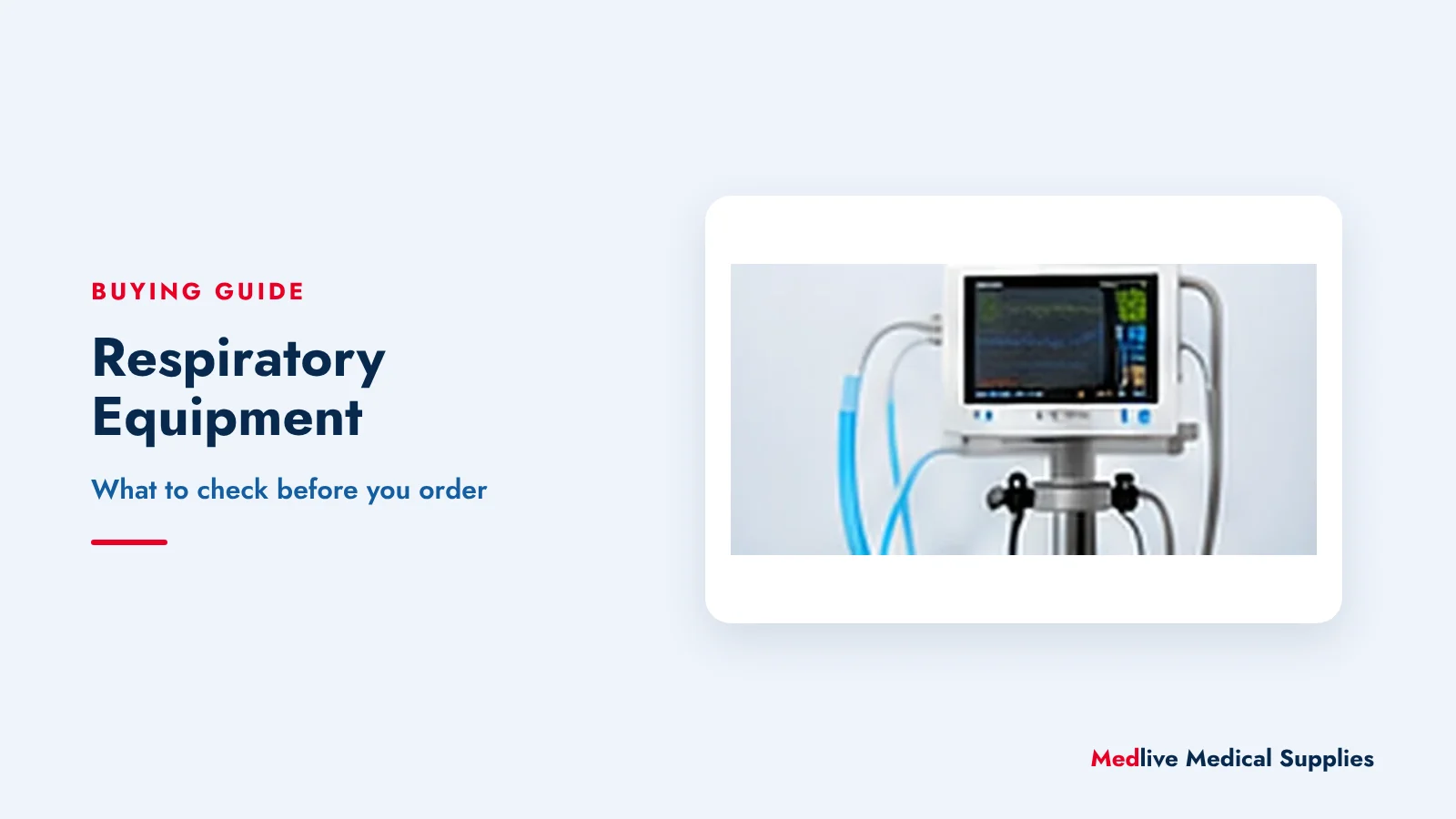
Ventilators & CPAP devices are prescribed and set up for a specific patient or clinical purpose. The category includes, for example, the ResMed AirSense 10 CPAP with Humidifier.
When comparing devices, look at the modes the manufacturer lists, whether a humidifier is built in or optional, data recording and reporting options, noise level, power requirements and the cost and availability of masks, tubing and filters over the life of the device. For CPAP, mask fit is often the deciding factor in whether therapy succeeds, so involve the prescribing clinician or sleep practitioner in that choice. For ventilators, confirm that your clinical team is trained on the model and that servicing arrangements are clear before buying.
5. Respiratory diagnostics and trainers
Respiratory Diagnostics & Trainers includes spirometers, peak flow meters and breathing trainers, for example the Cami Spirometer Pulmogain. For diagnostic spirometers, compare the measured parameters, how results are stored or printed, the software and computer requirements, calibration needs and the cost of single-use mouthpieces or filters. Breathing trainers are simpler, but check the resistance range and whether the device is intended for single-patient use.
6. Mistakes to avoid
- Buying a device before confirming that masks, tubing, filters and jars are available for it.
- Ordering an oxygen regulator without checking the cylinder valve type.
- Choosing on purchase price alone and overlooking servicing, spare parts and running costs.
- Assuming a home-care device suits continuous ward use, or the reverse.
- Not checking voltage, plug type and battery options for the country where the device will be used.
Respiratory equipment is regulated as medical devices in many markets. In South Africa, SAHPRA licenses medical device establishments such as manufacturers, distributors and wholesalers; our guide on how to check a medical device supplier with SAHPRA explains how to confirm this. If you are comparing several devices, the product comparison tool lets you view specifications side by side.
7. How to order from Medlive
Browse the full Respiratory Equipment department. Customers in South Africa see verified ZAR prices including VAT on eligible products and can add them to the cart. Customers in other African countries see “Price on request (USD)” and can request a quotation; see ordering medical supplies outside South Africa for how that works.
Freight is confirmed for each order, and payment is by EFT once the final total has been confirmed in writing. Hospitals, clinics and NGOs ordering larger quantities of consumables can use bulk orders for volume pricing on quotation, and procurement teams responding to a formal requirement can submit a tender enquiry. If you are unsure which model fits your setting, contact us with your requirements.