Respiratory measurement and training devices range from full clinical spirometers used in hospitals and occupational health clinics to simple peak flow meters and breathing trainers used at home. This guide explains the main device types in our respiratory diagnostics and trainers range, what to ask before buying and how to avoid common mistakes. It is purchasing guidance only: testing, interpretation and any exercise programme should follow the clinician’s instructions, your facility’s protocols and the manufacturer’s instructions for use.
1. Choose the type of spirometer
| Type | Typical setting | What to check |
|---|---|---|
| Standalone or desktop with built-in display or printer | Clinics and wards without a dedicated computer | Screen, printer consumables, internal storage |
| PC-based (USB) | Practices and occupational health clinics with a computer at the test station | Software, operating system compatibility, report formats |
| Handheld | Mobile screening, outreach and site visits | Battery, data transfer, durability |
| App-based personal monitor | Personal monitoring as directed by a clinician | Phone compatibility, app availability, data sharing |
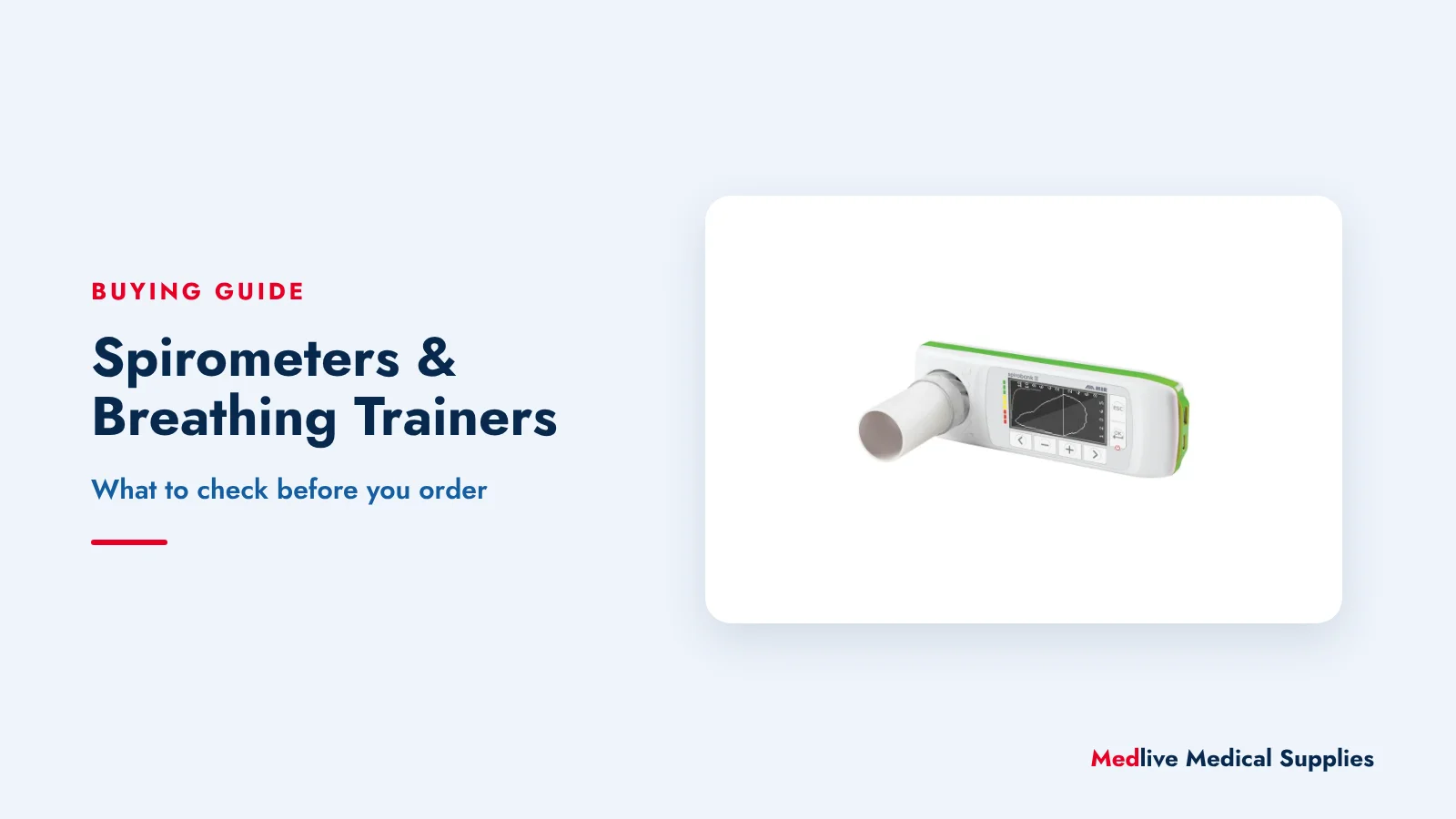
Examples in the range include the Spirometer SP100 Full Clinical, the Spirobank II Basic Spirometer, the MIR MiniSpir USB PC-Based Spirometer, the COSMED microQuark USB PC-Based Spirometer, the Spirometer SP10 Digital Handheld and the Bluetooth Pocket Spirometer Spirox. Use the manufacturer’s specifications on each product page to compare the measured parameters, and our product comparison page to line up options.
2. Sensors, hygiene and calibration
Spirometers measure airflow with different types of flow sensor, such as turbines and other designs. Rather than choosing on sensor type alone, ask practical questions:
- Mouthpieces and filters: which disposable mouthpieces or bacterial/viral filters the device uses, and their cost per test. Factor these consumables into your budget.
- Single-patient or reusable parts: some sensors or turbines are disposable, others reusable after cleaning. Follow the manufacturer’s instructions for use for cleaning and replacement.
- Calibration checks: many manufacturers specify a regular check with a calibration syringe. Confirm whether your chosen device requires one and whether you already have a compatible syringe.
3. Software, reports and occupational health use
For clinical and occupational health use, the software matters as much as the hardware. Ask:
- Which predicted-value (reference) sets are available, and which your clinicians or programme require.
- Whether reports can be printed, saved as files or exported to your records system.
- Whether the software is licensed per computer and whether updates are included.
Spirometry in workplace medical surveillance follows professional guidelines on test quality, operator training and record-keeping. Make sure staff carrying out tests are trained, and check that the device and software meet the requirements of your occupational health programme before buying.
4. Peak flow meters and personal monitors
Peak flow meters are simple, low-cost devices often used for personal monitoring as directed by a clinician. The Peak Flow Meter – Rossmax is one example. Check the measurement range on the product page, as low-range or paediatric versions may suit children. App-based monitors, such as the MIR Smart One App-Based Peak Flow & FEV1 Monitor, record readings on a phone; confirm the app works on your device. Each user should have their own meter or mouthpiece.
5. Sleep apnoea screening devices
Screening devices, such as the Heyer Sleep Apnea Meter AS20A Pro, record signals overnight to help identify people who may need further assessment. They are screening tools only; diagnosis and any treatment decisions are made by a clinician, usually after a full sleep study. Check what the device records, how data is downloaded, and which disposable accessories are needed per study. For CPAP machines and masks, see our ventilators and CPAP range.
6. Incentive spirometers and respiratory muscle trainers
Breathing exercisers, such as the 3-Ball Upper Respiratory Exerciser, and respiratory muscle trainers, such as the LUFT Respiratory Muscle Trainer, are used as directed by a clinician or physiotherapist. When buying for a ward or practice, check whether the device is single-patient use, whether resistance settings are adjustable and how it should be cleaned. Issue each device to one person only.
7. Common mistakes to avoid
- Buying a PC-based spirometer without checking software compatibility with your computers.
- Forgetting the ongoing cost of mouthpieces, filters and disposable sensors.
- Skipping the calibration checks the manufacturer specifies.
- Treating a screening result as a diagnosis.
How to order from Medlive
Browse the full respiratory diagnostics and trainers or the wider Respiratory Equipment department. For oxygen, nebulisers and other respiratory equipment, see our respiratory equipment buying guide. Customers in South Africa see verified ZAR prices including VAT on eligible products and can add them to the cart. Customers in other African countries see Price on request (USD) and can request a quotation; freight and any import paperwork are confirmed on the quotation. Clinics ordering consumables in volume can use bulk orders, and hospitals, occupational health providers and government buyers can submit a tender enquiry. Payment is by EFT once the final total, including freight, has been confirmed in writing.