Scalpel blades, sutures, skin staplers and stitch packs are among the most frequently reordered items in theatres, casualty units, clinics and treatment rooms. They are low in unit cost but high in consequence: the wrong blade size for a handle, or a suture that is not what the clinician expected, delays a procedure. This guide explains what to check when buying from our blades, sutures and skin staplers range. Which blade, suture or closure method is used for a patient is a clinical decision for the clinician, following your facility’s protocols and the manufacturer’s instructions for use.
1. Scalpel handles and blade compatibility
Detachable scalpel blades are numbered by shape and size, and each blade fits a particular handle size. The two handles most often stocked are:
| Handle | Blades it is generally made to take |
|---|---|
| No 3 | Smaller blades, numbers 10 to 15 |
| No 4 | Larger blades, numbers 20 to 25 |
The range includes, for example, the Scalpel Handle No 3 and Scalpel Blades No 22 Box 100. Following the pattern above, a No 22 blade belongs with a No 4 handle rather than a No 3. Before ordering, check the blade-handle compatibility stated by the manufacturer, particularly when mixing brands or buying specialist handles, and order handles and blades together when setting up a new procedure room.
2. Sterile single-use blades, removal and sharps disposal
Scalpel blades are normally supplied sterile in individual foil packs and are intended for single use. When comparing products, check:
- That each blade is individually wrapped and the pack shows the blade number, sterility, lot number and expiry date.
- The blade material stated by the manufacturer, if your clinicians have a preference.
- Pack quantity (for example boxes of 100) against your monthly usage, so stock is used within its shelf life.
Fitting and removing blades by hand is a recognised source of sharps injuries. Many facilities use a blade remover or follow a set removal method in their protocol, and every area that uses blades needs a suitable sharps container within reach. Our disinfectants, sharps and waste buying guide covers containers and disposal. Reusable handles go back for cleaning and sterilisation with other instruments, as described in our surgical instruments buying guide.
3. Sutures: the terms you will see
Suture selection belongs to the clinician, but buyers need to understand the description on the box so they can order exactly what was requested. The main points are:
- Absorbable or non-absorbable. Absorbable sutures are broken down by the body over time; non-absorbable sutures remain until removed, or permanently. The suture material determines which it is.
- Size. Suture size usually follows the USP system and describes the diameter of the strand. Sizes written with zeros, such as 3-0 or 4-0, become finer as the number of zeros increases, so 4-0 is finer than 3-0.
- Needle. Sutures come with an attached needle whose shape, length and point type (for example cutting or round-bodied) are printed on the pack. Two sutures of the same material and size can have very different needles.
- Length and quantity of the strand and the number of sutures per box.
Because the combinations are so numerous, ask your clinician for the full description from a pack they already use, including material, size, needle and length, and send it to us. We can then quote the specific sutures you need rather than a near match.
4. Skin staplers
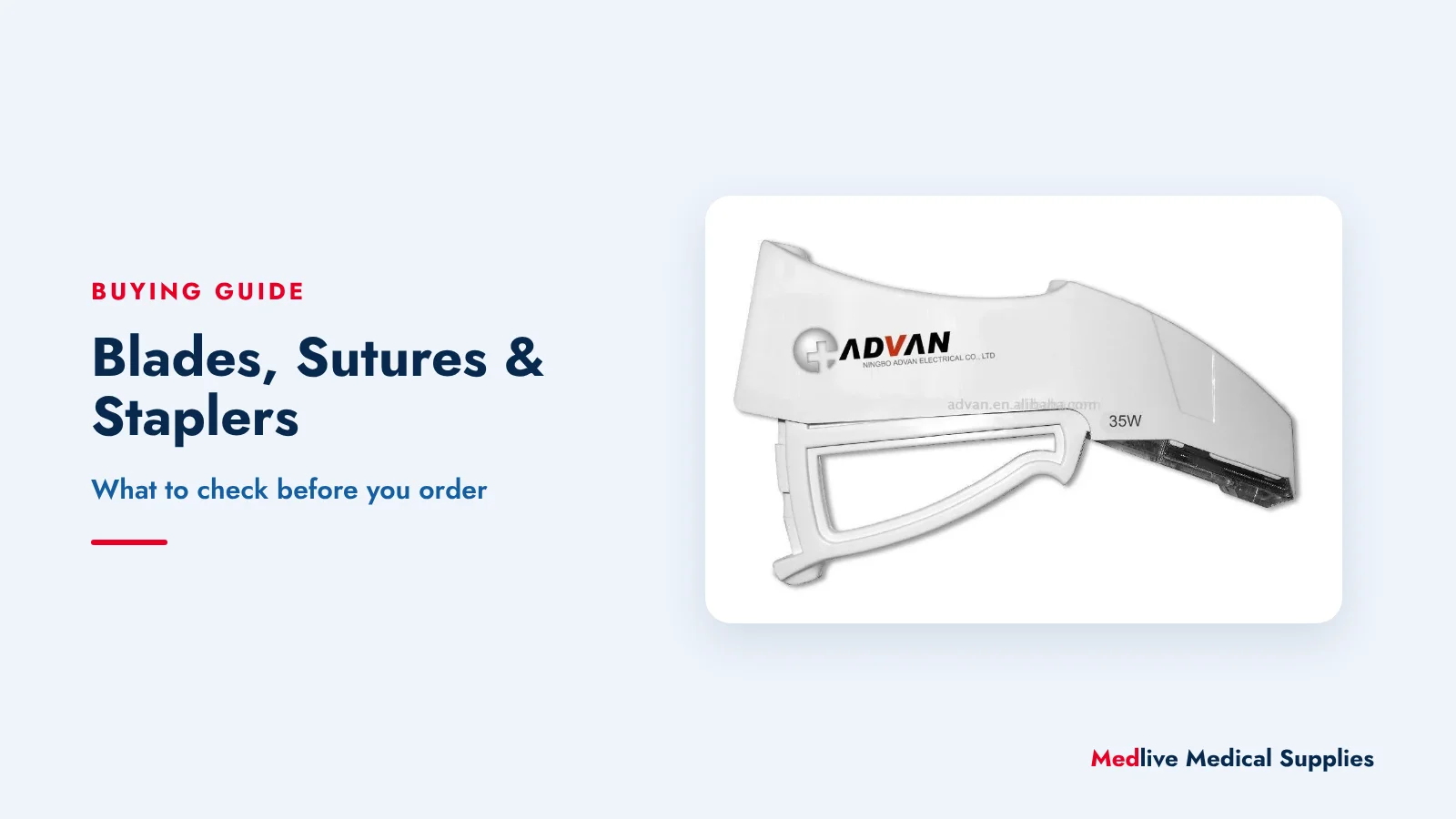
Disposable skin staplers, for example the Skin Stapler – Disposable, are an alternative closure method where the clinician chooses it. When buying, check the number of staples in each stapler as stated by the manufacturer, the staple size, and whether the device is sterile and single-use. Staples have to be removed later, so make sure the facility that will remove them has suitable staple removers; order them alongside the staplers if needed.
5. Stitch packs and procedure packs
Stitch packs bring together the instruments and consumables for a minor suturing procedure in one sterile pack, which saves preparation time in casualty and clinic settings. The range includes, for example, the Casualty Stitch Pack – 16 Piece. The piece count tells you how many items are in the pack, not what they are, so always read the contents list. Check:
- Which instruments are included and whether they are single-use.
- Which consumables are included, such as drapes, swabs or gallipots.
- Whether sutures and blades are included or must be ordered separately; often they are not.
6. Mistakes to avoid
- Ordering blades without confirming the handle size in use.
- Substituting a suture of the same size but a different material or needle without the clinician’s agreement.
- Buying staplers without removers, or stitch packs on the assumption that sutures are inside.
- Overstocking sterile items that will pass their expiry date before use.
For gloves, drapes, dressings and other theatre consumables, see our surgical supplies buying guide.
How to order from Medlive
Browse the blades, sutures and skin staplers range or the wider surgical supplies department. Customers in South Africa see verified ZAR prices including VAT where available and can add items to the cart; other items and all other countries are priced through a quotation request, with freight and import paperwork confirmed on the quotation. For specific sutures, send the full description with your request. Theatres and clinics ordering in volume can use bulk orders, and hospitals, health departments and NGOs can submit requirements through a tender enquiry. Payment is by EFT once the final total is confirmed in writing.