Tongue depressors, patient ID wristbands, specimen bags, pill counters and vial openers rarely appear on a capital budget, yet a clinic or dispensary notices immediately when they run out. The same is true of the probes and adaptors that keep monitors and meters working. This guide covers how to choose and keep a steady supply of these everyday items from our pharmacy and clinical consumables range. How each item is used should follow your facility’s policies and the manufacturer’s instructions for use.
1. Tongue depressors
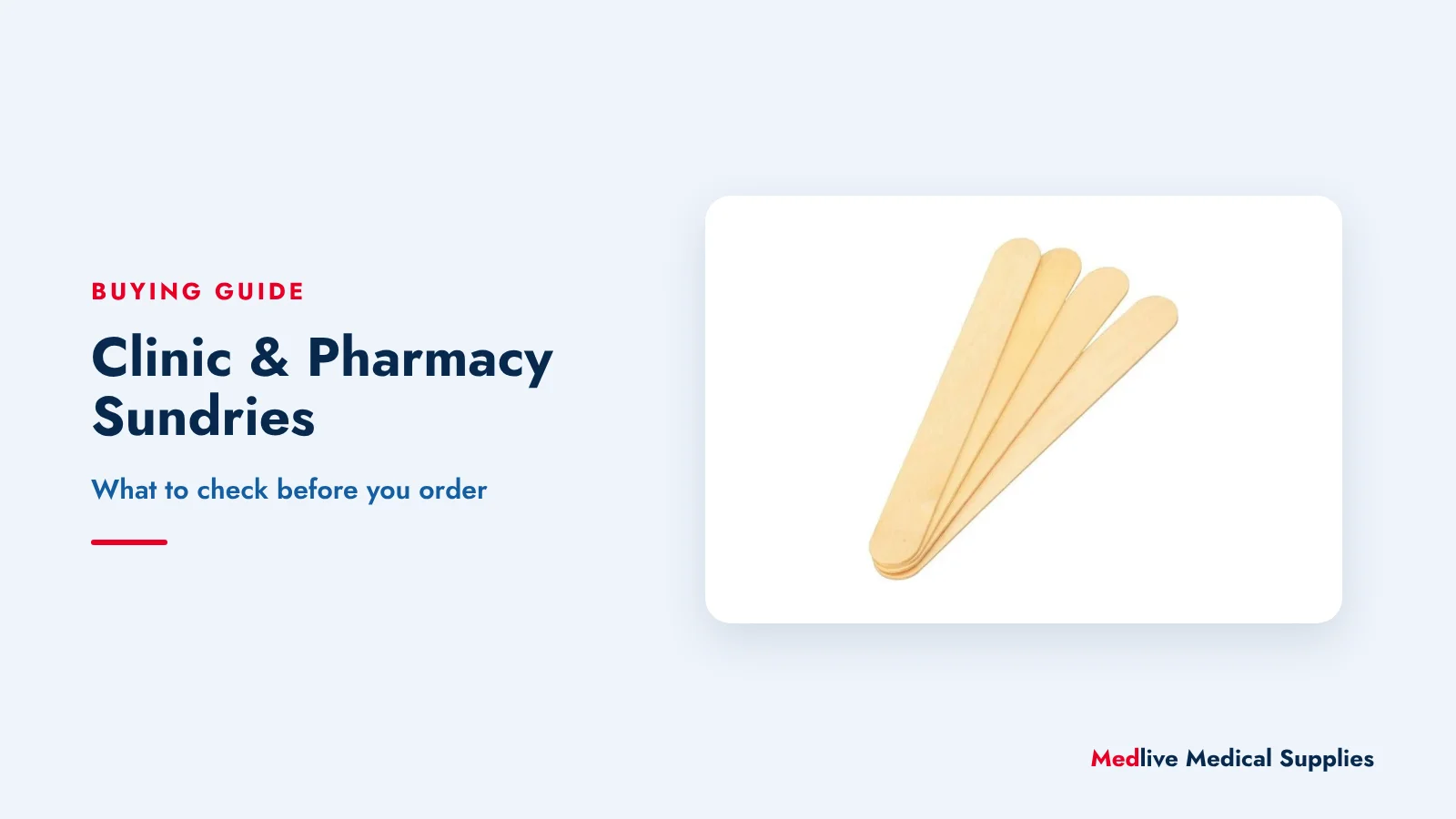
Wooden tongue depressors are used in large quantities in consulting rooms, school and workplace clinics and outreach programmes. The main choice is pack size. The range includes, for example, Tongue Depressors Wooden – Box 100 and Wooden Tongue Depressors 10 Pack. Larger boxes suit busy consulting rooms and central stores; small packs suit mobile kits, home visits and first aid bags where a large box would be opened and left exposed. Check the product description for whether depressors are individually wrapped or sterile, and buy accordingly for your setting, as these are single-use items.
2. Patient ID wristbands
Identification wristbands, such as ID Wristbands – Pack of 100, help staff confirm a patient’s identity at each step of care. When buying, check:
- Whether the band is write-on or designed for printed labels, and what pen or printer it needs.
- Adult, paediatric or infant sizing, and how the band closes so it cannot be removed and reused by accident.
- Whether the colour matches your facility’s policy. Some facilities use coloured bands to flag information such as allergies; the colours and meanings are set locally, so order to your own policy rather than a supplier’s suggestion.
3. Specimen bags
Specimen bags, for example Aseptor Specimen Bags 50 Pack, keep sample containers separate from request forms and contain leaks during handling. Requirements for packaging and transporting samples are set by the receiving laboratory, your facility and any courier or transport regulations that apply. Before buying, ask the laboratory what it expects: bag size, a separate document pocket, biohazard marking, absorbent material and how bags are sealed. If samples travel between facilities or by courier, confirm the full packaging requirements with the laboratory and carrier, as a bag on its own may not be enough.
4. Dispensary tools: pill counters and vial openers
A pill counter, such as the Pill Counter in our range, is a simple tray-and-spatula tool that speeds up counting tablets into smaller quantities and helps keep counting tidy. Dispensaries often keep separate counters for particular medicines to reduce cross-contamination, following their own procedures, so consider ordering more than one. Check that the material can be cleaned with the products you already use.
A Vial Opener for Drug Vials helps staff remove caps and seals from medicine vials. Tools of this kind are intended to reduce hand strain and the risk of cuts compared with opening vials by hand. Check that the opener suits the vial types your pharmacy actually stocks, and keep it with your other dispensing tools.
5. Device accessories: match the exact model
Probes, cuffs, cables and power adaptors are not interchangeable simply because they look similar. The range includes, for example, the SpO2 Probe Adult Child Infant for Contec Monitor and the Veroval AC DC Mains Adaptor. Each is listed for a particular device, so before ordering:
- Note the make and full model number from the device label, not just the brand.
- Check the connector type and, for probes, the patient size the probe is intended for.
- For adaptors, confirm the device it is listed for and check the plug type suits your sockets.
- If you are unsure, send us the model details or a photograph of the label and connector before ordering.
Batteries, chargers and other spares are listed under accessories and batteries.
6. Building a reorder list and par levels
Sundries are easiest to manage with a simple reorder list. For each item record the exact product name, pack size, usual monthly use and a par level, the quantity you want on the shelf after each delivery. Set a reorder point that allows for the time it takes to confirm a quotation, receive payment confirmation and deliver, including freight and any import paperwork where they apply. Check expiry dates on sterile items so a large order is used before it lapses. Some products are sold in fixed pack sizes or have minimum order quantities, so ask when you request a quotation. Our clinic supplies checklist is a useful starting point, and for the wider range see our medical consumables buying guide.
Once your list is settled, quick order lets you enter items in one go rather than browsing for each one.
How to order from Medlive
Browse the pharmacy and clinical consumables range or the full medical supplies and consumables department. Customers in South Africa see verified ZAR prices including VAT where available and can add items to the cart; other items and all other countries are priced through a quotation request, with freight and import paperwork confirmed on the quotation. Clinics, pharmacies and programmes ordering regularly or in volume can use bulk orders, and health departments, hospitals and NGOs can submit requirements through a tender enquiry. Payment is by EFT once the final total is confirmed in writing.