Emergency equipment is bought in advance and judged in the worst few minutes of someone’s day. A first aid box that is missing items, a resuscitator in the wrong size or a defibrillator with expired pads can turn a manageable incident into a serious one. This guide explains what to decide before you order emergency and first aid equipment for a workplace, school, clinic, event team or ambulance service, and how to keep it ready once it arrives.
1. Start with a simple risk assessment
Before choosing products, write down who you are equipping and what could realistically go wrong. A small office, a factory floor, a mine site, a sports club and a rural clinic all need different kits. Ask:
- How many people are on site, and over how many shifts and buildings?
- What are the likely injuries: cuts and burns, falls, crush injuries, chemical splashes, collapse or cardiac arrest?
- How far is the nearest hospital or ambulance base, and how long could you be waiting for help?
- Who will use the equipment, and what training do they hold?
The answers decide whether a basic first aid box is enough or whether you also need resuscitation equipment, a defibrillator, spinal immobilisation or a fully stocked jump bag.
2. Workplace first aid kits and regulations
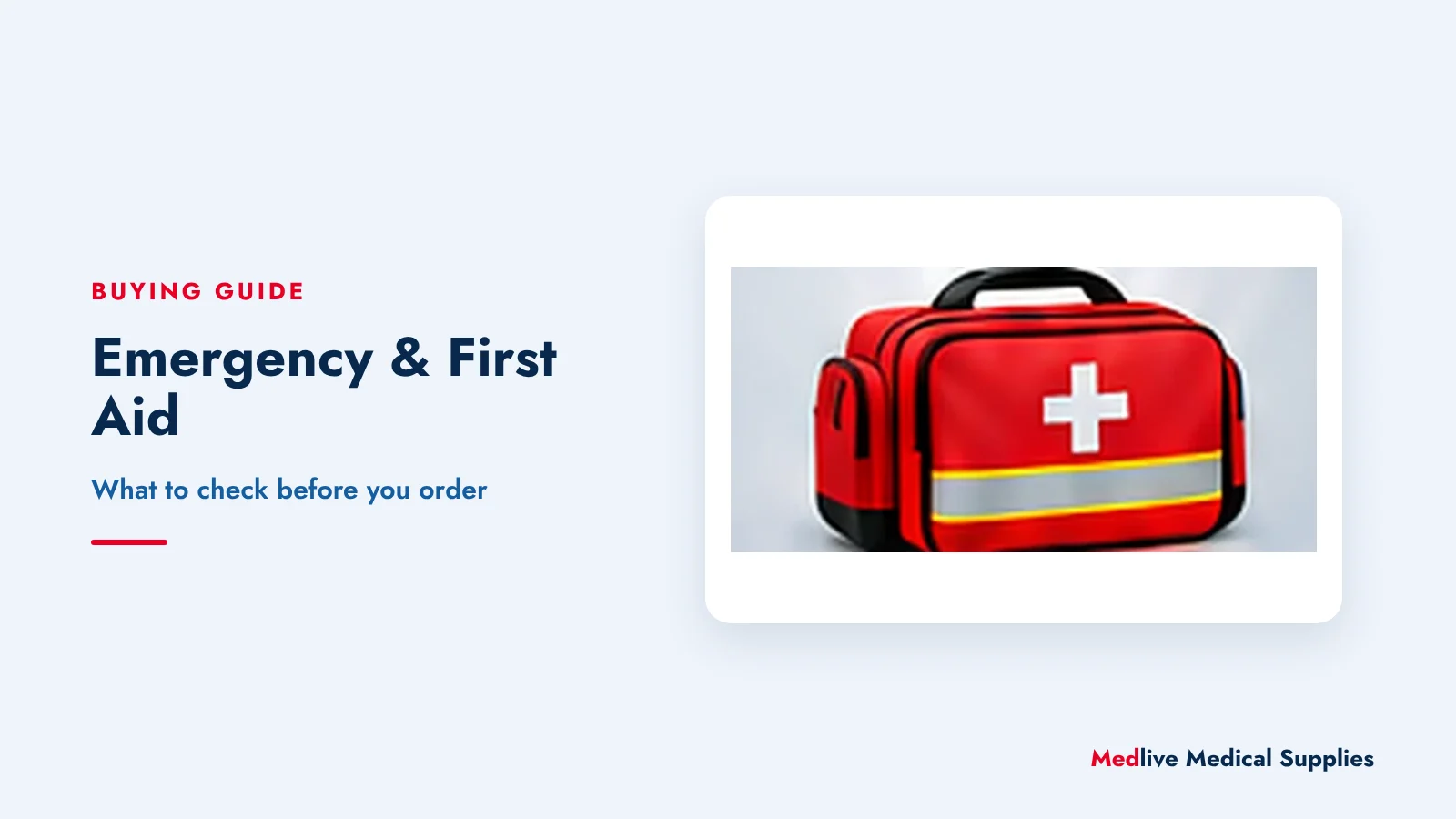
Our First Aid Kits & Jump Bags range includes workplace kits such as the Factory First Aid Kit – Regulation 3 and Regulation 7 versions, supplied in a carry bag, metal box or plastic box.
In South Africa, Regulation 3 of the General Safety Regulations under the Occupational Health and Safety Act requires employers to provide a first aid box where more than five employees work, and an annexure lists the minimum contents. The number of boxes depends on the employer’s own risk assessment. “Regulation 7” kits take their name from draft regulations that proposed additional items, such as spillage-handling items; those draft changes did not come into effect, so a Regulation 7 kit is best understood as a Regulation 3 kit with extra items, which some employers choose as good practice.
Outside South Africa, first aid requirements are set by each country’s own workplace laws. Buyers should confirm which kit contents their workplace regulation and safety officer require before ordering.
Choose the container to suit the site: a wall-mounted metal box for a fixed workshop, a plastic box for damp areas and a carry bag for vehicles, teams on the move or outdoor work.
3. Jump bags for responders and clinics
A jump bag is a portable, organised kit for trained responders. An example in the range is the Advanced Life Support Jump Bag. When comparing bags, look at:
- Scope of practice: match the contents to the qualifications of the people who will carry it. Advanced airway or drug items are only appropriate where your clinical governance allows them.
- Layout: clearly labelled, colour-coded compartments make items faster to find and restock.
- Material and weight: a water-resistant, easy-to-clean bag that one person can carry comfortably.
4. Airway, resuscitation and defibrillators
The Airway & Resuscitation category covers items such as bag-valve-mask (BVM) resuscitators, for example the BVM Silicone Resuscitator Adult – Complete. Points to check:
- Patient size: adult, paediatric and infant resuscitators are not interchangeable. Sites that see children should stock the right sizes.
- Reusable or single-use: silicone units are generally designed to be cleaned and reprocessed according to the manufacturer’s instructions; single-use units avoid reprocessing but must be replaced after use.
- Completeness: confirm which masks, reservoir and oxygen tubing are included.
For AEDs & Defibrillators, decide where the unit will be mounted and who will use it. Compare whether the device is fully or semi-automatic, the voice and visual prompts, paediatric capability, and the cost and shelf life of replacement pads and batteries. Budget for consumables, not only the device.
5. Immobilisation, rescue and site safety
The Rescue & Safety Equipment category includes items such as the BSN Cervical Collar and fire safety equipment such as the Fire Extinguisher – 1.5kg DCP. For collars and splints, check whether items are adjustable or come in set sizes, and train staff in their use according to your protocols. For fire extinguishers, confirm with your fire safety adviser which type and size suit the risks on your premises, and arrange regular servicing.
6. Training manikins and simulators
Equipment is only useful if people are confident using it. Training Manikins & Simulators support CPR and first aid practice. Consider whether you need adult, child or infant manikins, the type of feedback the manikin gives, and how hygiene is managed between trainees, for example with replaceable faces or airways.
7. Common mistakes to avoid
- Buying a kit once and never checking it. Appoint someone to inspect contents and expiry dates on a fixed schedule and after every use.
- Storing equipment where it cannot be reached quickly, such as a locked office.
- Buying adult-only resuscitation equipment for sites that serve children.
- Ordering devices without allowing for training and replacement consumables.
If you are equipping a new facility, our clinic supplies checklist can help you plan the wider order.
How to order from Medlive
Browse the full Emergency & First Aid department. Customers in South Africa see verified ZAR prices including VAT where available and can add items to the cart; customers in other countries see price on request (USD) and can request a quotation. Freight is confirmed for each order, and payment is by EFT once the final total has been confirmed in writing. For multiple sites or fleet kits, use bulk orders, and for institutional or government requirements, submit a tender enquiry. Buyers outside South Africa can read ordering medical supplies outside South Africa.