Diagnostic equipment ranges from a stethoscope in a consulting room to a portable ultrasound unit or a multi-parameter monitor in a ward. What these items have in common is that clinical decisions depend on their readings. This guide explains how to match diagnostic equipment to your setting, what to check in the specifications and how to order from Medlive.
1. Decide where and by whom the equipment will be used
Before comparing models, write down the setting and the users:
- Setting: home care, a GP or nurse-led clinic, an outreach or mobile service, an emergency department or a hospital ward.
- Patients: adults only, or also paediatric and neonatal patients. Many devices need different cuffs, probes or attachments for smaller patients.
- Users: trained clinicians, community health workers or patients at home. Simpler controls and clear displays matter more as the user group widens.
- Power: mains, rechargeable battery or disposable batteries. In areas with unreliable power, battery life and charging options are important.
2. Blood pressure, pulse oximetry and temperature
These are the most frequently used measurements in most facilities.
- Blood pressure monitors are either aneroid (a gauge with a manual bulb, used with a stethoscope) or automatic digital. The range includes, for example, the Aneroid Palm Elite BP meter and the Rossmax CF155F BP meter. Check that the correct cuff sizes are available for your patients, as an incorrectly sized cuff affects readings. For digital monitors, ask whether the model has been clinically validated for accuracy and whether it stores readings.
- Pulse oximeters and thermometers vary in measurement method (fingertip, handheld with probe, infrared, contact digital), display readability and whether paediatric sensors are available. Handheld units with separate probes generally suit ward use better than fingertip units intended for spot checks.
3. Examination instruments
- Stethoscopes: compare single or dual head, adult or paediatric chest pieces, tubing length and acoustic performance. Electronic stethoscopes, for example the Contec electronic stethoscope, amplify sound and can suit noisy environments or teaching; check battery type and any recording features.
- Otoscopes, ophthalmoscopes and exam lights: check the light source (LED or halogen), whether handles are rechargeable, the availability of disposable specula and whether heads are interchangeable across a diagnostic set.
- Assessment and measurement and scales and measuring equipment should match the patient group. Infant scales, adult floor scales and chair or platform scales are not interchangeable. Check the capacity, the graduation (how finely it reads) and whether the scale carries any approvals your facility requires.
4. Monitors, ECG and imaging
Patient monitors and ECG machines are larger investments. We have a separate guide to choosing a patient monitor for a ward, clinic or ICU, which covers parameters, alarms and consumables in detail. For ECG machines, such as the ECG 1200G in our range, compare the number of channels, whether results are printed, stored or exported, the paper size and the availability of electrodes and lead sets.
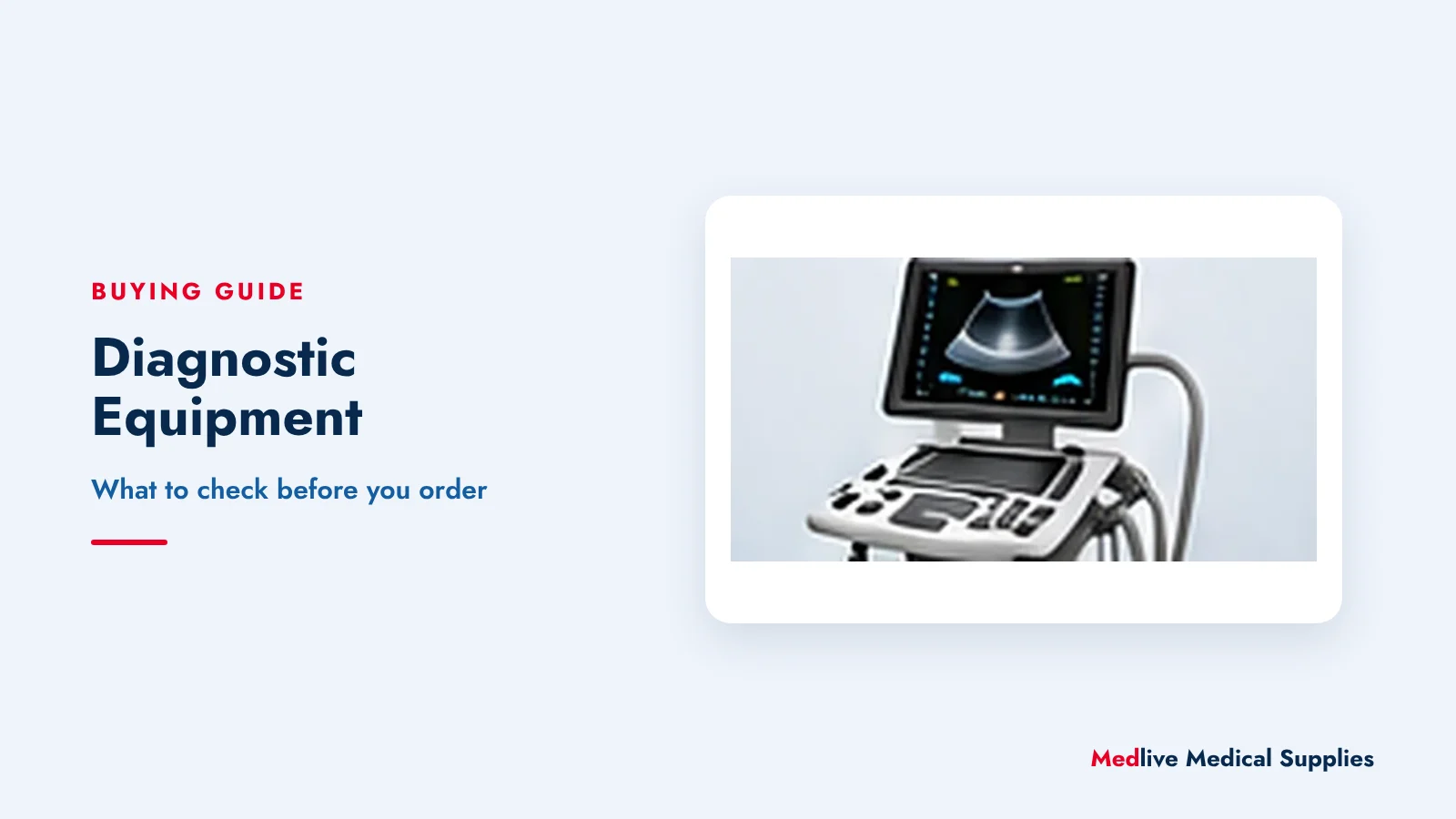
For ultrasound and imaging, confirm the intended applications with the clinicians who will use the device, the probes required for those applications, the operator training needed and how images will be stored or shared. Request the manufacturer’s specification sheet before quoting.
5. Rapid tests, meters and screening
Rapid tests and meters and alcohol and drug testing products are often bought for screening programmes, occupational health and workplace testing.
- Check what each test is intended to detect and the sample type it uses.
- Confirm the expiry date and storage temperature, and order quantities you can use before expiry.
- For meters, check that test strips or cartridges are readily available and compatible with the model you buy.
- For breath alcohol testers, ask about calibration requirements and mouthpiece supply.
- Positive or unexpected results should be handled according to your programme’s confirmation procedures and the manufacturer’s instructions for use.
6. Common mistakes to avoid
- Buying a device without the right cuffs, probes or sensors for all your patient groups.
- Ignoring running costs: strips, electrodes, paper, specula and batteries often cost more over time than the device.
- Choosing features nobody has been trained to use.
- Not planning for calibration, servicing and spare parts.
- Not checking the supplier. Read how to check a medical device supplier with SAHPRA.
To compare models side by side, use our product comparison tool.
7. How to order from Medlive
Browse the full Diagnostic Equipment department. In South Africa, products with verified prices show ZAR prices including VAT and can be added to the cart. Customers in our other markets see “Price on request (USD)” and can submit a Request a Quotation.
Equipping several consulting rooms or sites? Use Bulk Orders for volume quotations, or Tender Enquiry for institutional and government requirements. Freight is confirmed for each order, and payment is by EFT once the final total has been confirmed in writing. Buyers outside South Africa can read ordering medical supplies outside South Africa.