Beds, couches, trolleys, pressure care and high-care equipment are long-term purchases. They are used every day, they affect staff safety as well as patient comfort, and they are expensive to replace if the wrong model is chosen. This guide sets out what to decide before buying hospital and critical care equipment, what the main specifications mean and how to order from Medlive.
1. Plan around the room, the patients and the staff
Start with a short written brief for each area you are equipping:
- The space: measure doorways, lifts, corridors and bed bays. A bed or stretcher that cannot turn into a room is a costly mistake.
- The patients: typical weight range, mobility, length of stay and whether paediatric or bariatric patients are cared for.
- The staff: how many people are available to move, position and transfer patients. Height adjustment and good castors reduce manual handling strain.
- Cleaning: surfaces, upholstery and joints should withstand the disinfectants and cleaning routine your facility uses.
2. Hospital beds
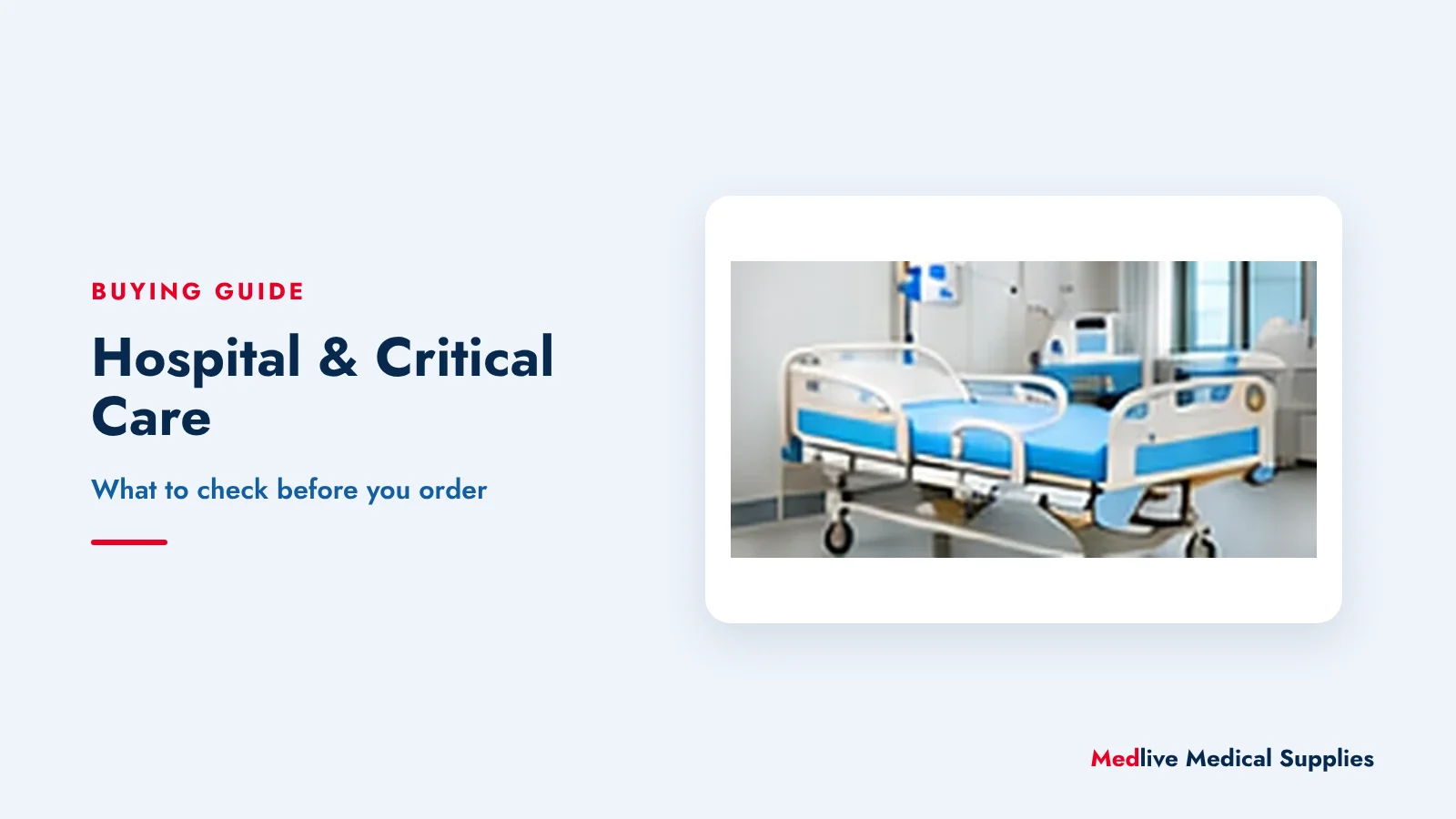
In hospital beds, the main choices are:
- Manual or electric: manual beds use cranks and suit lower-acuity or budget-limited settings; electric beds make frequent repositioning easier for staff and patients. If you choose electric, consider power reliability and whether a battery backup is offered.
- Functions: backrest, knee break, height adjustment and tilt positions. Buy the functions your clinical teams actually need.
- Safe working load: check the manufacturer’s stated maximum load, which includes the patient, mattress and any accessories.
- Side rails, castors and brakes: check rail design, central or individual braking and castor size for your floors.
- Accessories: IV poles, lifting poles, bed extensions and the correct mattress size.
3. Mattresses and pressure care
A bed is only as good as the mattress on it. Mattresses and pressure care products range from standard foam mattresses to pressure-redistributing foam and alternating air systems. Selection should follow your clinical team’s pressure injury risk assessment and protocols. When comparing, check the mattress dimensions against the bed frame, the cover material (waterproof, vapour-permeable and wipeable), the maximum user weight and, for powered systems, the pump noise and power requirements.
4. Examination couches, stretchers and trolleys
- Examination couches and treatment tables: compare fixed or adjustable height, backrest adjustment, width, upholstery and whether a paper roll holder is included. The range includes, for example, an examination bed with adjustable backrest.
- Stretchers and trolleys: decide whether you need patient transport, emergency treatment or equipment and dressing trolleys. For patient stretchers, check height adjustment, backrest positions, side rails, castor size and brakes. An example in the range is the Emergency Treatment Stretcher NTCR SD09.
5. ICU, high care and medical furniture
The ICU and high care category includes higher-acuity equipment such as defibrillators, for example the Defi Xpress biphasic defibrillator with AED. For this kind of equipment, involve the clinicians and biomedical or technical staff who will use and maintain it. Confirm the operating modes required, consumables such as pads and batteries, training needs, servicing arrangements and the manufacturer’s documentation before ordering. For monitoring, see our guide to choosing a patient monitor for a ward, clinic or ICU.
Medical furniture covers items such as bedside lockers, overbed tables, chairs, screens and cabinets. Lockable storage, for example a lockable flat-top steel poison cabinet, should be used in line with your facility’s medicine storage policy and the regulations that apply to you.
6. Common mistakes to avoid
- Not measuring doors, lifts and bed spaces before ordering.
- Buying beds and mattresses separately without checking that the sizes match.
- Choosing upholstery that cracks or degrades under your cleaning products.
- Overlooking servicing, spare parts and consumables for electric beds and critical care devices.
- Ordering one unit for evaluation and then a different model for the full roll-out. Agree the specification first.
Our product comparison tool helps you compare models, and the clinic buying checklist covers wider purchasing.
7. How to order from Medlive
Browse the full Hospital & Critical Care department. In South Africa, products with verified prices show ZAR prices including VAT and can be added to the cart; some items may be quotation-only. Customers in our other markets see “Price on request (USD)” and can submit a Request a Quotation.
For ward or facility fit-outs, use Bulk Orders, and for institutional or government procurement use Tender Enquiry so we can respond to your specification and documents. Freight for large items is confirmed for each order, and payment is by EFT once the final total has been confirmed in writing. Buyers outside South Africa can read ordering medical supplies outside South Africa.