A blood pressure reading is one of the most common measurements taken in any clinic, ward or home, and the device used to take it matters. Monitors differ in how they measure, who can use them, how they are mounted and which cuffs they accept. This guide explains the main types in our blood pressure monitors range, what to check before buying and how to order from Medlive.
1. Aneroid, digital, mercury or ambulatory
- Aneroid monitors use a dial gauge, a cuff and a hand bulb, and are used with a stethoscope by a trained person. They need no batteries, which suits outreach work and sites with unreliable power. The range includes, for example, the Aneroid Palm Single-Handed BP Meter.
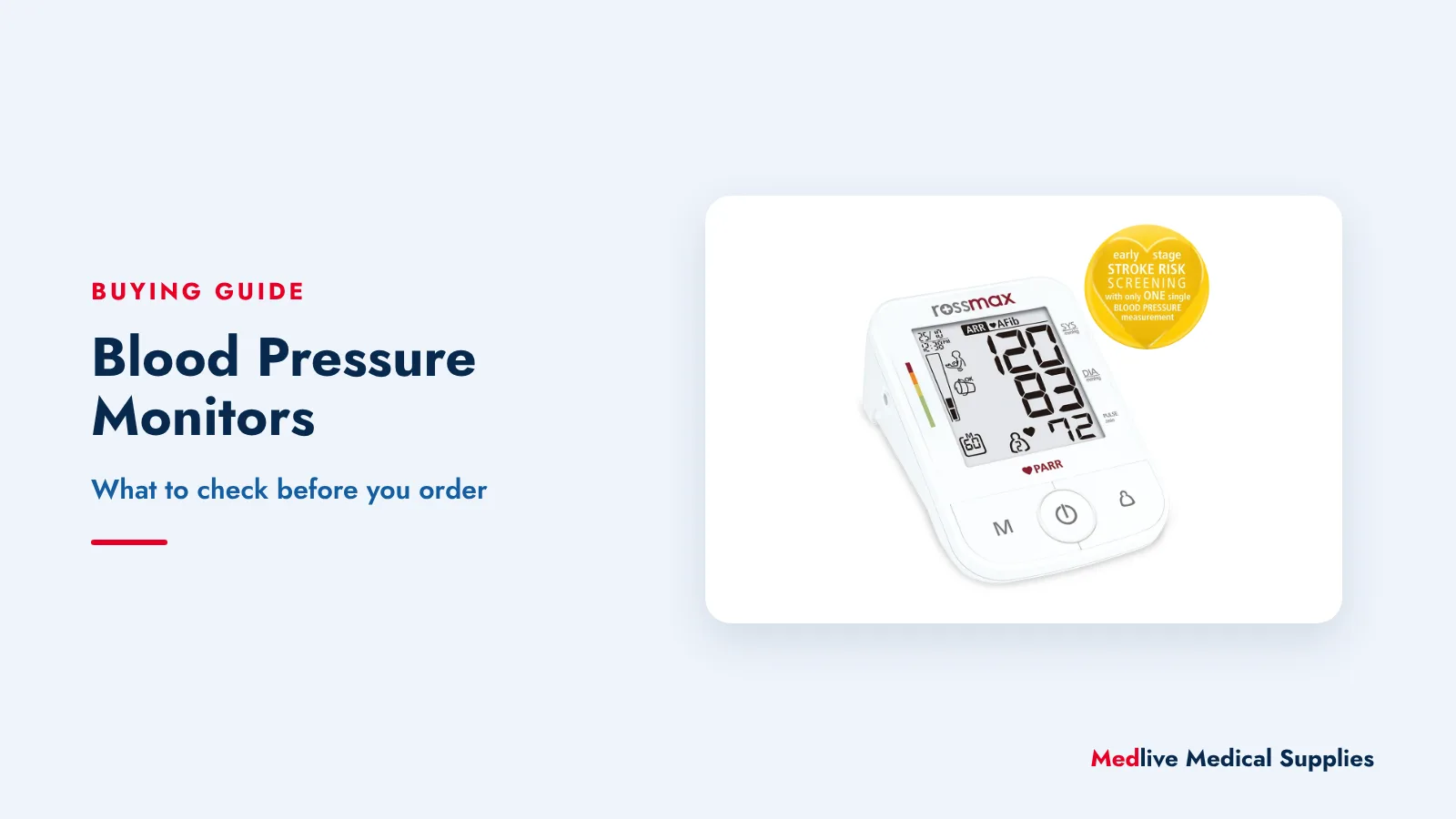
- Automatic digital monitors inflate the cuff and display the reading without a stethoscope. Upper-arm models, for example the Omron M2 Blood Pressure Monitor, the Rossmax X5 Auto Arm BP Monitor and the Digital BP Meter Contec 08A, are the usual choice for clinics and home monitoring. Wrist models, for example the BP Meter Rossmax S150 Automatic Wrist, are compact and easy to carry, but readings depend more on correct wrist position, so follow the manufacturer’s instructions closely.
- Mercury sphygmomanometers, for example the Mercurial BP Meter on Mobile Stand, were long used as a reference device. Under the Minamata Convention on Mercury, countries that are party to it agreed to phase out the manufacture, import and export of mercury sphygmomanometers, with a phase-out date of 2020, and many health systems have replaced them with aneroid or validated digital devices. Check your facility’s policy and local rules before ordering mercury equipment, and make sure you have a spill and disposal procedure for any mercury devices still in use.
- Ambulatory monitors, for example the Telemedicine Ambulatory BP Monitor, are worn by the patient and take repeated readings over a set period. They are used when a clinician requests out-of-clinic monitoring, and they need software, data review and staff trained to fit them.
2. Cuff sizing
A cuff that is too small or too large for the arm affects the reading, so cuff size is as important as the monitor itself.
- Measure the arm circumference of your typical patients and compare it with the range printed on the cuff or in the specification.
- Most facilities need at least a standard adult cuff, a large adult cuff and child or small adult cuffs. Paediatric and neonatal patients need cuffs designed for them.
- Confirm that spare cuffs and bladders are compatible with the monitor you choose. Connectors differ between manufacturers and models.
- For shared clinical use, order spare cuffs from the start. Cuffs wear, stretch and need cleaning between patients according to your infection-control procedures.
3. Accuracy, validation and calibration
For automatic digital monitors, ask whether the model has been clinically validated for accuracy, and whether that validation covers the patients you treat (for example children or pregnant women). The manufacturer’s documentation should state this.
All monitors drift over time. Aneroid gauges can be knocked out of accuracy by drops, and digital monitors should be checked against a reference at the interval the manufacturer recommends. Plan who will carry out these checks, keep a record for each device and remove any device that reads incorrectly or will not return to zero. Check the batteries or power adaptor that digital models use and keep spares available.
4. Mounting options for wards and consulting rooms
- Wall-mounted units, for example the Aneroid Square Face Wall BP Meter, keep the gauge at eye level and the cuff within reach, and cannot be misplaced. Confirm the mounting position before installation.
- Mobile stands let one device move between beds in a ward. Check the stability of the base, the castors and the basket or hook for the cuff.
- Desk and handheld units suit consulting rooms, outreach bags and home visits. Check the carry case and the weight if staff carry them all day.
5. Home monitoring
For patients monitoring at home, choose a simple upper-arm digital monitor with a large display, the correct cuff size and clear instructions. Memory storage helps patients share readings with their clinician. Patients should follow their clinician’s advice on when and how often to measure, and on what to do with the results. A home monitor does not replace clinical assessment.
6. Common mistakes to avoid
- Buying monitors with only one cuff size for a mixed patient group.
- Choosing wrist monitors for settings where staff cannot ensure correct positioning.
- Having no calibration plan or record for aneroid and digital devices.
- Forgetting running costs such as spare cuffs, bulbs, valves and batteries.
- Not checking the supplier. Read how to check a medical device supplier with SAHPRA.
To compare models side by side, use our product comparison tool. For stethoscopes, thermometers, monitors and the rest of the diagnostic range, see our diagnostic equipment buying guide.
7. How to order from Medlive
Browse the blood pressure monitors sub-category or the full Diagnostic Equipment department. In South Africa, products with verified prices show ZAR prices including VAT and can be added to the cart. Customers in our other markets see “Price on request (USD)” and can submit a Request a Quotation; freight and import paperwork are confirmed on the quotation.
Equipping several wards, clinics or outreach teams? Use Bulk Orders for volume quotations, or Tender Enquiry for institutional and government requirements. Freight is confirmed for each order, and payment is by EFT once the final total has been confirmed in writing.