Electrotherapy and physiotherapy equipment is a significant investment for a practice, sports club or rehabilitation centre, and the range of modalities can be confusing. This guide explains in plain terms what the main types of equipment do, how clinic units differ from personal and sport units, which running costs to plan for and how to order from Medlive. It is purchasing guidance only: treatment choices, settings and contraindications are a matter for the practitioner, within their scope of practice, and the manufacturer’s instructions for use.
1. Start with the services you offer
Before comparing equipment, list the treatments your practitioners are trained in and plan to offer, the number of treatment rooms, and whether equipment will stay in one room or move between rooms, sites or sports events. Buying a modality nobody is trained or registered to use is a common and costly mistake.
2. The main modalities in plain terms
- Electrical stimulation: devices deliver small electrical currents through electrodes on the skin. TENS (transcutaneous electrical nerve stimulation) is generally used for pain management, while EMS and NMES (electrical or neuromuscular electrical stimulation) are designed to make muscles contract. Personal and sport stimulators include, for example, the Compex Sport 6.0 and the Compex Mini Wireless Muscle Stimulator.
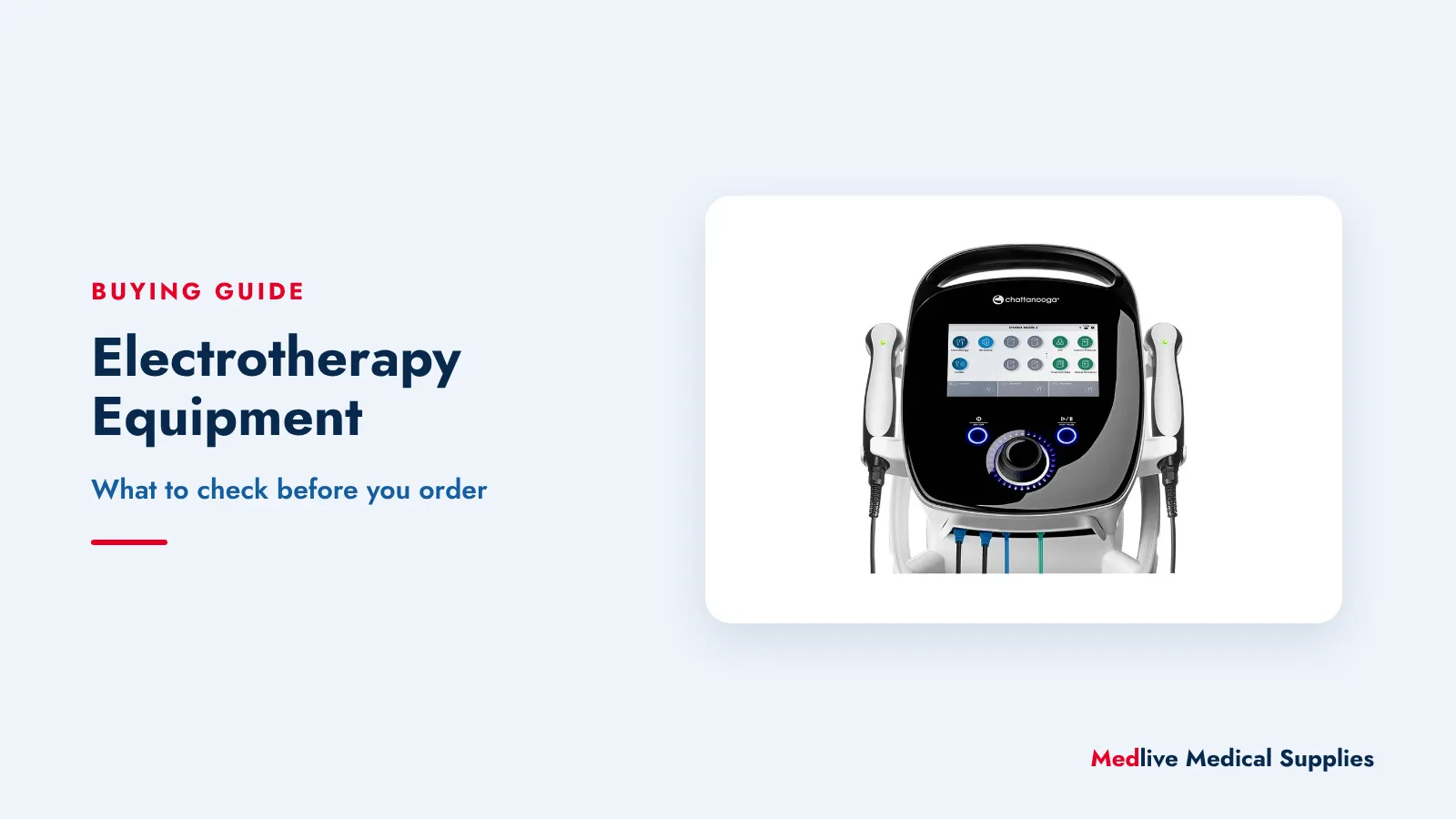
- Therapeutic ultrasound: a treatment head delivers ultrasound energy through a coupling gel. The range includes, for example, the Chattanooga Intelect Mobile 2 Ultrasound Only. Check the treatment head sizes and frequencies available.
- Combination units: combine electrical stimulation and ultrasound in one device, for example the Chattanooga Intelect Mobile 2 Combo, which saves space and can cost less than two separate units.
- Laser therapy: devices apply laser light to the treatment area, for example the ASA Mphi Laser. Laser equipment needs appropriate eye protection, a controlled treatment area and trained users, as set out by the manufacturer.
- Shockwave: devices deliver pressure waves into tissue through a handpiece, for example the Chattanooga Intelect RPW2 Shockwave. Check the applicator types, the expected life of the handpiece and the cost of servicing it.
- Traction: units apply a controlled pulling force, typically to the spine, for example the BTL-6000 Traction Unit. They need a suitable table and harnesses, and space in the treatment room.
- Deep oscillation: uses electrostatic attraction to create gentle oscillations in tissue, applied by the therapist through special gloves or a hand applicator, for example the Deep Oscillation Professional.
3. Clinic units or personal and sport units
Clinic units are designed for many treatments a day across different patients. They typically offer more programmes and adjustable parameters, larger displays, multiple channels and accessories for different body areas. Personal and sport units are smaller, battery powered and simpler to operate, and are often used for training, recovery or ongoing home use as directed by a practitioner.
When comparing, check the number of channels or outputs, the preset and custom programmes, the display and controls, the size and weight, battery or mains power, and whether a trolley or carry case is available.
4. Consumables and running costs
The purchase price is only part of the cost. Plan for:
- Electrodes: self-adhesive electrodes wear out and are often single-patient use. Check sizes and connector compatibility with your device.
- Ultrasound gel and cleaning products compatible with the treatment heads.
- Applicators and heads: shockwave applicators, ultrasound heads and laser probes may need servicing or replacement after a set number of uses or hours.
- Lead wires, batteries and chargers, which are easy to damage in busy rooms.
- Traction harnesses and table accessories.
Ask for a list of the consumables and spare parts for each model before you order, so you can estimate the cost per treatment.
5. Portability, training and servicing
- Portability: mobile units suit practitioners who treat at several sites, at sports events or at home. Check battery life and the carry case.
- Training: make sure staff are trained on each device before use, and keep the instructions for use available in the treatment room.
- Servicing and safety checks: ask about recommended service intervals, calibration of outputs, and the availability of spare parts and service support for the model.
- Infection control: follow the manufacturer’s cleaning instructions for heads, applicators and leads between patients.
6. Related equipment and common mistakes
Many practices combine electrotherapy with simpler modalities. See hot and cold therapy and massage and recovery products, and our mobility and rehabilitation buying guide for the wider range.
- Buying a personal unit for heavy clinic use, or a clinic unit that is too large to move between rooms.
- Not budgeting for electrodes, gel and applicator servicing.
- Buying modalities outside your practitioners’ training or scope of practice.
- Not checking the supplier. Read how to check a medical device supplier with SAHPRA.
7. How to order from Medlive
Browse electrotherapy and physiotherapy equipment or the full Mobility & Rehabilitation department, and compare models with our product comparison tool. In South Africa, products with verified prices show ZAR prices including VAT and can be added to the cart. Customers in our other markets see “Price on request (USD)” and can submit a Request a Quotation; freight and import paperwork are confirmed on the quotation.
Equipping several rooms or a rehabilitation centre? Use Bulk Orders, or Tender Enquiry for institutional and government requirements. Payment is by EFT once the final total has been confirmed in writing. For help choosing between units in the electrotherapy range, contact us.