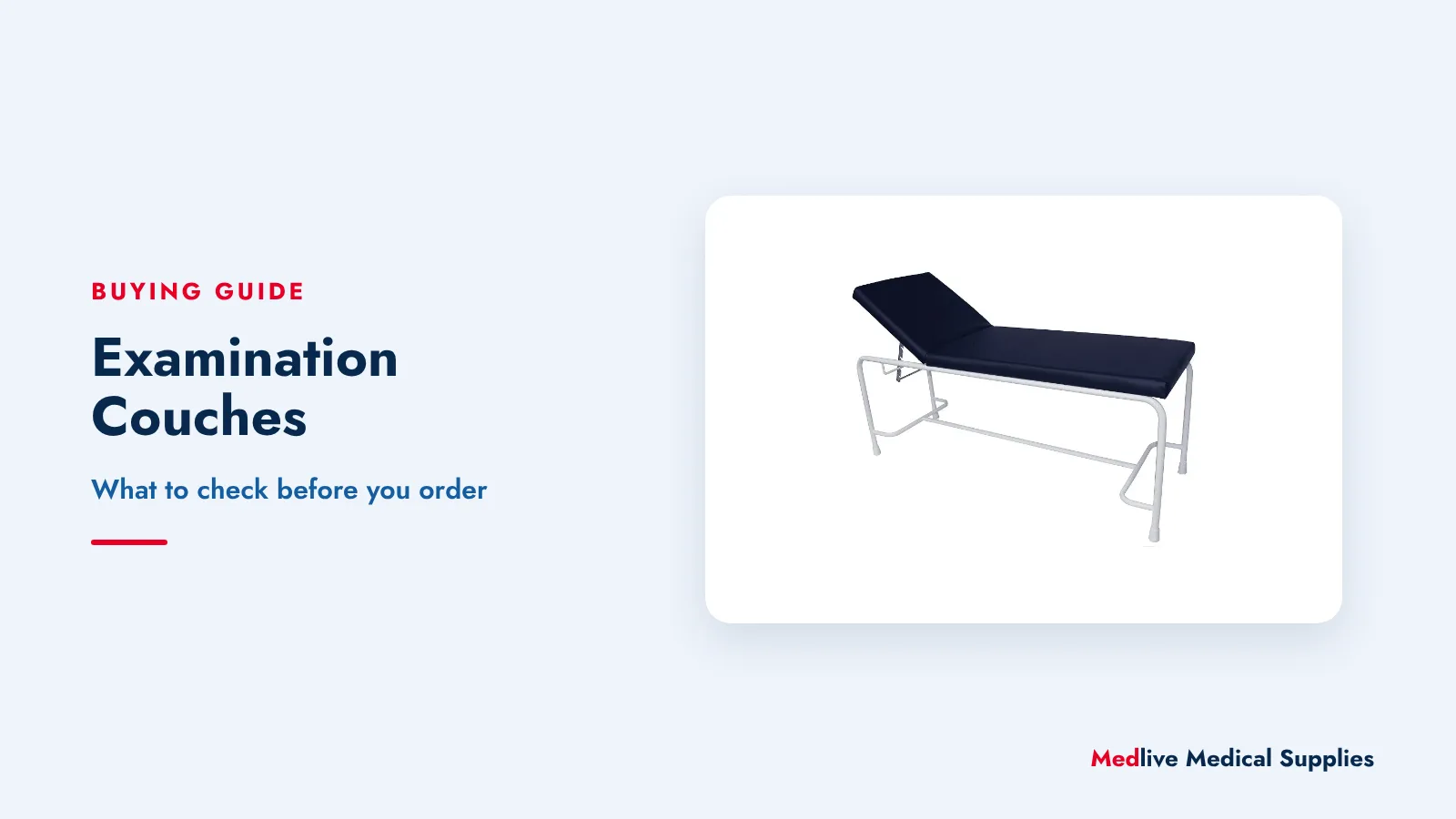
An examination couch is used dozens of times a day, by staff and patients of every size and level of mobility. A well-chosen couch makes examinations safer and more comfortable and reduces strain on staff; a poor one creates daily problems with access, cleaning and space. This guide explains the main types of examination couch and treatment table, what to check in the specifications and how to order from Medlive.
1. Start with the room and the work
Before comparing models, note:
- The practice type: GP and nurse consulting rooms, physiotherapy, chiropractic, podiatry, gynaecology, emergency or outpatient clinics.
- The patients: how many have limited mobility, use wheelchairs or need help to get on and off the couch.
- The room: measure the floor space, door widths and the space needed on each side for staff to work and for patients to get on and off safely.
- Use: a few examinations a day, or continuous treatment sessions where staff work at the couch for long periods.
2. Fixed, hydraulic or electric height
Height adjustment is the most important decision for many buyers.
- Fixed-height couches and plinths, for example the Standard Medical Metal Plinth, are simple, durable and economical. They suit rooms used for short examinations. A step stool is usually needed for patients, and staff cannot adjust the working height.
- Hydraulic couches, for example the 2-Section Synergy-C Treatment Table Hydraulic, are raised and lowered with a foot pump and need no power supply.
- Electric couches, for example the Examination Bed Electric DB-40 Height Adj, adjust at the touch of a control. They are easier for staff who change height often and can be lowered for patients who have difficulty getting on.
Adjustable height helps staff work at a comfortable height and can make patient transfers easier. For electric couches, check the power requirements, the controls (hand or foot) and what happens if power fails.
3. Sections, backrests and face holes
- Backrest: many examination beds have an adjustable backrest, for example the Examination Bed Adjustable Backrest, so patients can sit up or lie flat. Check the angle range and how it is adjusted.
- Two or three sections: a two-section table has a backrest and a seat or leg section; three-section tables add further positioning options, useful in therapy settings.
- Face holes: physiotherapy, chiropractic and massage practitioners often need a face hole so patients can lie face down comfortably. Check whether a plug or cover is supplied for when it is not in use.
4. Specialty tables
Some practices need tables designed for a particular kind of examination or treatment, such as gynaecology, podiatry, chiropractic or Bobath tables. The range includes, for example, the Synergy-C Gynaecology Examination Table. Specialty tables have features such as leg supports, divided sections or extra-wide surfaces. Confirm with the practitioners exactly which features they need before you order, as these tables are less flexible for general use.
For outreach work, home visits or temporary clinics, a folding portable table, for example the Portable Massage Table, can be carried between sites. Check the folded size, weight, carry case and the safe working load.
5. Safe working load, size and upholstery
- Safe working load: check the manufacturer’s stated maximum load and make sure it suits your patient population. On adjustable couches, check whether the load rating applies while the couch is moving.
- Width and length: a wider top is more comfortable and secure for larger patients; a narrower top gives staff closer access. Check that the length suits taller patients.
- Upholstery and cleaning: the surface should be wipeable and compatible with the disinfectants your facility uses. Seams, stitching and damaged upholstery are hard to clean, so check build quality and whether replacement tops are available. Follow your infection control policy and the manufacturer’s cleaning instructions.
- Covers and paper rolls: many practices use couch roll or fitted covers, for example the PVC Plinth Cover with Face Hole. Check that roll holders and cover sizes match the couch.
- Stability: check the frame, locking wheels or fixed feet, and whether the couch stays steady when patients get on at one end.
6. Common mistakes to avoid
- Buying a fixed-height couch for a practice that needs frequent height changes.
- Not measuring the room, door widths and working space before ordering.
- Ignoring the safe working load for the patients you see.
- Choosing upholstery that does not tolerate your disinfectants.
- Not budgeting for covers, couch roll and step stools.
Compare models in the examination couches and treatment tables range with our product comparison tool. For beds, trolleys and other ward equipment, see our hospital and critical care buying guide, and for setting up a new practice, the clinic supplies checklist.
7. How to order from Medlive
Browse examination couches and treatment tables or the full Hospital & Critical Care department. In South Africa, products with verified prices show ZAR prices including VAT and can be added to the cart. Customers in our other markets see “Price on request (USD)” and can submit a Request a Quotation; freight and import paperwork are confirmed on the quotation. Couches are bulky, so give the full delivery address and any access details when you ask for a quote.
Equipping several consulting rooms or sites? Use Bulk Orders, or Tender Enquiry for institutional and government requirements. Payment is by EFT once the final total has been confirmed in writing.