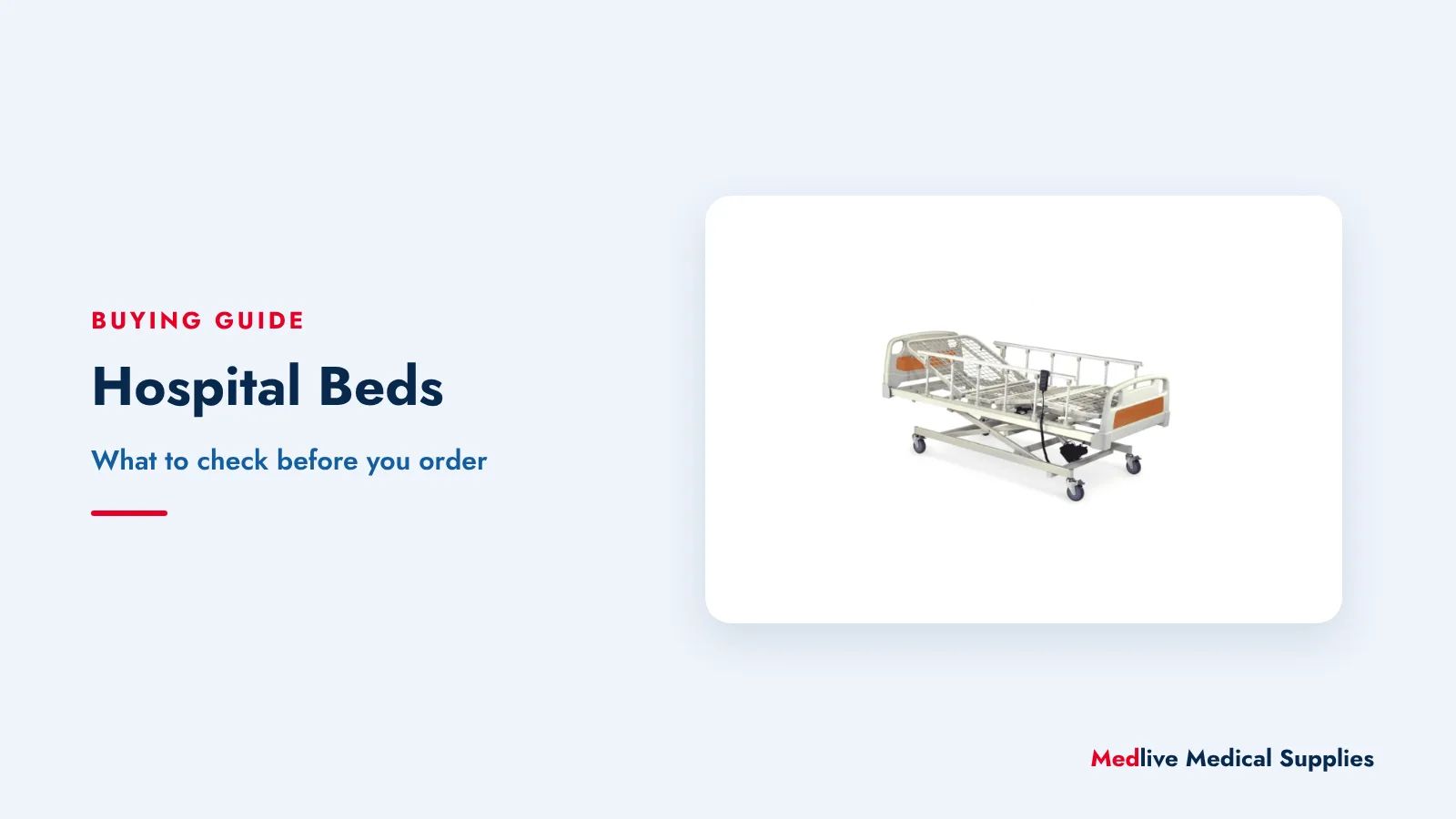
A hospital bed is used for many hours a day, by patients who may be frail, confused or unable to move themselves, and by carers who lift, turn and reposition them. The right bed protects both. This guide explains the main types of hospital bed, what the functions mean, which safety features to check and what to ask before ordering, whether you are equipping a ward or a room at home.
1. Manual or electric?
- Manual (crank) beds are adjusted with hand cranks, usually at the foot of the bed. They need no power, have fewer parts to fail and generally cost less. They suit settings where positions are not changed often and where carers can operate the cranks. The hospital beds range includes, for example, the Mechanical Hospital Bed – 2-Crank and the Manual Hospital Bed 2-Function Full Fowler.
- Electric beds are adjusted with a handset or control panel. They make frequent repositioning easier for carers, and some allow patients to adjust the bed themselves. They need a reliable power supply. The range includes, for example, the Electric Hospital Bed FS3230W – 3-Function.
Where power is unreliable, ask whether an electric model has a battery backup and whether it has a manual release for lowering the backrest in an emergency.
2. What the functions mean
Beds are often described by the number of functions, meaning the separate movements they can make:
| Function | What it does |
|---|---|
| Backrest | Raises the head and upper body. “Full Fowler” describes a backrest that can be raised to a near-upright sitting position. |
| Knee break | Raises the knee section, which helps stop the patient sliding down the bed. |
| Height adjustment | Raises the bed to a comfortable working height for carers and lowers it for safer transfers. |
| Trendelenburg and reverse Trendelenburg | Tilts the whole platform head-down or head-up. |
A 2-function bed usually offers backrest and knee adjustment; 3-function beds commonly add height; 5-function beds commonly add the two tilt positions. Check the exact functions on each product page, as naming varies between manufacturers. Which positions are used for a patient is a clinical decision made according to your protocols.
3. ICU, ward, paediatric and home-care beds
- ICU beds are designed for critically ill patients and frequent repositioning. They typically offer full electric adjustment and features such as tilt functions and accessories for monitoring equipment. The range includes, for example, the FS3237WMF3 5-Function ICU Electric Bed and the Electric ICU Hospital Bed – Full-Function DA2. Confirm X-ray or CPR features with the specification sheet rather than assuming them.
- General ward beds balance function, durability and ease of cleaning. A 3-function bed, for example the Manual Hospital Bed 3-Function – Folding Sides, is a common choice.
- Paediatric beds, for example the Paediatric / Juvenile Hospital Bed B-61, are sized and railed for children. Do not use an adult bed for a small child without clinical advice.
- Home-care beds need to fit the room and doorway, operate quietly and be simple for family carers to use.
4. Safety features to check
- Safe working load: the maximum combined weight of patient, mattress and accessories the bed is designed for. Check it against your heaviest expected patients.
- Side rails and entrapment: patients can become trapped in gaps between side rails, the mattress, the platform and the head or foot boards. The international safety standard for adult medical beds (IEC 60601-2-52, now replaced by IEC 80601-2-52) includes requirements on these trapping zones. Ask whether the bed has been assessed against it, use the mattress size the manufacturer specifies, and follow your facility’s policy on when rails are used.
- Castors and brakes: check castor size for your floors, whether brakes are central (all wheels locked from one pedal) or individual, and whether a steering castor is available for moving the bed along corridors.
- Controls: lockable handsets or nurse panels can prevent unintended movement.
- Cleaning: smooth, removable panels and surfaces compatible with your disinfectants make infection control easier.
5. Mattresses and pressure care
The mattress must match the bed’s platform dimensions. A mattress that is too small leaves gaps that increase entrapment risk; one that is too thick can reduce the effective height of the side rails. For patients at risk of pressure injuries, the facility’s pressure-care assessment should guide the choice of foam or alternating-pressure mattress. See our mattresses and pressure care range, and order mattresses together with beds where possible so sizes can be checked on one quotation.
6. Delivery and installation questions to ask
Hospital beds are large and heavy. Before ordering, measure doors, corridors, lifts and stairways, and ask:
- Is the bed delivered assembled or flat-packed, and who assembles it?
- What are the packed dimensions and weight?
- Is there step-free access, or will the bed need to be carried?
- For electric beds, is a suitable power socket available at the bedside?
Freight and any delivery arrangements are confirmed on the quotation for each order.
7. How to order from Medlive
Browse the hospital beds sub-category or the full Hospital & Critical Care department. For monitors, trolleys and other ward equipment, see our hospital and critical care buying guide. To compare models side by side, use the product comparison tool.
In South Africa, products with verified prices show ZAR prices including VAT and can be added to the cart. Customers in other countries see “Price on request (USD)” and can submit a Request a Quotation; freight and import paperwork are confirmed on the quotation. Equipping a ward or facility? Use Bulk Orders for volume quotations, or Tender Enquiry for institutional and government requirements. Payment is by EFT once the final total has been confirmed in writing.