Otoscopes, ophthalmoscopes and examination lights are used in almost every consultation, so small differences in light quality, power and compatibility add up quickly. A student’s first instrument, a GP’s consulting room and a busy primary care clinic all need something slightly different. This guide explains the choices in our otoscopes, ophthalmoscopes and examination lights range, so you can buy the right instrument and the right accessories the first time.
1. Pocket or full-size instruments
Pocket instruments are compact, light and usually run on standard batteries. They suit students, home visits, outreach and emergency bags. Examples in the range include the Welch Allyn Pocket Junior Otoscope and the Welch Allyn Pocket LED Ophthalmoscope 12870.
Full-size instruments have larger heads and handles, and often brighter illumination and a wider field of view. They suit consulting rooms and clinics where the instrument is used many times a day. The Welch Allyn MacroView Otoscope, the Otoscope Fibre Optic OT10D and the Ophthalmoscope OP10 are examples of what the range includes.
A sensible rule: if the instrument travels in a pocket or bag, choose pocket size; if it stays at a desk and is used all day, choose full size or a wall station.
2. Illumination: conventional, fibre optic, halogen and LED
In a conventional otoscope, the lamp sits in the head and shines directly into the ear canal. In a fibre-optic otoscope, light is carried from the lamp through fibres to the tip of the speculum, giving a clearer, unobstructed view and leaving more room for instruments.
The light source itself is usually halogen or LED. LED lamps generally run cooler, last longer and use less battery power, while halogen gives a warm light that some clinicians prefer. Before buying replacement lamps, confirm the exact model and voltage of your instrument: lamps are rarely interchangeable between brands, and sometimes not between models from the same brand.
3. Power: batteries, rechargeable handles and wall stations
- Battery handles take standard disposable or rechargeable batteries. They are simple and easy to replace in the field, but keep spare batteries on hand.
- Rechargeable handles use a built-in battery and a charger or charging base. They avoid ongoing battery costs and give steadier brightness, but you need reliable power to charge them.
- Wall-mounted diagnostic stations, for example the Welch Allyn Diagnostic Set Wall-Mounted, are mains-powered via a transformer, with heads on coiled cords. Instruments are always charged and always in the same place, which suits consulting rooms. Check the wall space, nearby power point and the plug or adapter required.
4. Diagnostic sets
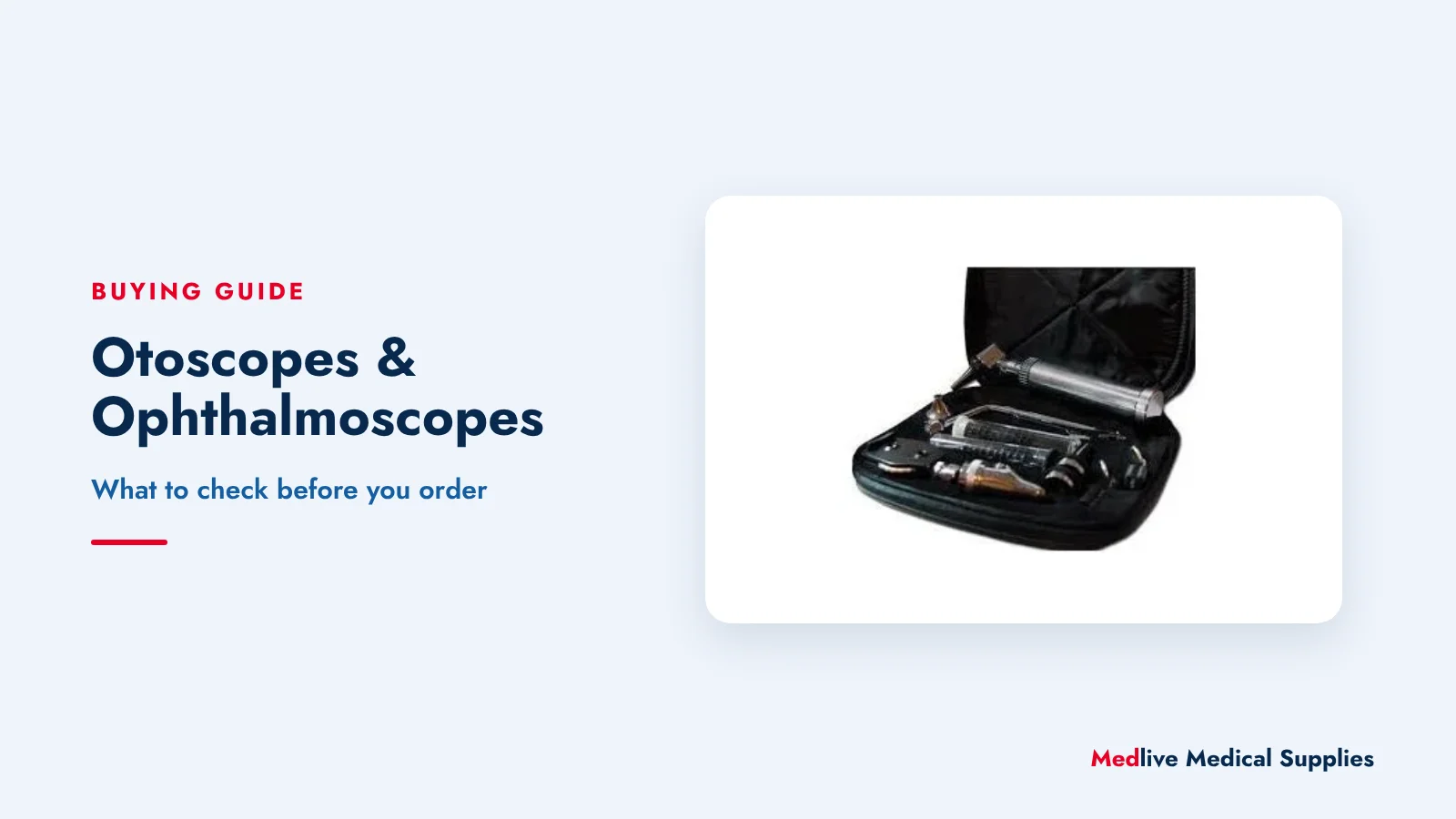
A diagnostic set combines an otoscope head and an ophthalmoscope head that share one handle, usually in a protective case with specula and spare lamps. Examples include the Mini Otoscope-Ophthalmoscope Set and the Universal Diagnostic Set. Sets are good value for students and new practices, and keep everything together. Before ordering, check that the heads and handle are from the same system, because heads from different manufacturers usually do not fit each other’s handles.
For ophthalmoscopes, specifications usually list the apertures (different spot sizes, filters and grids for different examinations) and the lens range (the dioptre range used to bring the retina into focus). More apertures and a wider lens range give more flexibility; for general screening, a simpler instrument may be enough.
5. Specula: reusable or disposable
Ear specula come in several sizes for children and adults. Reusable specula, such as the Welch Allyn Reusable Ear Specula Set of 4, are cleaned and disinfected between patients according to the manufacturer’s instructions. Disposable specula are used once and discarded, which simplifies infection control but adds an ongoing cost.
The most common ordering mistake is buying specula that do not fit. Specula are designed for particular otoscope models, so quote the brand and model of your otoscope when you order, and order a mix of sizes.
6. Examination lights and small instruments
A good examination lamp makes skin, wound and throat examinations easier. Choose by how the room is used:
- Mobile stand lamps, for example the Examination Lamp LED Mobile Stand KD202C, can be moved between couches and rooms.
- Clamp-type lamps, for example the Examination Lamp LED Clamp-Type KD2005W, attach to a desk, trolley or couch and save floor space.
- Desk and magnification lamps suit close work such as minor procedures and dermatology.
LED lamps are now the usual choice because of their low heat output and long life. Check the arm reach, the head adjustment and how the lamp is cleaned.
Smaller items complete the kit: a pupil torch (for example the Pupil Torch with Pupil Gauge) for pupil checks, and reflex hammers such as Buck or patella styles for neurological examinations.
7. Cleaning and buying for students or clinics
Clean the instrument heads, handles and reusable specula between patients using only products and methods the manufacturer’s instructions for use allow, as some disinfectants damage lenses and plastics. Students usually do best with a compact diagnostic set and a pupil torch. Clinics should standardise on one system so that heads, handles, lamps and specula are interchangeable across rooms. For the wider range, see our diagnostic equipment buying guide.
How to order from Medlive
Browse the otoscope and ophthalmoscope range or the full diagnostic equipment department. South African customers see verified ZAR prices including VAT where available; customers elsewhere in Africa see “Price on request (USD)” and can request a quotation, with freight confirmed on the quote. Training institutions and clinic groups ordering sets for many users can use bulk orders. Payment is by EFT once the final total is confirmed in writing.