Bathroom and daily living aids help people stay safe and independent at home, and help carers in frail-care homes, hospices and wards work with less strain. They are also among the easiest products to get wrong: a commode that does not fit through the bathroom door or a hoist rated below the user’s weight is of no use. This guide sets out what to measure, how the main product types differ, and how to order. Where possible, ask an occupational therapist to assess the user and the home or room before you buy; they can recommend the right type and set-up for the individual.
1. Measure before you choose
Most returns and disappointments come from measurements that were never taken. Before browsing the bathroom and daily living range, record:
- User weight, and compare it with the manufacturer’s stated maximum user weight or safe working load for every item. Leave a margin rather than buying at the limit.
- Toilet height from floor to the top of the bowl rim, and the shape of the bowl, before choosing a raised seat or toilet frame.
- Door widths and corridor widths along the route the equipment must travel, including bathroom doors.
- Turning space beside the bed and in the bathroom, especially if a carer must stand alongside or a hoist must manoeuvre.
- Floor surface, thresholds and steps that castors will need to cross.
2. Commodes and raised toilet seats
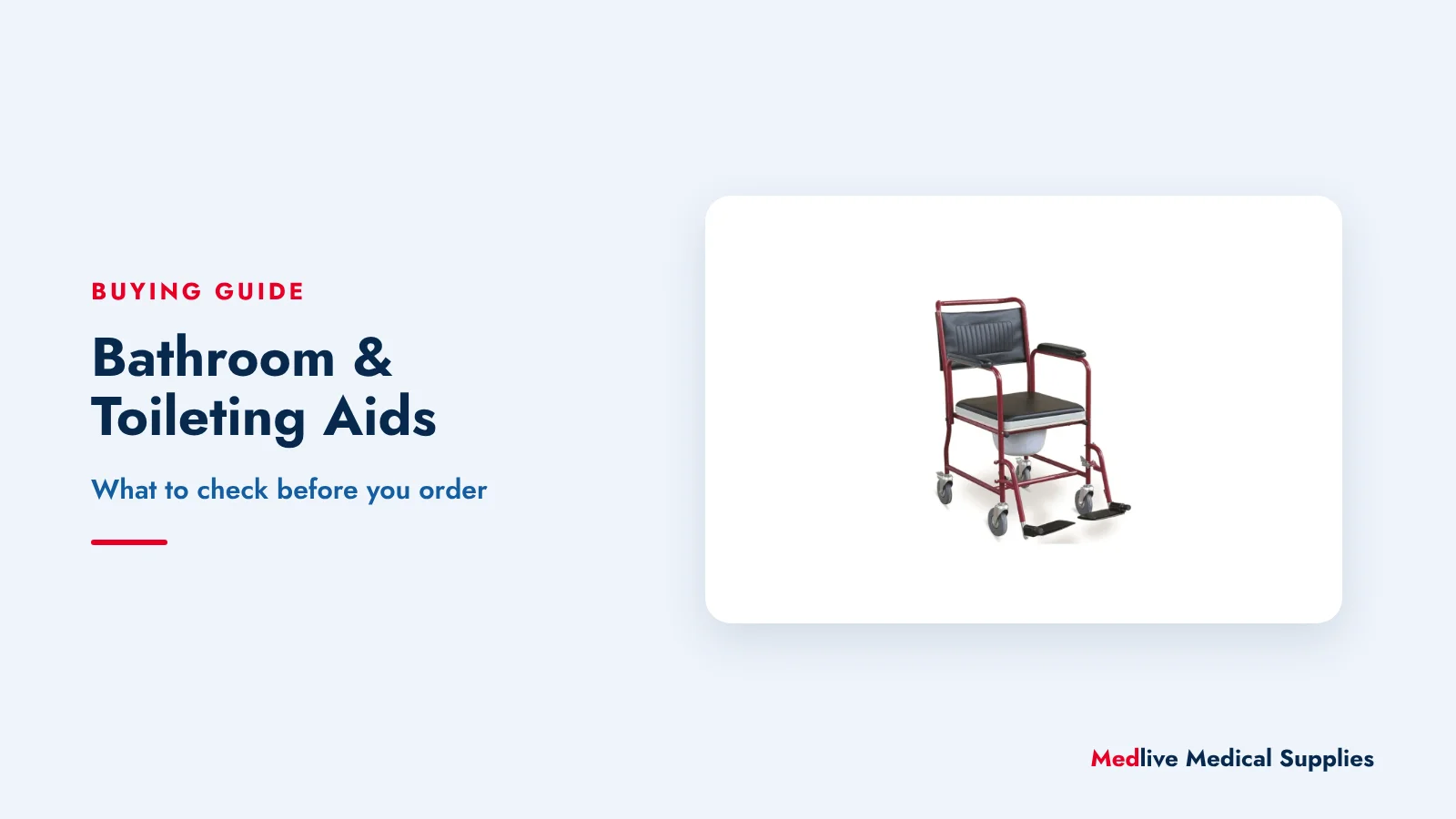
A commode chair gives toilet access at the bedside or can be positioned over a toilet. Key differences:
- Fixed or detachable arms: detachable or drop-down arms allow side transfers from a bed or wheelchair. The Commode Chair with Detachable Arm FS691 is an example of this type.
- Height adjustment: adjustable legs let the seat be set to suit the user and the bed or toilet height, as with the Hospital Commode Chair – Adjustable Height.
- Static or mobile: static frames are stable for bedside use; models with castors can be wheeled over a toilet or into a shower, and should have brakes that lock firmly.
- Pan or bucket: check that a removable pan with a lid is included and whether spare pans are available for care facilities.
A raised toilet seat, such as the Raised Toilet Seat with Lid – Standard, lifts the sitting height of an existing toilet. Confirm the height added, how it fixes to the bowl, and that it suits the bowl shape you measured.
3. Grab bars
Grab bars, for example the Grab Bar FS7905SF1, are only as safe as their fixing. The wall type (brick, concrete, drywall or tiled board) determines the fixings needed, and some walls need reinforcement. Have bars installed by a competent installer following the manufacturer’s fitting instructions, and position them with the user’s reach and transfer method in mind, ideally on an occupational therapist’s advice.
4. Bedpans and urinals
For bed-bound users, bedpans and urinals are everyday essentials. Stainless steel items such as the Stainless Steel Bedpan are durable and suit facilities with washer-disinfectors or established cleaning routines. Plastic items such as the Bedpan Plastic Adult and Male Urinal Plastic – Each are lighter and lower in cost per unit. Whichever you choose, follow your facility’s infection-prevention procedures and the manufacturer’s cleaning instructions, and allow enough units per ward that each can be properly cleaned between uses.
5. Patient hoists and transfer chairs
Hoists and transfer chairs reduce manual lifting for carers. They are significant purchases and need careful specification.
- Safe working load: an item such as the Electric Mobile Birdie Hoist 180kg states its rated load in the name. Check this against the user’s weight for every hoist and sling.
- Slings: slings come in different types and sizes and must be compatible with the hoist’s attachment system. Ask which slings fit the hoist and how sizing is determined before ordering.
- Space: mobile hoists need room for the base to pass under the bed and to turn. Check the base width and leg clearance.
- Battery and charging: electric hoists rely on a charged battery. Plan a charging routine and ask whether a spare battery is available.
- Training: hoists should only be used by carers trained in their safe use, following the manufacturer’s instructions and the facility’s moving-and-handling procedures.
Transfer chairs, for example the Transfer Lift Chair TPC08, are an alternative for some transfers. Ask for the manufacturer’s specifications and confirm suitability with the care team.
6. Medication aids and related equipment
Pill organisers such as the Pill Organiser 7-Day Weekly Box help users and carers keep track of daily doses. A Pill Crusher – Manual is useful where crushing is appropriate, but some medicines must not be crushed or split. Always check with a pharmacist or the prescriber before crushing or splitting any medicine.
Bathroom aids are often bought alongside other mobility equipment. See our walking aids buying guide and wheelchairs buying guide, and for the full range, the mobility and rehabilitation equipment buying guide.
7. How to order from Medlive
Browse the bathroom and daily living sub-category or the wider mobility and rehabilitation department. South African customers see verified prices in ZAR including VAT where available and can add items to the cart. Customers in other African countries see Price on request (USD); freight and import paperwork are confirmed on the quotation. Larger items such as hoists and commodes add freight volume, which is confirmed per order.
- For specific items or questions about slings, sizes and accessories, use Request a Quotation.
- Care homes, hospices and hospitals equipping several rooms can use Bulk Orders.
- Institutional buyers with a formal procurement process can submit requirements through Tender Enquiry.
Payment is made by EFT once the final total has been confirmed in writing.