Casting and splinting supplies are used to support and immobilise injured limbs, from first aid at the scene to cast application and removal in a clinic or orthopaedic room. The range is small but varied, and the right purchase depends on who will use the item and where. This guide explains the main product types and what to check before ordering. For the wider range of dressings and wound care products, see our wound care buying guide.
One principle applies throughout: splints and casts should be applied and removed by trained clinicians or first aiders following their facility’s protocols and the manufacturer’s instructions for use. This guide covers purchasing only.
1. Who will use the equipment?
Start by listing the settings you are buying for. Typical buyers include:
- Clinics, pharmacies and outpatient departments supplying ready-made splints to patients.
- Emergency medical services, mines, sports clubs and workplace first aid teams needing temporary immobilisation in the field.
- Casualty units and orthopaedic rooms applying and removing casts.
Each group needs a different mix, so plan your order by setting rather than buying a single kit for everyone. It also helps to note where items will be stored, for example in a vehicle, a first aid room or a plaster room, and how often stock is checked and replaced.
2. Ready-made wrist splints
The casting and splints range includes, for example, the Wrist Splint DW-303-16 and the Mueller Brace Wrist Carpal Tunnel W/Splint. When ordering ready-made splints:
- Use the manufacturer’s sizing chart. Sizes differ between brands, so do not assume a medium in one brand matches a medium in another.
- Check left or right. Many wrist splints are made for one hand; confirm whether a model is handed or universal.
- Stock a size spread. A clinic dispensing splints needs a sensible mix of sizes and both sides.
The choice of splint for a particular patient is a clinical decision. For longer-term braces and joint supports, see our supports and braces buying guide.
3. Inflatable air splints for first aid and EMS
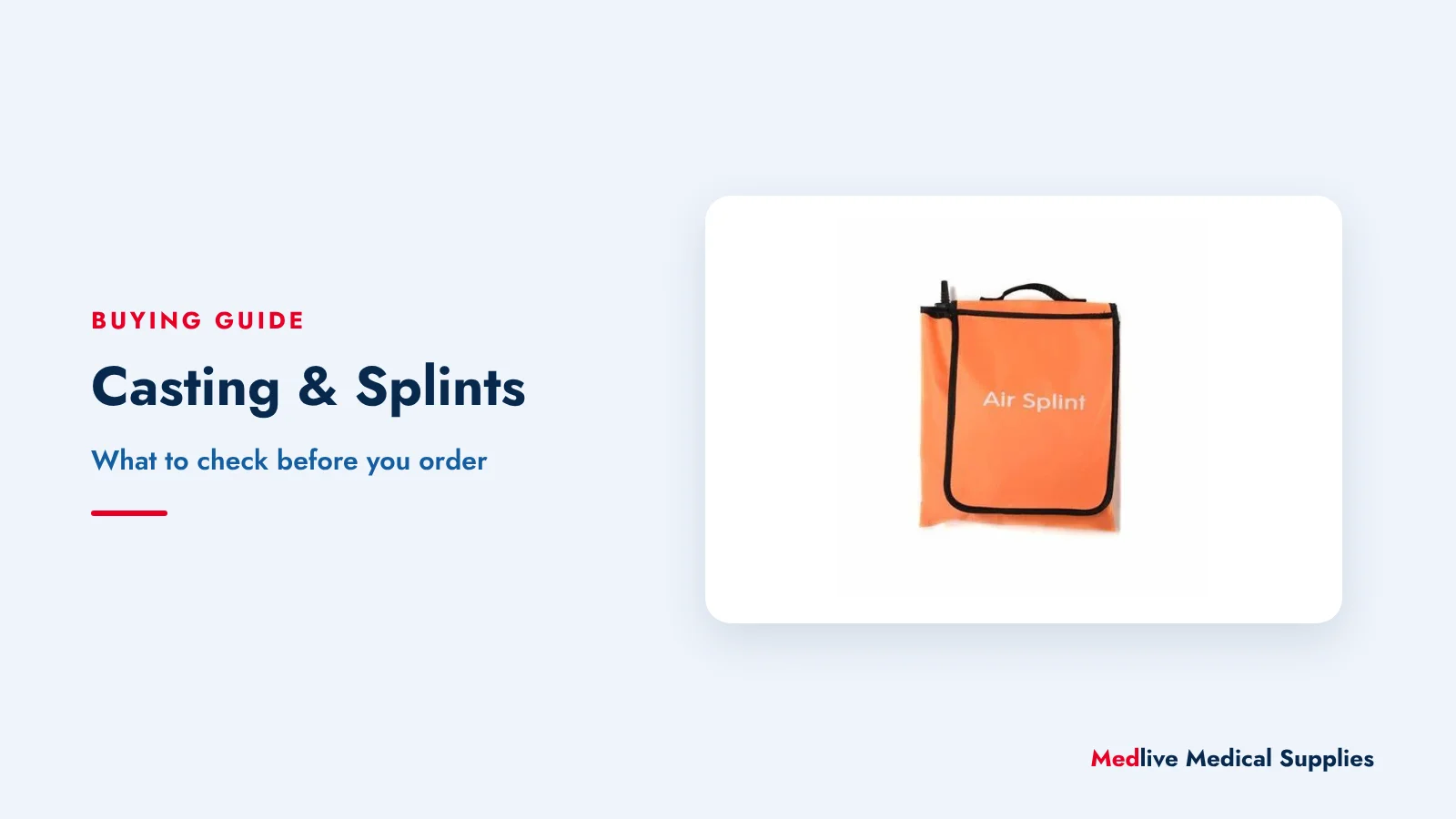
An inflatable air splint wraps around a limb and is inflated to provide temporary support while a patient is moved. The range includes, for example, the Air Splint Set Inflatable. Points to check:
- Which limb sizes the set covers and how many pieces it contains.
- How the splints are inflated and checked, according to the manufacturer’s instructions.
- How the splints are cleaned between uses, and whether the storage bag suits your vehicle or first aid station.
- That users are trained in their use.
Air splints are often bought with other rescue equipment. Our rescue and immobilisation equipment buying guide covers stretchers, spine boards and other immobilisation items.
4. Plaster saws for cast removal
Cast removal saws generally use an oscillating blade, which moves rapidly back and forth rather than spinning. The range includes, for example, the Plaster Saw and the Plaster Saw Electric + Blades. Before buying, consider:
- Replacement blades. Blades wear with use, so confirm which replacement blades fit the model and order spares at the same time.
- Noise and dust. Ask about noise levels and whether dust extraction or collection is available or recommended, and plan where the saw will be used.
- Power and servicing. Check the plug type and voltage for your site and ask about servicing and spare parts.
- Training. Only trained staff should use a cast saw, following the manufacturer’s instructions.
5. Casting materials, padding and bandages
Casts are commonly made from plaster of Paris or from synthetic materials such as fibreglass. Each has its own handling characteristics, and the choice follows your clinicians’ preferences and protocols. Casting materials, padding and stockinette are not always listed online, so ask us for current options and pack sizes. Conforming and crepe bandages used alongside splints are in the bandages category.
6. Common mistakes to avoid
- Ordering one size of wrist splint, or only one side, for a clinic that dispenses to many patients.
- Buying a cast saw without spare blades.
- Assuming sizing is the same across brands.
- Issuing air splints to teams who have not been trained to use them.
7. How to order from Medlive
Browse the wound care and dressings department and the casting and splints category. Customers in South Africa see verified ZAR prices including VAT where available and can add items to the cart. Customers in other African countries see Price on request (USD) and can request a quotation; freight and import paperwork are confirmed on the quotation. For larger quantities use bulk orders, and hospitals, EMS providers and government departments can submit requirements through a tender enquiry. Payment is by EFT once the final total, including freight, has been confirmed in writing.