Supports, braces and orthotics range from a simple elastic sleeve to a hinged knee brace or a walker boot. Choosing well is mostly about matching the type of support to the purpose a clinician has in mind, then getting the size and side right. This guide explains the main types, how sizing works, what to look for in materials and how practices and pharmacies can plan their stock. It is purchasing guidance only: the choice of support for a particular person should follow the advice of their doctor, physiotherapist or other treating clinician.
1. Start with the purpose
Supports are bought for different reasons, and the purpose shapes the choice:
- Sport and activity: lighter supports worn during exercise, often chosen for comfort and freedom of movement.
- After an injury or procedure: supports or boots that a clinician has recommended for a specific period.
- Rehabilitation and daily living: supports used while a person returns to normal activity, as directed by their therapist.
If a support has been recommended by a clinician, take the recommendation with you when ordering so that the type, size and side match exactly.
2. Types by body area
Our Supports, Braces & Orthotics range covers the main body areas:
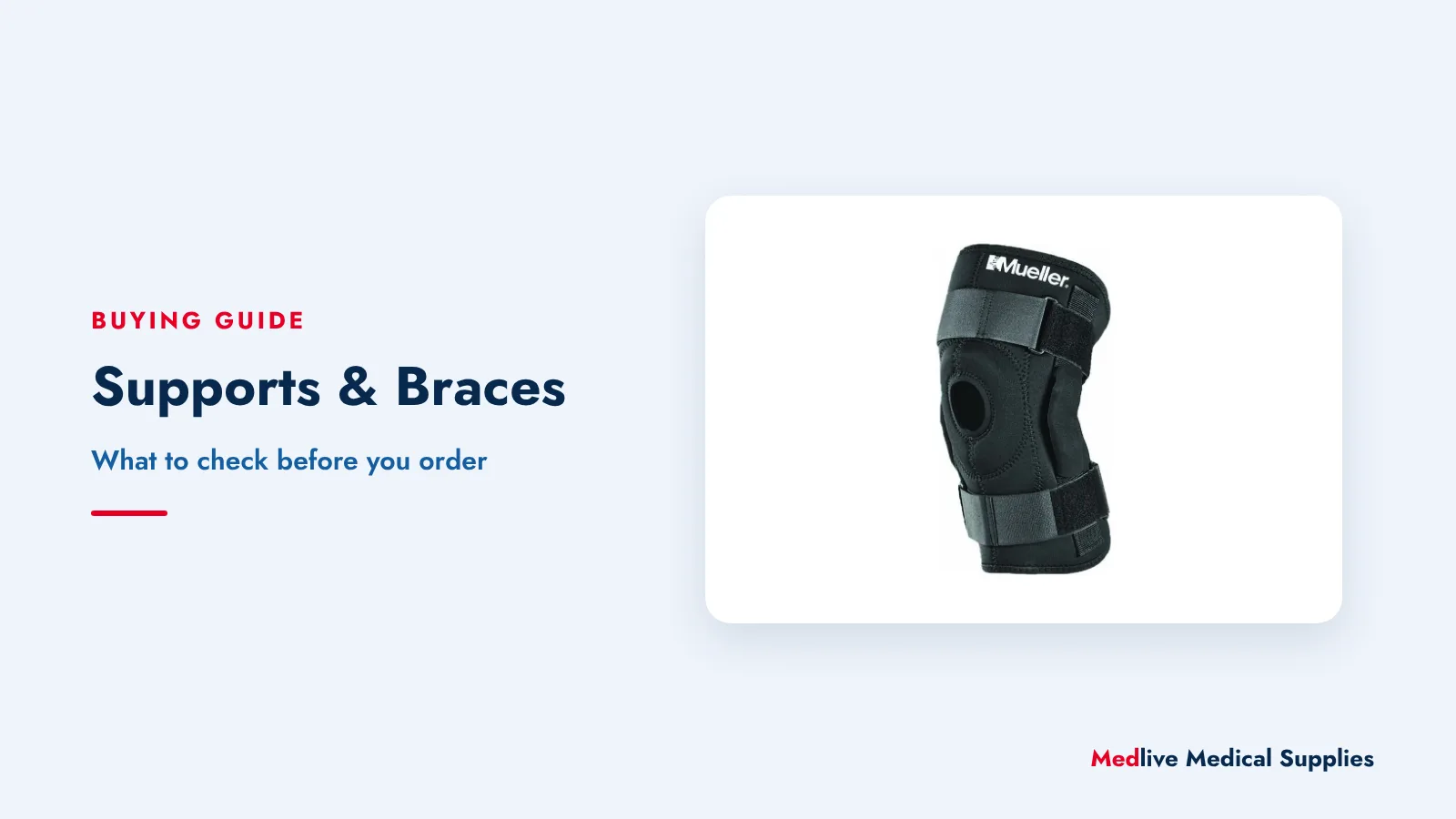
- Knee: sleeves, stabilisers and hinged braces, for example the Mueller Hinged Knee Brace Small (Slip-on), the Mueller Comfort Plus Knee Stabilizer and the Actimove Open Patella Knee Support Small.
- Ankle: soft supports and strapped braces, for example the Mueller Soft Ankle Brace with Straps Small.
- Foot and lower leg: walker boots, for example the Freely Pneumatic Walker Boot Long (43cm) – Medium. Boots come in different heights, so check which height has been recommended.
- Wrist and hand: wrist braces, for example the Mueller Contour Wrist Brace Large Taupe.
- Elbow: straps and supports, for example the Mueller Tennis Elbow Support.
- Back: back supports and belts, for example the Actimove Sport Back Support Medium.
- Shoulder and arm: slings, for example the Hemi Arm Sling Medium Left.
3. Sleeves, straps and hinged braces
Supports are often grouped by how much they restrict movement:
- Sleeves: pull-on supports that give compression and a feeling of support while allowing normal movement.
- Strapped supports: adjustable straps let the wearer change the fit and how firmly the support holds.
- Hinged or rigid braces: side hinges, stays or shells limit certain movements. These are usually chosen on a clinician’s advice.
- Walker boots: rigid frames that hold the foot and ankle. Pneumatic models have air cells that the wearer can inflate for a closer fit.
More support is not automatically better. Follow the treating clinician’s advice on which type to use and for how long.
4. Sizing and left or right items
Most sizing problems come from guessing. To get it right:
- Use the manufacturer’s size chart for that specific product, as sizes are not consistent between brands or even between product lines.
- Measure at the point the chart specifies, for example a set distance above or below a joint, or around the widest part of the limb.
- Measure with a soft tape, without pulling it tight.
- If a measurement falls between sizes, follow the manufacturer’s guidance or ask the clinician.
- Check whether the item is universal or side-specific. Some products, such as certain slings and braces, are made for the left or the right side and must be ordered accordingly.
5. Materials, comfort and skin care
Common materials include neoprene, elastic knit fabrics and breathable mesh panels. Neoprene holds warmth and gives a firm feel; knitted and breathable fabrics can be more comfortable for longer wear and in warm weather. Check the product details for latex content if the wearer has a latex allergy.
Wearers should keep the skin under a support clean and dry and follow the manufacturer’s washing and care instructions. If a support rubs, causes numbness, tingling, swelling or skin irritation, the wearer should stop and seek advice from their clinician.
6. Stocking a practice, pharmacy or sports club
- Stock a run of sizes for the items you dispense most often, rather than many units of one size.
- For side-specific items, order both left and right versions.
- Keep the manufacturer’s size charts available at the counter or in the consulting room.
- Review which sizes sell and adjust reorders accordingly.
For walking aids, wheelchairs and other rehabilitation equipment, see our Mobility & Rehabilitation buying guide.
7. Common mistakes to avoid
- Ordering by usual clothing size instead of measuring.
- Ordering the wrong side for a side-specific item.
- Choosing a rigid brace where a clinician recommended a sleeve, or the reverse.
- Ignoring the care instructions, which can shorten the life of the product.
8. How to order from Medlive
Browse the supports and braces range or the full Mobility & Rehabilitation department. In South Africa, products with verified prices show ZAR prices including VAT and can be added to the cart. Customers in our other markets see “Price on request (USD)” and can submit a Request a Quotation.
Stocking a practice, pharmacy or sports programme? Use Bulk Orders for volume quotations across a size run. Freight is confirmed for each order, and payment is by EFT once the final total has been confirmed in writing. For buyers in other African countries, freight and import paperwork are confirmed on the quotation.