Syringes and needles are among the most frequently ordered items in any clinic, ward or vaccination programme. Because they are used in such large numbers, small decisions about size, connection type and packaging add up quickly, and safe disposal must be planned at the same time. This guide explains what to check when buying from our syringes and needles range and how to order from Medlive.
1. Start with what the facility uses
Which syringe and needle is used for which procedure is a clinical decision that follows your facility’s protocols and the manufacturer’s instructions for use. For purchasing, the most reliable starting point is your current usage: list the sizes, gauges and lengths your teams use, the quantities used per month and any products specified in protocols or tenders. Order to match that list rather than guessing.
2. Syringe sizes and connections
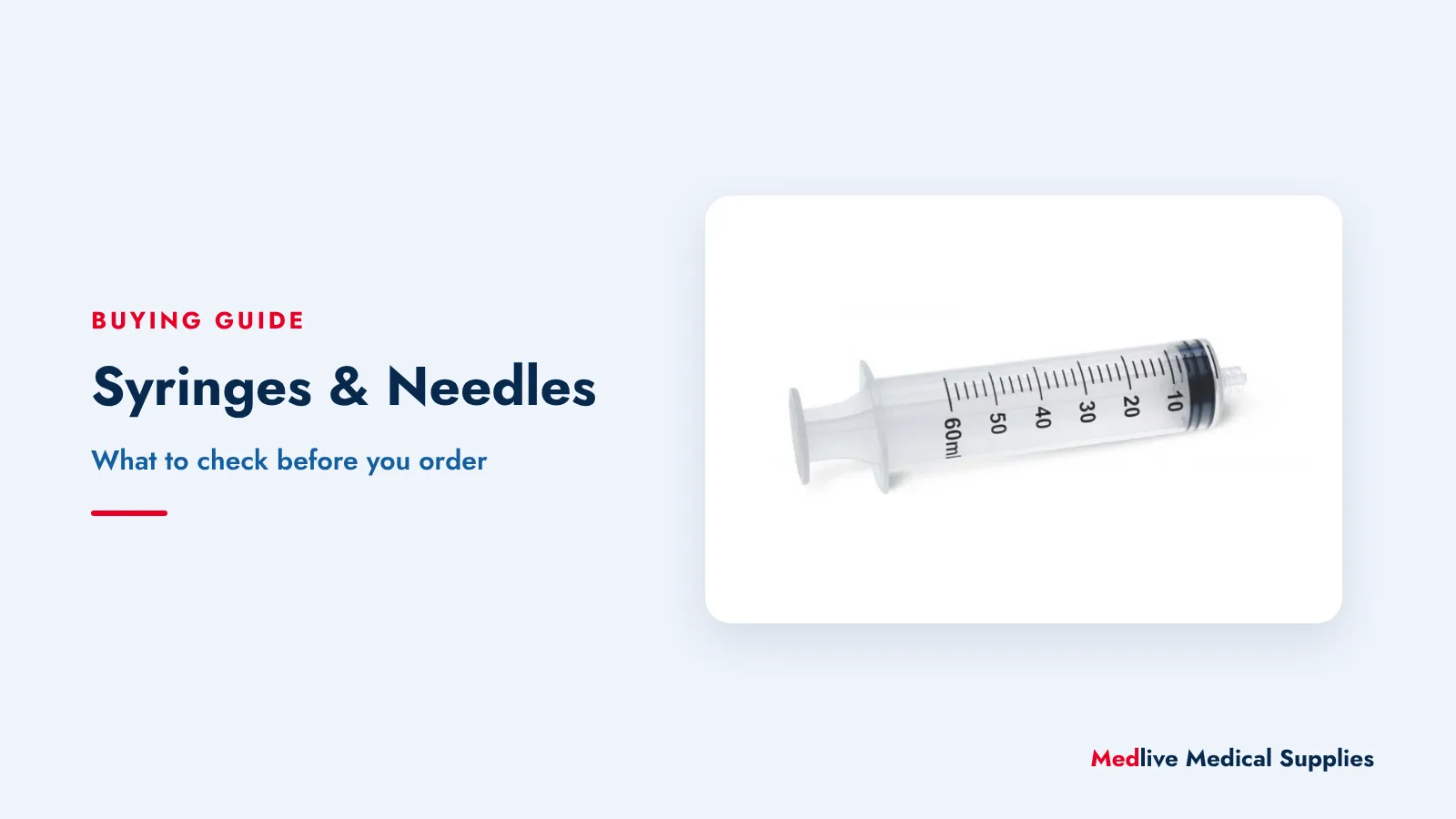
Syringes are sold by capacity, from small sizes for precise doses up to large syringes, for example the 50ml Luer Lock Syringe – Single. Check that the graduations are clear and suit the volumes your teams measure.
The connection between the syringe and the needle or line matters:
- Luer lock syringes have a threaded tip, so the needle or connector twists on and is held securely.
- Luer slip syringes have a smooth tapered tip and the needle pushes on.
Check which type your protocols specify and that it is compatible with the needles, extension sets and other devices you use, including any syringe pumps.
3. Insulin syringes
Insulin syringes are marked in units rather than millilitres and usually have a fine, fixed needle. The range includes, for example, the 0.5ml Insulin Syringe 29G Fixed Needle (Box 100). When ordering, make sure the capacity, unit markings and needle match what has been prescribed and what patients have been taught to use. If you are unsure, check with the prescriber or pharmacist rather than substituting a different size.
4. Needle gauge, length and colour coding
Needles are described by gauge (G) and length. The higher the gauge number, the thinner the needle, so a 25G needle is thinner than a 21G needle. Length is usually stated in millimetres or inches. Our range includes, for example, Hypodermic Needles 21G – Box 100.
The hubs of single-use hypodermic needles are colour coded by size. The international standard ISO 6009 sets out this colour code for identification. Colour helps staff pick the right needle quickly, but always confirm the gauge and length printed on the packaging rather than relying on colour alone, especially when changing supplier.
5. Safety-engineered devices and single use
Safety-engineered syringes and needles include features designed to reduce the risk of needlestick injury, such as shields or retractable needles. If your facility uses or is introducing them, check how the safety mechanism is activated, train staff before switching and make sure the devices are compatible with your other equipment.
Syringes and needles in this range are for single use. Do not reuse or resterilise them, and follow the manufacturer’s instructions for use.
6. Sharps disposal, storage and specialist syringes
Plan disposal at the same time as purchase. Used sharps should go directly into an appropriate sharps container at the point of use. Containers are in our disinfectants and waste range. Some facilities and outreach programmes also use needle and syringe destroyers, for example the Manual Needle & Syringe Hub Destroyer and the Syringe Destroyer Manual 800ml. Follow your facility’s infection-prevention and healthcare waste procedures and your local waste regulations.
For storage:
- Store boxes in a clean, dry place, off the floor and away from direct sunlight.
- Rotate stock so that older batches are used first, and check expiry dates and that packaging is intact before use.
- Order in boxes and cartons that match your usage, so stock is used well before expiry.
Ear syringes and dental syringes are specialist items with different uses from hypodermic syringes. The Ear Syringe and the Dental Syringe in our range should be chosen by the clinician who will use them, and the dental syringe must be matched to the cartridges and needles used in the practice.
Common mistakes to avoid:
- Mixing Luer lock and Luer slip products that are not compatible with your other devices.
- Relying on hub colour without checking the printed gauge and length.
- Ordering syringes and needles without enough sharps containers.
- Over-ordering slow-moving sizes that may expire before use.
For other everyday consumables, see our medical consumables buying guide. The clinic buying checklist helps with wider planning.
7. How to order from Medlive
Browse the syringes and needles range or the full Medical Consumables department. In South Africa, products with verified prices show ZAR prices including VAT and can be added to the cart. Customers in our other markets see “Price on request (USD)” and can Request a Quotation; freight and import paperwork for other African countries are confirmed on the quotation.
Buying by the carton for a hospital, clinic network or vaccination programme? Use Bulk Orders for volume quotations, Quick Order if you know the SKUs, or Tender Enquiry for institutional and government requirements. Freight is confirmed for each order, and payment is by EFT once the final total has been confirmed in writing.