Maternity and newborn equipment supports two patients at once, often in settings where staff, power and space are limited. Whether you are equipping a labour ward, a midwife-led unit, a rural clinic or an outreach programme, careful planning avoids gaps on the day they matter. This guide covers what to decide, what to compare and how to order.
1. Plan around your level of care
Start with the services your facility provides and the protocols it follows. A clinic offering antenatal visits needs different equipment from a unit that conducts deliveries or cares for small and sick newborns. Ask:
- How many antenatal visits and deliveries do you handle each month?
- Which procedures are performed on site, and which cases are referred?
- Is mains power reliable, or do you need battery-operated or non-electric options?
- Who will clean, maintain and repair equipment?
Clinical choices should follow your facility’s protocols and the manufacturer’s instructions for use. This guide covers purchasing considerations only.
2. Fetal monitoring: dopplers and foetalscopes
The Fetal Monitors & Dopplers category includes handheld dopplers such as the Fetal Doppler AD50D and traditional instruments such as the Pinard Aluminium Foetalscope.
- Handheld dopplers: compare the probe type and whether it is fixed or interchangeable, the display, the battery type and running time, and whether ultrasound gel is needed and readily available.
- Pinard foetalscopes: need no power or consumables and are simple to clean, which makes them a useful backup in any facility and a practical choice where power is unreliable.
- Fetal monitors: for continuous monitoring, check the parameters measured, recording or printing options, paper and transducer consumables, and service support.
Our guide to choosing a patient monitor covers many of the same questions about displays, power and consumables.
3. Delivery and maternity supplies
The Delivery & Maternity category includes consumables and instruments such as the Delivery Kit Pack – 10 Piece and Umbilical Cord Scissors, as well as furniture such as the Obstetric Delivery Bed B-48M Fixed Height.
- Delivery kits: check the full list of contents, whether the pack is sterile and single-use, and its expiry date. Make sure the contents match your protocol so staff are not opening extra packs.
- Instruments: confirm whether items are single-use or reusable. Reusable instruments need a cleaning and sterilisation process; see our Autoclaves & Sterilisers range.
- Delivery beds: compare fixed-height and adjustable designs, the positions supported, the mattress and upholstery, safe working load, and the room space needed. Fixed-height beds have fewer moving parts; adjustable beds can reduce strain on staff.
4. Newborn care and incubators
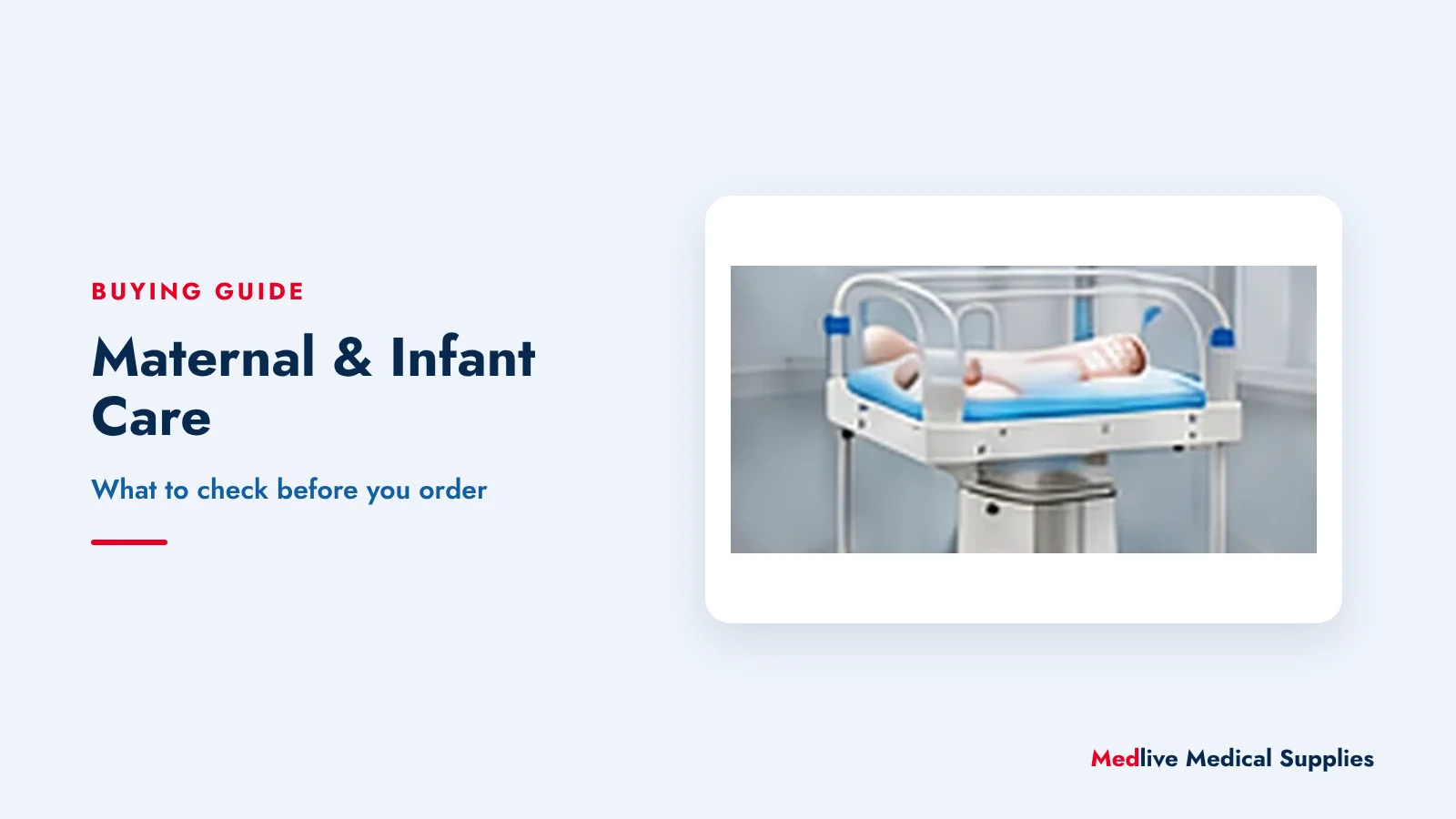
The Infant Care & Incubators category covers equipment for keeping newborns warm, observed and safe. Incubators and warmers are significant purchases, so compare:
- Temperature control and alarms: how the unit is controlled and what alarms it provides.
- Power: the electrical requirements and how the unit behaves during a power interruption.
- Access and visibility: portholes, tray access and how easily staff can observe the baby.
- Cleaning: how the canopy, mattress and humidity components are cleaned and which disinfectants are compatible.
- Service: training for staff, routine maintenance and the availability of spare parts and consumables.
Plan for supporting items too: newborn resuscitation equipment in infant sizes, scales, and suitable thermometers. Infant resuscitation equipment is in the Airway & Resuscitation category.
5. Outreach programmes and NGOs
Community health and outreach programmes often need equipment that is portable, durable and easy to keep clean. Non-electric instruments, battery-powered devices with replaceable batteries and individually packed sterile kits simplify supply chains. When ordering for several sites, standardise on the same models so training, spare parts and consumables are consistent. Our clinic supplies checklist can help you plan a complete order.
6. Common mistakes to avoid
- Buying a device without allowing for its consumables, such as gel, batteries, paper or probes.
- Ordering delivery kits without checking that the contents match your protocol.
- Choosing an incubator without confirming power requirements and service arrangements.
- Relying on a single electronic device with no non-electric backup.
- Overlooking expiry dates on sterile packs when ordering large quantities.
How to order from Medlive
Browse the full Maternal & Infant Care department. Customers in South Africa see verified ZAR prices including VAT where available and can add items to the cart; customers in other countries see price on request (USD) and can request a quotation. Freight is confirmed for each order, and payment is by EFT once the final total has been confirmed in writing. Hospitals, NGOs and health departments equipping several facilities can use bulk orders or submit a tender enquiry. Buyers outside South Africa can read ordering medical supplies outside South Africa.