A microscope and a laboratory freezer are two of the longest-lived purchases in most laboratories. Both are bought once and used daily for years, so it pays to match the equipment to the work before comparing prices. This guide explains the main choices for microscopes, laboratory freezers and the small consumables that go with them, and what to ask before you order. For the wider range of laboratory equipment, see our laboratory equipment buying guide.
1. Start with the work the laboratory does
Before looking at models, write down who will use the equipment and for what. A teaching laboratory with many students has different needs from a routine clinical laboratory, and both differ from a research group storing long-term samples. Useful questions include:
- How many users share each instrument, and how experienced are they?
- Do you need to capture or share images, for example for teaching, reporting or quality records?
- What will be stored in a freezer, at what temperature, and for how long?
- How reliable is the power supply at the site, and what backup is available?
2. Microscopes: monocular, binocular or trinocular
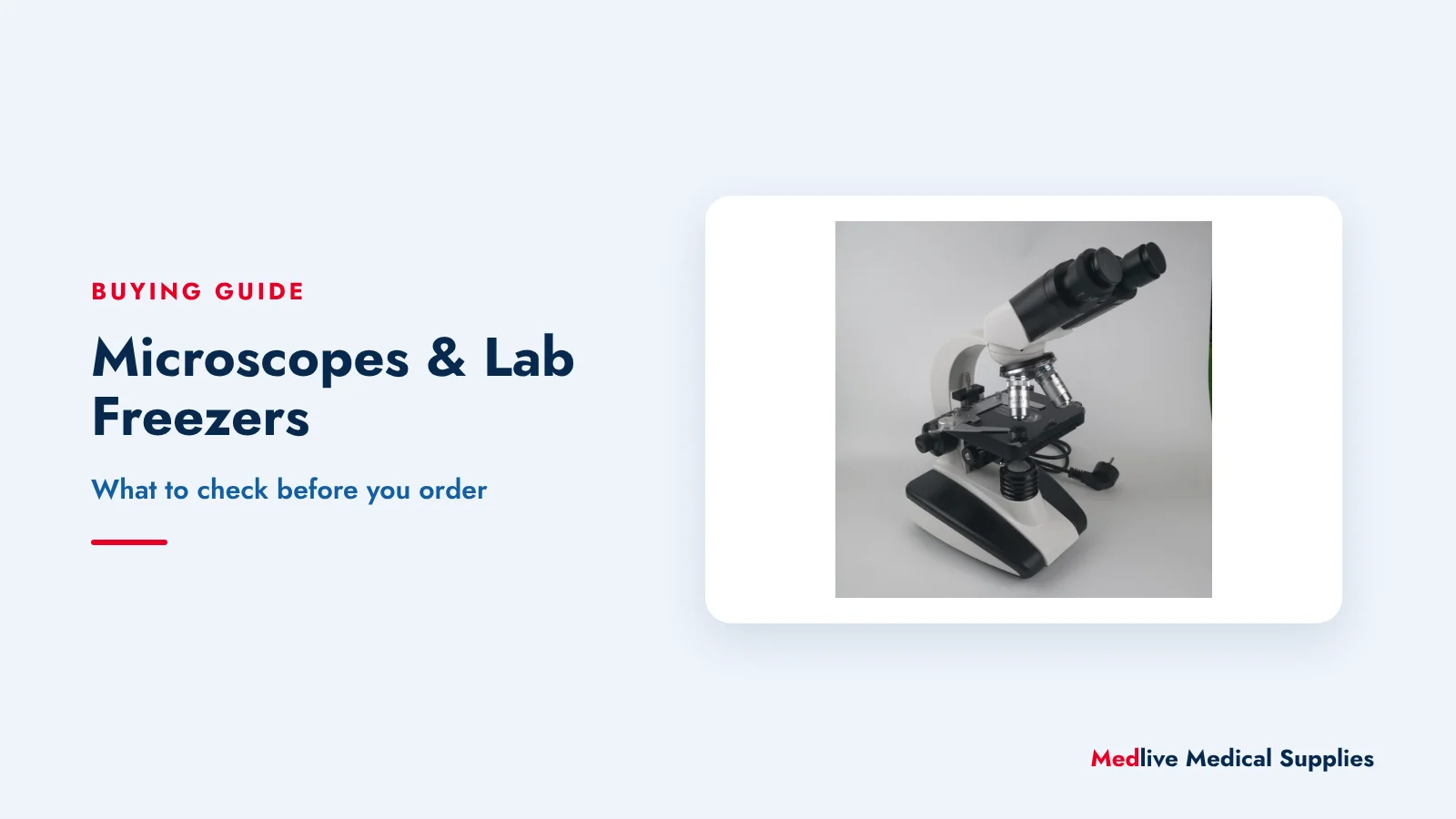
The microscopes range includes, for example, the Monocular Biological Microscope XSP-300D, the Binocular Compound Microscope – LED and the Trinocular Lab Microscope Z110-THD9 Digital. The main difference between them is the viewing head:
- Monocular microscopes have a single eyepiece. They are simple and often chosen for basic teaching and occasional use.
- Binocular microscopes use both eyes, which many users find more comfortable during long sessions at the bench, such as routine slide reading.
- Trinocular microscopes add a third port for a camera, so the image can be viewed on a screen or captured while the user still looks through the eyepieces. A digital model is useful for teaching, second opinions and documentation.
If you plan to add a camera later, check before ordering whether the model has a camera port and what camera adaptor it accepts. Ask us for the manufacturer’s specification sheet rather than assuming.
3. Illumination, objectives, stage and care
Most current laboratory microscopes use LED illumination, which generally runs cooler and needs fewer bulb changes than older halogen lighting. If you already use halogen microscopes, check that spare bulbs remain easy to obtain.
Magnification comes from the combination of eyepieces and objectives. Rather than chasing the highest number, confirm that the objectives supplied suit your methods, including whether an oil-immersion objective is included if your procedures require one. A mechanical stage with fine controls makes it easier to move a slide systematically, which matters for routine work. Compare specifications on the manufacturer’s data sheet, and use our product comparison tool where it helps.
Care: good care extends the working life of the optics. Keep a dust cover on the microscope when it is not in use, clean lenses only with materials and methods the manufacturer recommends, and train users to handle the instrument correctly. In humid conditions, fungus can grow on optics during storage, so store microscopes in a dry, ventilated place and follow the manufacturer’s guidance on storage and servicing.
4. Laboratory freezers: temperature class and capacity
Laboratory freezers are grouped by the temperature they are designed to hold. Our range includes, for example, the Laboratory Deep Freezer -25°C – Medical Grade and the Ultra-Low Freezer -86°C – Sample Storage. The right class depends on what you store: always follow the storage requirements of the samples, reagents or products themselves and your laboratory’s procedures. For vaccines and medicines, follow the manufacturer’s and the relevant health authority’s cold-chain requirements. See the lab refrigeration category for related units.
Points to compare:
- Capacity: estimate current volume and allow room for growth, as overfilling restricts air circulation.
- Alarms and monitoring: ask whether the unit has high and low temperature alarms, door alarms and a way to record or export temperature data for your quality records.
- Power backup: where outages occur, ask us whether the model is suitable for use with your UPS or generator, and plan what happens to samples during a long outage.
- Placement: freezers need space around them for ventilation. Check the room size, floor loading, doorway widths and ambient temperature before delivery.
- Door openings: frequent openings let warm air in. Organise contents so users can find items quickly.
5. Small lab consumables
Consumables are easy to overlook until they run out. The lab consumables range includes, for example, Transfer Pipettes 50µL Graduated – Box 50. Estimate monthly usage per bench, check pack quantities, and order consumables alongside equipment so work is not delayed. If your laboratory also needs sample processing equipment, read our centrifuges and analysers buying guide.
6. Common mistakes to avoid
- Buying a monocular microscope for heavy routine use when users would be more comfortable with a binocular head.
- Choosing a freezer without confirming alarms, data logging and how it will be powered during an outage.
- Forgetting that a freezer needs ventilation space and a suitable electrical point.
- Ordering equipment without the consumables and spares needed to use it.
7. How to order from Medlive
Browse the laboratory equipment department and the microscopes category. Customers in South Africa see verified ZAR prices including VAT where available and can add items to the cart. Customers in other African countries see Price on request (USD) and can request a quotation; freight and import paperwork are confirmed on the quotation. For several instruments or larger consumable volumes, use bulk orders. Hospitals, universities, NGOs and government laboratories can submit requirements through a tender enquiry. Payment is by EFT once the final total, including freight, has been confirmed in writing.