Oxygen therapy equipment is used in hospitals, clinics, ambulances and, increasingly, at home. Whatever the setting, oxygen is prescribed by a healthcare professional, who decides the flow rate, the delivery device and how long it is used. This guide explains the choices a buyer has to make once that prescription or clinical protocol is in place: which source of oxygen, which accessories and what to plan for. It does not give clinical advice; always follow the prescriber’s instructions, your facility’s protocols and the manufacturer’s instructions for use.
1. Concentrator or cylinder?
There are two common sources of medical oxygen in clinics and homes, and many users need both.
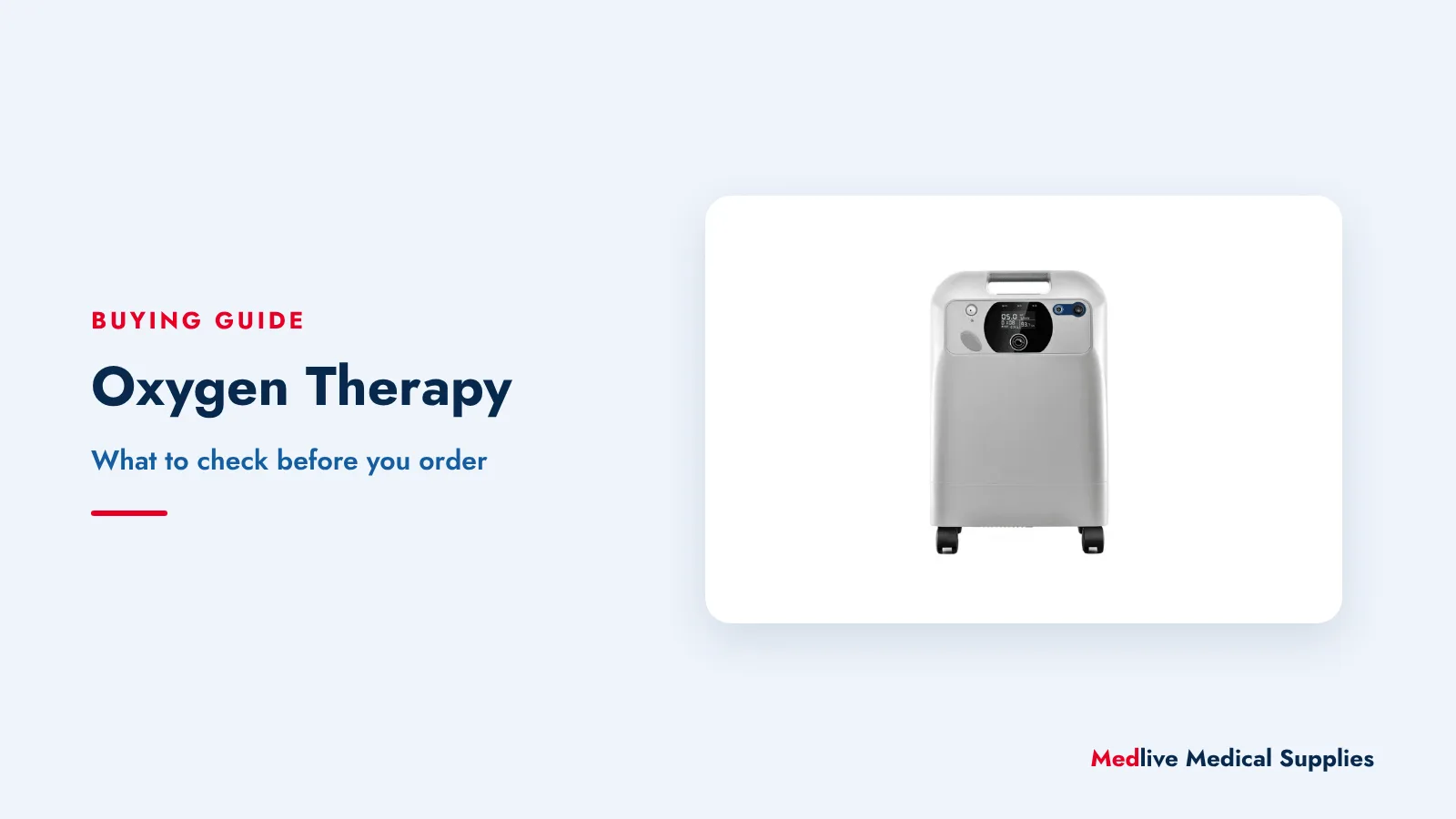
- Oxygen concentrators draw in room air and separate out oxygen, so they do not need refilling. They need electricity, produce some noise and heat, and have a maximum flow rate set by the model. The oxygen therapy range includes, for example, the Oxygen Concentrator Contec OC5B – 5L and the Oxygen Concentrator 10L/min – Dual Flow.
- Oxygen cylinders store compressed oxygen and work without power, which makes them suitable for backup, transport and emergencies. They must be refilled or exchanged, which means planning for a gas supplier. The range includes, for example, the 10L Oxygen Cylinder with Pin Index Valve.
Where the power supply is unreliable, including during load-shedding, plan a backup before you need it. A cylinder with a matching regulator, or a concentrator with a suitable backup power arrangement confirmed with the manufacturer, keeps oxygen available during an outage. Discuss the backup plan with the prescriber or facility.
2. Matching flow rate and flow type
The most important specification on a concentrator is its maximum flow rate in litres per minute (L/min). Choose a unit whose rated range comfortably covers the flow that has been prescribed, rather than one that would have to run at its limit. Other points to compare:
- Single or dual flow: a dual-flow concentrator can supply two outlets, which may suit wards or clinics. Check how the total flow is shared between outlets.
- Oxygen purity indicator and alarms: many concentrators monitor the oxygen concentration they deliver and alarm if it falls, or if there is a power failure or blocked flow. Ask what alarms the model has.
- Portable concentrators: battery-powered units, for example the LoveGo G1 Portable Oxygen Concentrator 5L, give mobility. Portable units may deliver continuous flow, pulse flow (oxygen delivered as the user breathes in) or both. Pulse settings are not the same as L/min on continuous flow, so confirm with the prescriber that the delivery mode is suitable before buying.
- Running considerations: filters to clean or replace, servicing intervals, noise level and the space needed around the unit for ventilation.
3. Regulators, valves and flowmeters
A cylinder needs a regulator to reduce the pressure and control the flow. The regulator must match the cylinder’s valve type. For example, the Oxygen Regulator CGA870 Pin Index 0-15L is designed for pin index valves such as the one on the 10L Oxygen Cylinder with Pin Index Valve. Before ordering, check the valve type on the cylinders you already use or will be supplied with, and ask us to confirm compatibility on the quotation.
In wards with piped oxygen, a wall flowmeter is used instead. The range includes, for example, the Oxygen Flowmeter Single Tube FM4548-S. Confirm the connection type used at your wall outlets, the flow range and whether a humidifier bottle is required by your protocols.
4. Masks, cannulas and other delivery devices
The delivery device is chosen by the clinician according to the patient’s needs. Buyers should make sure the right types and sizes are stocked:
- Nasal cannulas for lower flows and comfort during eating and talking.
- Simple and non-rebreather masks, for example the Non-Rebreather Oxygen Mask Adult, often used in emergency settings.
- Venturi masks, for example the Venturi Oxygen Mask with Tubing and 6 Diluters, which use colour-coded diluters to deliver set oxygen concentrations.
- Tubing and connectors of suitable length, plus adult and paediatric sizes where both patient groups are treated.
Most of these items are single-patient use, so order in quantities that match your patient numbers and follow the manufacturer’s instructions for replacement.
5. Fire safety basics
Oxygen does not burn by itself, but it makes other materials catch fire more easily and burn faster. Whoever uses or stores the equipment should know the basics:
- Never smoke, or allow anyone to smoke, near oxygen equipment.
- Keep equipment away from open flames, candles, cookers and heaters.
- Keep oxygen away from oil-based creams, aerosols and other flammable products.
- Use oxygen in a well-ventilated room and turn it off when it is not in use.
- Store cylinders upright and secured so they cannot fall.
Follow the manufacturer’s instructions and any local fire-safety guidance for medical oxygen.
6. Common mistakes to avoid
- Buying a concentrator whose maximum flow is too close to the prescribed flow.
- Ordering a regulator that does not match the cylinder valve.
- Having no backup supply for power outages.
- Forgetting consumables: masks, cannulas, tubing and filters.
- Not checking the supplier. Read how to check a medical device supplier with SAHPRA.
For ventilation, suction and nebulisation equipment, see our respiratory equipment buying guide. To compare models, use the product comparison tool.
7. How to order from Medlive
Browse the oxygen therapy sub-category or the full Respiratory Equipment department. In South Africa, products with verified prices show ZAR prices including VAT and can be added to the cart. Customers in other countries see “Price on request (USD)” and can submit a Request a Quotation; freight and import paperwork are confirmed on the quotation.
Equipping a ward or several sites? Use Bulk Orders for volume quotations, or Tender Enquiry for institutional and government requirements. Payment is by EFT once the final total has been confirmed in writing.