Every clinic, ward, school sickbay and workplace first-aid room needs a dependable supply of dressings. The choice of dressing for a particular wound is a clinical decision, made by a trained person following the facility’s protocols and the manufacturer’s instructions for use. The purchasing task is different: building a sensible, well-organised range so the right products are available when they are needed. This guide explains the main product groups in our wound dressings range and how to stock them efficiently.
1. Gauze swabs and cotton wool
Gauze swabs are the most frequently used item in most wound care cupboards. When comparing them, check:
- Size: for example 100mm x 100mm, with smaller sizes for minor wounds and larger ones for padding.
- Ply: the number of folded layers. Higher ply, such as 8-ply, is thicker and more absorbent.
- Sterile or non-sterile: sterile swabs are individually or small-pack wrapped for procedures and open wounds; non-sterile swabs, such as the Gauze Swabs 100mm x 100mm 8-Ply Non-Sterile – Pack 100, are used for general cleaning and padding where protocols allow.
Cotton wool, for example the Cotton Wool BP 500g Roll, is useful for general cleaning and padding but sheds fibres, so it is generally not placed directly on open wounds. Follow your facility’s protocols.
2. Non-adherent, film and foam dressings
- Paraffin gauze: a gauze impregnated with soft paraffin, designed to reduce sticking to the wound bed. The Paraffin Gauze Dressing is an example; it is usually covered with a secondary absorbent dressing.
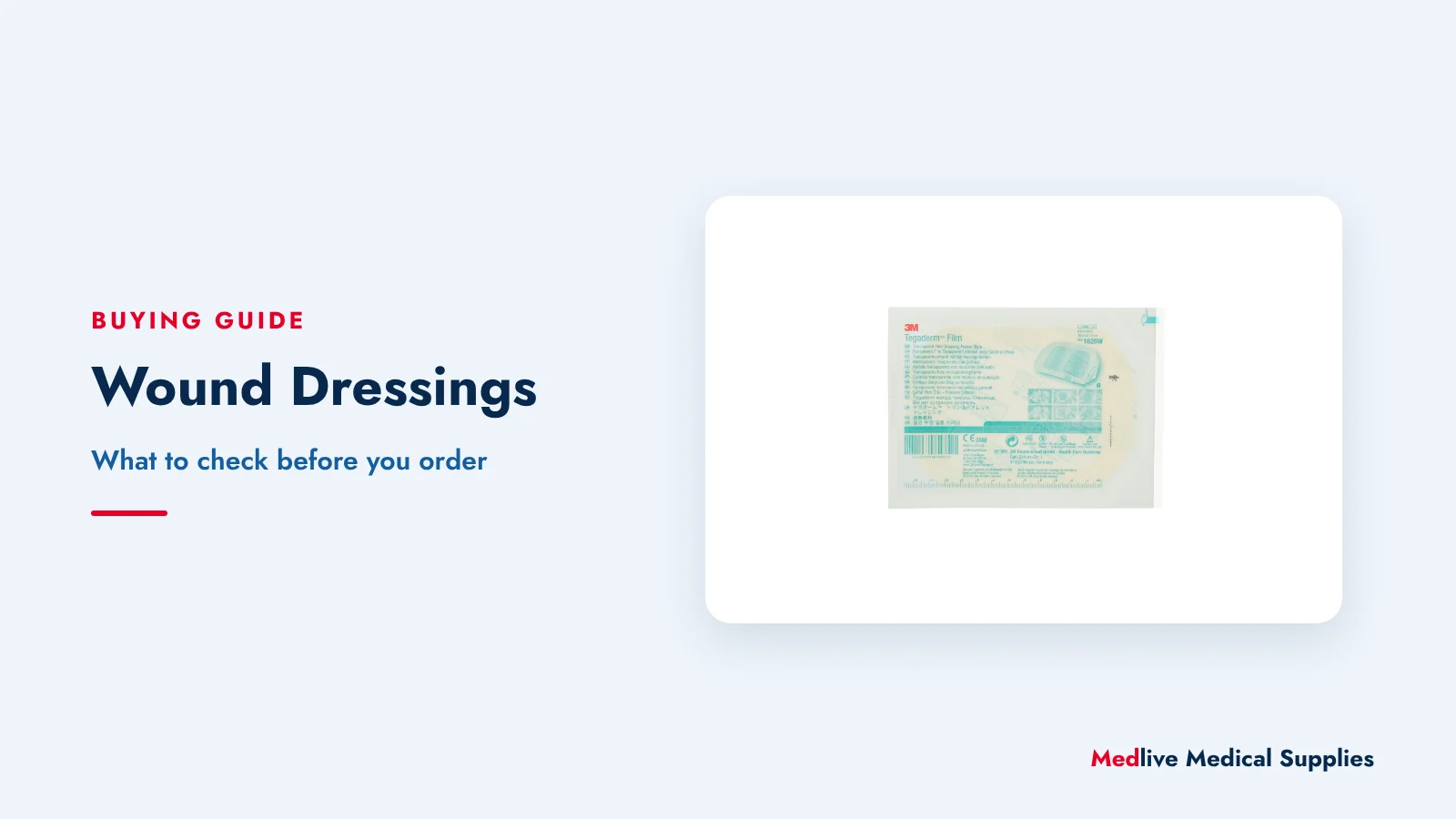
- Transparent film dressings: thin, see-through adhesive films that allow the site to be observed. They are widely used to cover and secure IV cannula sites. Some include an absorbent pad. Examples include the 3M Tegaderm 1626W Transparent Film Dressing 10cm x 12cm and the 3M Tegaderm 5cm x 7cm Film Dressing with Pad – Single.
- Foam dressings: absorbent foam pads, often with a gentle silicone adhesive border that is designed to be removed with less disturbance to the surrounding skin. The Silicone Adhesive Foam Dressing – 10cm x 10cm is an example.
When adding advanced dressings to a formulary, agree with the clinical lead which sizes are actually needed. Stocking every size of every type ties up budget and increases expiry losses.
3. Wound closure strips and burn dressings
Adhesive wound closure strips, such as the Wound Closure Strips – Steri-Strip 6mm x 75mm Box, are used by trained staff to hold the edges of minor wounds together. Stock the widths your team uses.
Burn dressings and gels are standard items in first-aid kits and emergency rooms. The Burnshield Burn Dressing 10x10cm – Sterile is one example in the range. Keep a few sizes, check the packaging is intact, and follow the manufacturer’s instructions and your first-aid training.
4. Cleansing and skin preparation
Wound irrigation and cleansing solutions, such as the B Braun Biotaine Wound Irrigation 500ml, are used to rinse wounds according to protocol. Check the bottle size against how quickly an opened bottle will be used, and note any instruction on how long it may be used after opening.
Alcohol swabs, for example the Alcohol Swabs Box 200, are intended for preparing intact skin before injections and procedures and for cleaning some equipment surfaces. They should not be used on open wounds unless the product’s instructions say so.
5. Building a clinic formulary
A short, agreed list of dressings is easier to buy, store and use correctly than a long one. Practical steps:
- Start from activity: estimate weekly use of each item from records or recent orders, then set minimum and reorder levels.
- Choose pack sizes carefully: single dressings suit kits and low-use items; boxes suit high-use items. Breaking open a large box that will expire before it is used is not a saving.
- Sterile packaging: store sterile items in their outer packaging, in a clean, dry place away from direct sunlight and heat, and discard any with damaged packaging.
- Expiry control: rotate stock first-expiry, first-out, and check dates during regular stock counts.
- Complete the system: dressings usually need something to hold them in place. See our bandages and tapes and plasters ranges.
Our clinic supplies checklist helps you plan wound care alongside the rest of a clinic’s consumables.
6. Mistakes to avoid
- Ordering non-sterile products where your protocols require sterile ones.
- Buying advanced dressings in sizes nobody uses.
- Letting a single bulk order expire on the shelf.
- Forgetting secondary dressings, tapes and bandages.
For the wider range, see our wound care buying guide.
7. How to order from Medlive
Browse the dressings range or the full wound care department. South African customers see verified ZAR prices including VAT where available and can add items to the cart; customers in other African countries see “Price on request (USD)” and can request a quotation, with freight and import paperwork confirmed on the quote. Clinics, NGOs and hospitals replenishing regularly can use bulk orders, and institutional buyers can submit a tender enquiry. Payment is by EFT once the final total is confirmed in writing.