A wheelchair that fits the user and the setting makes daily life safer and easier; one that does not can cause discomfort, pressure problems and falls, and may simply go unused. This guide explains the main types in our wheelchairs and mobility scooters range, how to measure for a chair and what to check before ordering.
Wherever possible, base the choice on an assessment by an occupational therapist, physiotherapist or other qualified professional. This guide covers purchasing considerations only.
1. Choose the type of chair
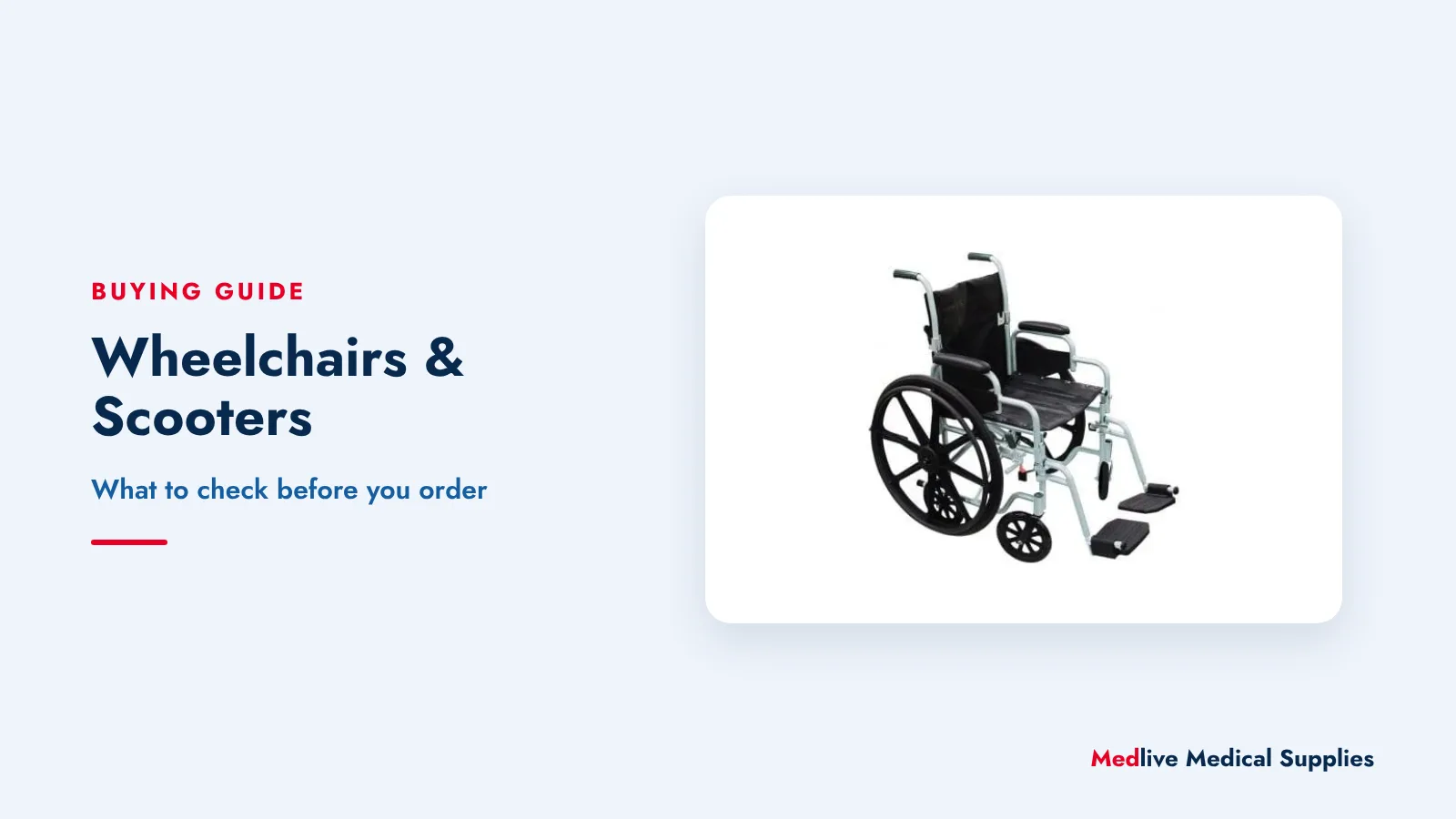
- Self-propelled wheelchairs have large rear wheels with push rims, so the user can move the chair independently. Examples include the Wheelchair Steel Nylon Fixed Arm and Foot Basic Model.
- Transit (attendant-propelled) wheelchairs have small rear wheels and are pushed by a carer. They are lighter and more compact, which suits hospital transfers, outings and car transport. An example is the Wheelchair Lightweight Aluminium – Transit.
- Electric wheelchairs, for example the Electric Wheelchair DW-710, are powered and controlled by the user, usually with a joystick. They suit users who cannot self-propel for long distances, but they are heavier and need charging.
- Mobility scooters, for example the Chair Scooter FS141, suit users who can walk short distances and transfer on and off a seat but need help over longer distances.
- Commode wheelchairs, for example the Wheelchair Commode with Removable Pail, combine seating and toileting and are often used in care homes, wards and home care.
2. Measure the user
Measure with the user seated, in the clothing they usually wear:
- Seat width: measure across the widest part of the hips or thighs and compare it with the seat width in the specification. Too narrow causes pressure; too wide makes self-propelling harder and the chair wider in doorways. Larger users may need an extra-wide model, for example the Wheelchair Steel Nylon Extra Wide Detachable Armrests.
- Seat depth: measure from the back of the buttocks to the back of the knee. The seat should support the thighs without pressing behind the knee.
- Footrest and seat height: the feet should rest on the footplates with the thighs supported.
- User weight: confirm the maximum user weight stated by the manufacturer and choose a chair rated above the user’s weight.
3. Armrests, footrests and other features
- Fixed armrests and footrests are simple and robust, with fewer parts to loosen or lose.
- Detachable or swing-away armrests and footrests make side transfers to a bed, toilet or car easier, and make the chair easier to store and transport.
- Check the brakes, the tyre type (solid or pneumatic), whether the chair folds, and whether a pressure-care cushion will be needed. A cushion should be chosen with the therapist’s advice.
4. Steel or aluminium
Steel frames are generally robust and lower in cost but heavier. Aluminium frames are lighter, which helps carers lifting chairs into vehicles and users who self-propel. Compare the chair’s weight in the specification with the person who will be lifting it, and check the folded dimensions against the vehicle or storage space.
5. Children’s wheelchairs
Children need chairs sized for them rather than small adult chairs. The range includes, for example, the Wheelchair Child Steel Fixed Arm – 35cm, where the measurement in the name indicates the size. Measure the child as above, and plan for review as they grow. A therapist should guide postural support and seating needs.
6. Terrain, storage and transport
- Consider where the chair will be used: smooth hospital floors, paved paths, gravel, sand or rough rural roads. Larger wheels and suitable tyres cope better outdoors.
- Check doorway widths, ramps and turning space at home or in the facility.
- For electric chairs and scooters, ask about battery type, charging, and the availability of spare batteries and parts, and confirm airline or vehicle transport requirements before travel.
7. Facility use or personal use
Hospitals, clinics and care homes often need a pool of standard and transit chairs for transfers, plus a few extra-wide and paediatric chairs. Choose durable frames with easy-to-clean surfaces, label chairs for asset tracking, and plan regular checks of brakes, tyres and upholstery. A personal chair should be fitted to one user after assessment.
For walking frames, crutches and rollators for users who do not need a wheelchair full time, see walking aids. For the wider range, see our mobility and rehabilitation buying guide, and use product comparison to compare models side by side.
8. How to order from Medlive
Browse the wheelchairs and scooters sub-category or the full Mobility & Rehabilitation department. In South Africa, products with verified prices show ZAR prices including VAT and can be added to the cart. Customers in our other markets see “Price on request (USD)” and can submit a Request a Quotation; freight and import paperwork are confirmed on the quotation.
Equipping a ward, care home or programme? Use Bulk Orders for volume quotations, or Tender Enquiry for institutional and government requirements. Freight is confirmed for each order, and payment is by EFT once the final total has been confirmed in writing.