Listening to the fetal heart is a routine part of antenatal care and labour. The equipment used ranges from a simple Pinard foetalscope to a handheld Doppler and a cardiotocography (CTG) fetal monitor. This guide is for clinics, midwifery practices, maternity units and NGO programmes. It explains the main types in our fetal monitors and dopplers range, what to check before buying and how to order from Medlive.
1. Equipment for trained health workers
Fetal dopplers and monitors are intended for use by trained midwives, nurses and doctors who can interpret what they hear and see and act on it. How and when fetal heart monitoring is carried out is a clinical decision that should follow your facility’s protocols and national guidelines.
A note on home use: health services, including the NHS in the UK, advise expectant parents not to use home dopplers or phone apps to check the baby’s heartbeat for reassurance, because hearing a heartbeat does not mean the baby is well. Anyone worried about their baby, including a change in the baby’s movements, should contact their midwife, doctor or maternity unit straight away.
2. Pinard foetalscopes
The Pinard foetalscope is a simple trumpet-shaped listening device placed on the mother’s abdomen. It needs no batteries or gel, which makes it useful as a backup and in settings without reliable power. The Pinard Aluminium Foetalscope is an example in our range. Material matters for cleaning: metal and plastic versions are easier to wipe down between patients than some other materials. Using a Pinard well takes practice, so it suits experienced practitioners and training programmes.
3. Handheld fetal dopplers
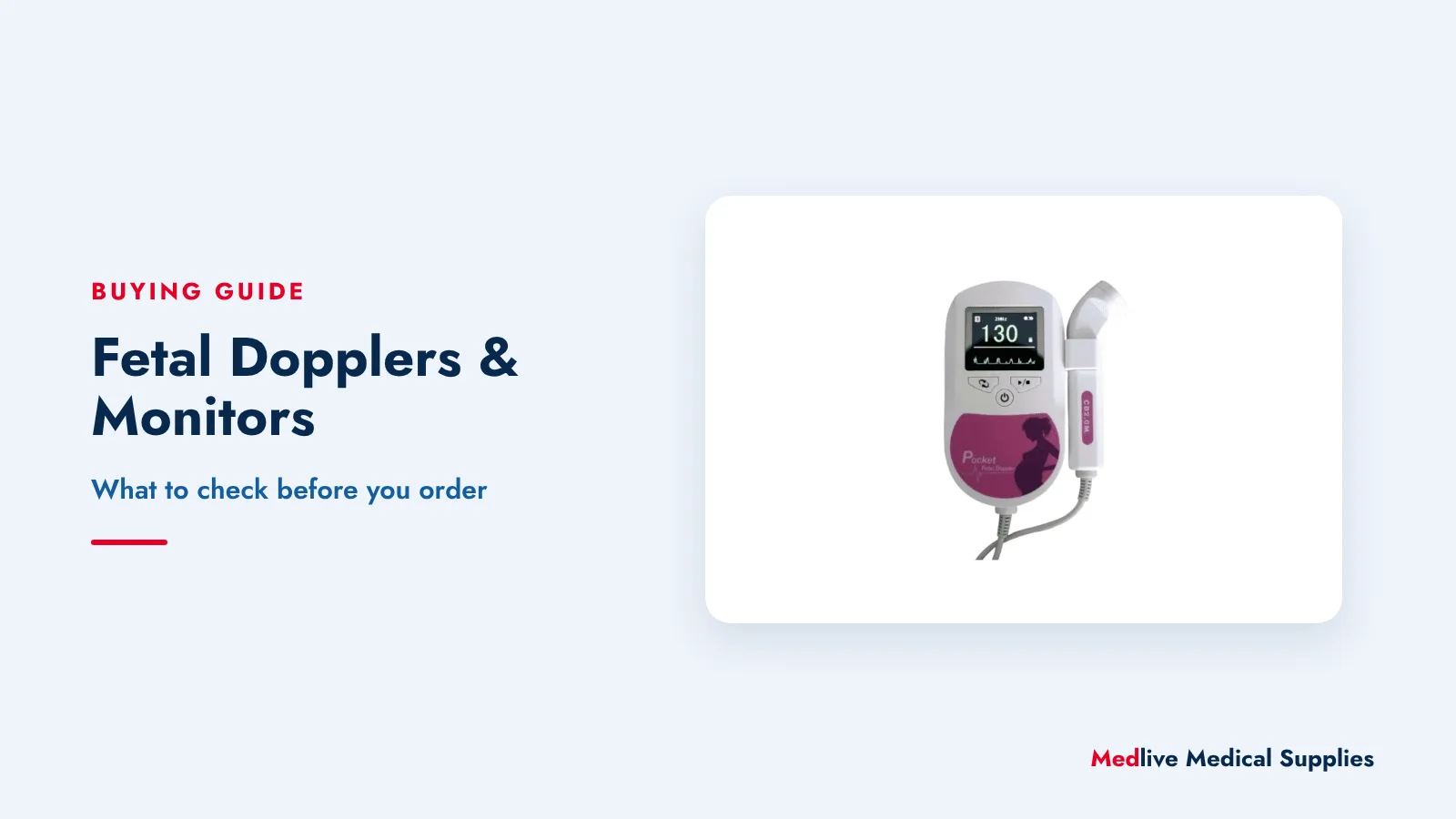
Handheld Doppler units use ultrasound to detect the fetal heartbeat and play it through a speaker, and many models also display a heart rate. The range includes, for example, the Fetal Doppler Sonoline C1, the Fetal Doppler BF600+ and the Fetal Doppler AD51D. When comparing models, check:
- Probe: whether the probe is fixed or detachable, and whether alternative probes are available. Ask the supplier which probe is included and what it is intended for.
- Display and sound: a clear, readable display and adequate speaker volume for your consulting rooms. Some models also have a headphone socket.
- Power: disposable or rechargeable batteries, battery life and how the unit is charged. In areas with unreliable power, keep spare batteries or a charging plan.
- Waterproofing: if the probe will be used in water or wiped frequently, check the manufacturer’s rating and cleaning instructions.
- Ultrasound gel: order enough gel for your patient volumes.
4. CTG fetal monitors
A cardiotocography (CTG) monitor records the fetal heart rate and uterine contractions at the same time. The fetal heart rate is picked up with an ultrasound transducer and contractions with a tocodynamometer (toco) transducer, both held in place with belts. The trace is shown on screen and usually printed on thermal paper. The Fetal Monitor CMS800G is an example in our range.
When specifying a CTG monitor, check:
- Whether it monitors one fetus or twins, and which parameters are included.
- The printer, the paper type and size, and the ongoing cost of paper.
- Data storage, transfer or connection options, if your unit records traces electronically.
- Battery backup and mains power requirements.
- The availability of transducers, belts and other accessories.
Transducers are handled constantly and are a common replacement item. Replacement parts such as the CTG Toco Transducer Replacement – Compatible must match the monitor model and connector. Give us the monitor’s make and model, and check compatibility with the manufacturer’s information before ordering.
5. Cleaning, maintenance and training
- Clean between patients: remove gel and clean probes, transducers and belts using products the manufacturer permits, following your infection-control procedures.
- Inspect cables and probes for cracks or damage, and replace damaged parts.
- Plan servicing: ask how CTG monitors are serviced and checked, and keep records.
- Train users: staff should be trained in using the equipment and interpreting results according to your facility’s protocols.
6. Buying for a clinic or maternity unit
A typical antenatal clinic may need several handheld dopplers plus Pinard foetalscopes as a backup. A labour ward may need CTG monitors with spare transducers, belts and paper. Consumables such as gel and printer paper are easy to overlook; include them in your order. Related delivery equipment is in our delivery and maternity range, and you can compare models with our product comparison tool. For the wider range, see our maternal and infant care equipment buying guide.
7. How to order from Medlive
Browse the fetal monitors and dopplers range or the full Maternal & Infant Care department. In South Africa, products with verified prices show ZAR prices including VAT and can be added to the cart. Customers in our other markets see “Price on request (USD)” and can Request a Quotation; freight and import paperwork for other African countries are confirmed on the quotation.
Equipping several clinics or a maternity unit? Use Bulk Orders for volume quotations, or Tender Enquiry for institutional and government requirements. Freight is confirmed for each order, and payment is by EFT once the final total has been confirmed in writing.