A walking aid is one of the simplest pieces of mobility equipment a person can use, but the right type, height and fit make a real difference to confidence and safety. This guide explains the main types of walking aid, what to check before buying and how to order from Medlive for a clinic, care home, hospital or home user.
1. Start with the user’s assessment
The choice between a stick, crutches, a frame or a rollator depends on how much support the person needs, their balance, their strength and where they will be walking. That decision should come from the physiotherapist’s or occupational therapist’s assessment, or the facility’s own protocol. Before ordering, note:
- The type of aid recommended and whether it is for short-term use (for example after an injury or operation) or long-term use.
- The user’s height and weight, so you can check the adjustment range and the maximum user weight stated by the manufacturer.
- Where it will be used: indoors only, outdoors on uneven ground, or both.
- Transport and storage: whether it needs to fold into a car boot or a small room.
2. Walking sticks and canes
Walking sticks give light support and help with balance. Adjustable aluminium sticks, for example the Cane Walking Stick Aluminium Adjustable in our walking aids range, can be set to different heights, which makes them practical for clinics and loan stores that issue aids to several people. Check the handle shape for comfort and grip, the adjustment mechanism, and that a rubber tip (ferrule) is fitted.
White canes for people who are blind or partially sighted, such as the Walking Stick for the Blind FS936L, serve a different purpose: they help the user detect obstacles and signal visual impairment to others. They are generally used alongside orientation and mobility training, so involve the user’s rehabilitation or vision support service when choosing one.
3. Crutches: elbow and underarm
Crutches take more weight off a leg than a stick and are often issued after injury or surgery.
- Elbow (forearm) crutches, for example the Elbow Crutches Medium – Pair, have a cuff around the forearm and a hand grip. They are usually height-adjustable and are commonly supplied in pairs. Check the size range against the user’s height.
- Underarm crutches, for example the Wooden Crutch FS935, have a pad that sits against the side of the chest below the armpit. Adjustment usually covers both the overall length and the hand-grip position.
Which type suits a person, and how much weight they may put through the leg, is a clinical decision. Ask the therapist, and follow the manufacturer’s instructions for setting up the crutches.
4. Walking frames, rollators and shoppers
Frames give the most support of the common walking aids.
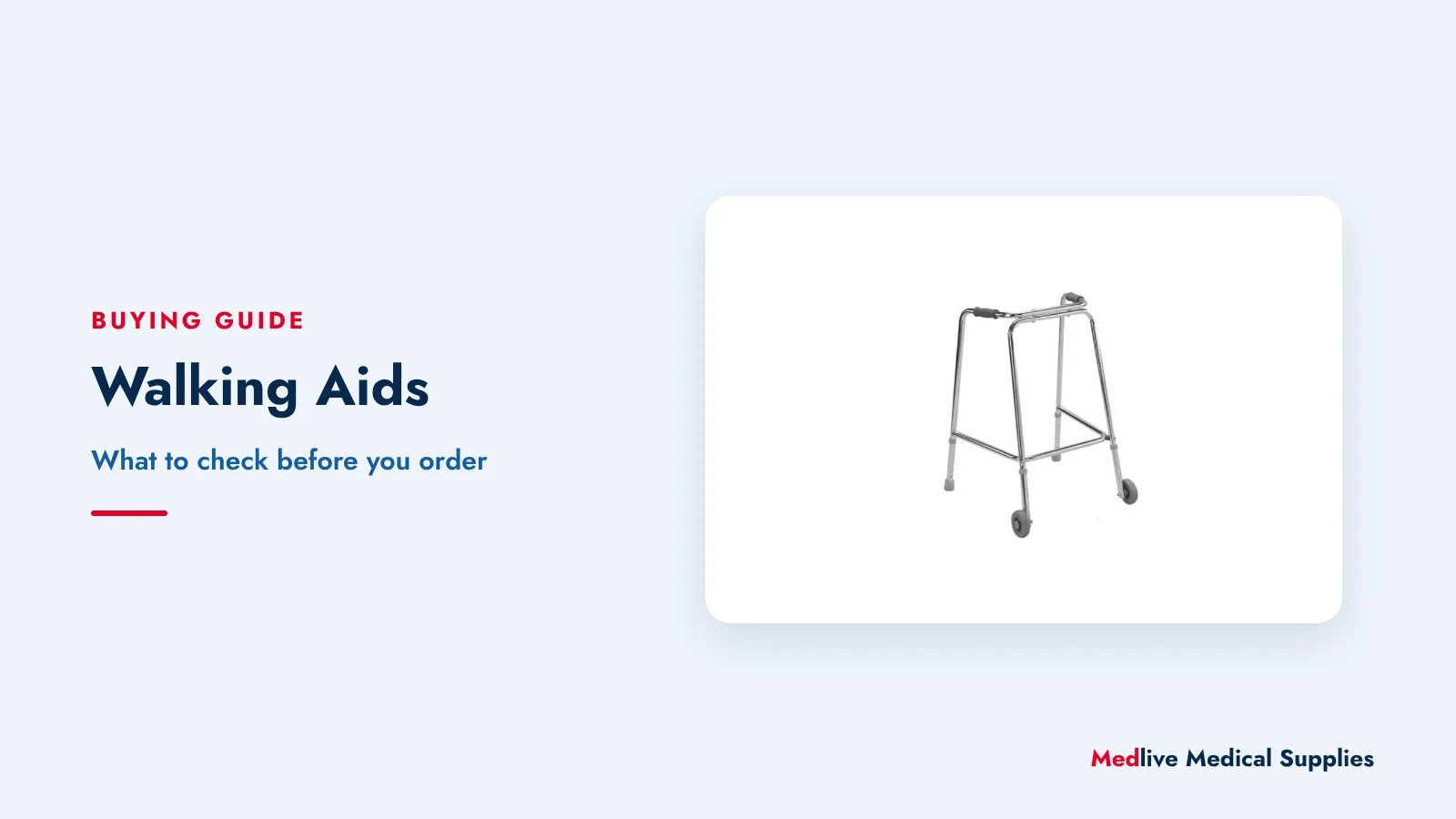
- Standard (pulpit) frames have four legs with ferrules and are lifted forward with each step. Folding versions, for example the Pulpit Folding Walking Frame FS913L, are easier to store and transport.
- Front-wheeled frames, for example the Front Wheeled Rollator Walking Frame FS918L, have wheels on the front legs so the frame can be pushed rather than lifted.
- Rollators and shoppers have wheels on all legs and usually hand brakes, and may include a seat, basket or bag. The Aluminium Quad Shopper FS965LH is an example. Check how the brakes work and lock, whether the user can operate them comfortably, the seat height and the maximum user weight.
Wheeled frames move more freely than standard frames, which suits some users and not others, so follow the therapist’s recommendation. If a user needs more support than a frame can provide, our wheelchair buying guide and the wheelchairs and scooters range may be relevant.
5. Height, fit and maintenance
An aid set at the wrong height can be uncomfortable and less safe. NHS patient guidance gives a common starting check: with the user standing upright and arms relaxed by their sides, the handle of a stick or frame should be roughly level with the crease of the wrist. Treat this as a general guide only. The therapist should confirm the final setting, especially for crutches, which are set up differently.
For ongoing use:
- Check ferrules regularly. Rubber tips wear down and lose grip. Keep spare ferrules in the correct diameter for each model.
- Check adjustment buttons, clips and joints to make sure they are secure and not loose or wobbly.
- Check wheels and brakes on rollators and front-wheeled frames.
- Clean shared aids between users according to the manufacturer’s instructions and your facility’s infection-control procedures.
6. Buying for a clinic, ward or loan store
Hospitals, physiotherapy practices, NGOs and community programmes often keep a stock of walking aids to issue or lend. Adjustable aluminium models help a smaller stock cover more users. Plan a mix of sticks, elbow crutches in different sizes, and standard and wheeled frames, and order spare ferrules at the same time. Use our product comparison tool to compare models side by side, and see the clinic buying checklist for wider planning.
Common mistakes to avoid:
- Choosing an aid without a therapist’s assessment.
- Not checking the maximum user weight and height range.
- Buying a wheeled frame or rollator for a user who cannot manage the brakes.
- Forgetting spare ferrules and replacement parts.
For the wider range, see our mobility and rehabilitation equipment buying guide.
7. How to order from Medlive
Browse the walking aids range or the full Mobility & Rehabilitation department. In South Africa, products with verified prices show ZAR prices including VAT and can be added to the cart. Customers in our other markets see “Price on request (USD)” and can Request a Quotation; freight and import paperwork for other African countries are confirmed on the quotation.
Equipping a ward, rehabilitation unit or community programme? Use Bulk Orders for volume quotations, or Tender Enquiry for institutional and government requirements. Freight is confirmed for each order, and payment is by EFT once the final total has been confirmed in writing.