Weight and height are among the most frequently recorded measurements in any clinic, ward or community programme, and they feed directly into growth charts, nutrition assessments and weight-based dosing. A scale that is the wrong type for the patient, or that has drifted out of calibration, quietly undermines all of that. This guide explains how to match medical scales and height measures to the people you weigh, what the specifications mean, and how to keep the equipment reliable.
1. Start with who is being weighed
The most useful first question is not “which scale” but “which patients”. Most facilities need more than one type.
- Infants: baby scales with a curved tray, such as the Digital Baby Clinic Scale – MS3500, are designed for small, restless patients. Hanging scales are still used in some outreach and community settings because they are light and need no flat surface. A combined unit such as the Mother & Baby Scale – MS6111 lets an adult step on holding the baby, which suits busy immunisation and well-baby clinics.
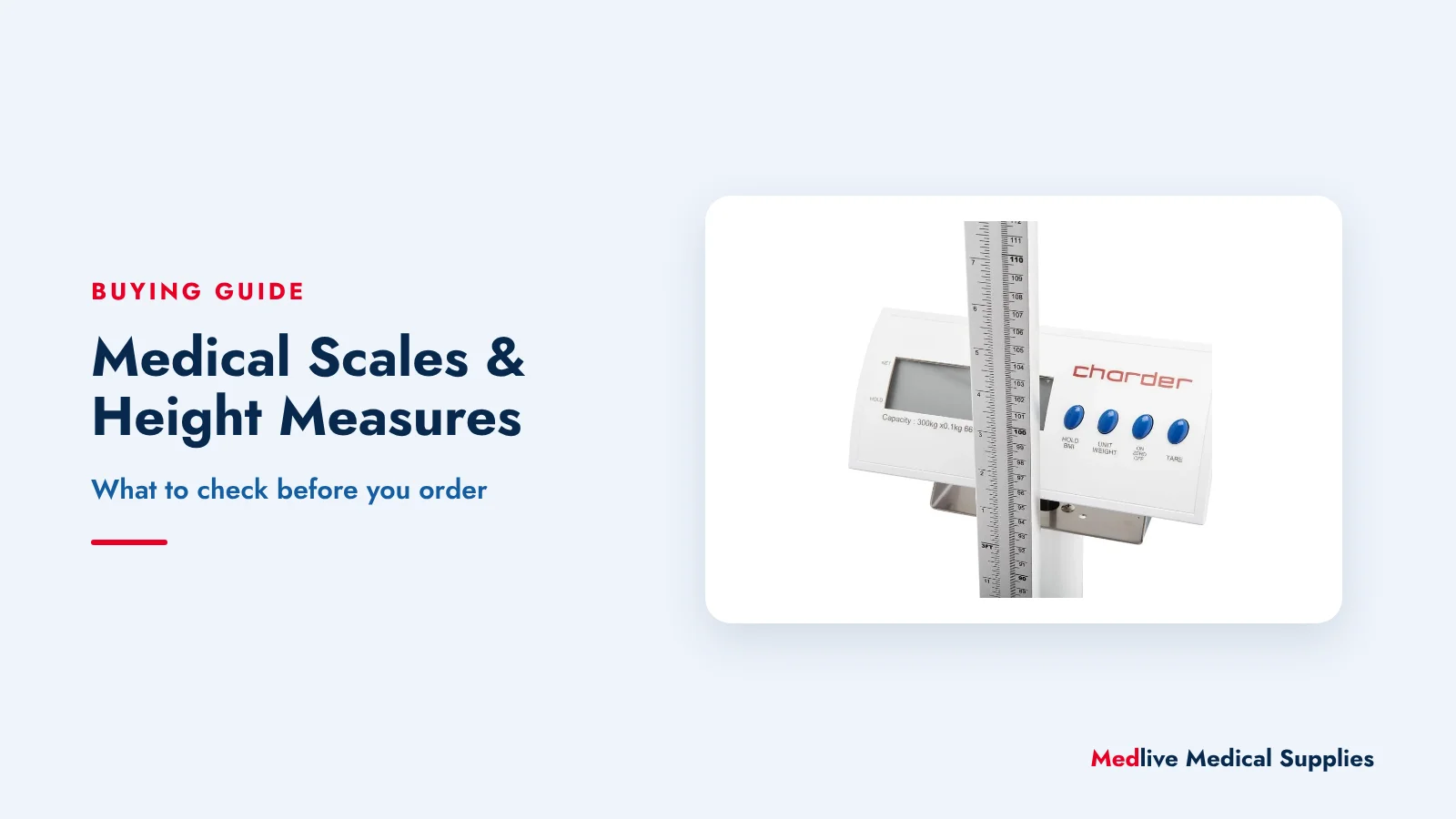
- Adults who can stand: floor and column scales, for example the Digital Floor Scale with Height Rod 300kg – MS3400, which combines weighing with a height rod.
- Patients who cannot stand safely: chair scales (for example the Electronic Chair Scale with Data Transfer – MS5810) and wheelchair platform scales (for example the Wheelchair Platform Scale Digital 300kg), where the patient is weighed in their own chair and the chair’s weight is subtracted.
- Bariatric patients: check the maximum capacity, the platform size and the stability of the scale before buying, not after the first difficult weighing.
2. Capacity, graduation and functions
Two numbers matter most on a scale specification. Capacity is the maximum load the scale is designed to weigh, such as 300kg. Graduation (also called division or resolution) is the smallest step the display shows. A baby scale needs a much finer graduation than an adult floor scale, because small changes in an infant’s weight are clinically meaningful. Some scales use a finer graduation in the lower part of their range; the manufacturer’s specification sheet will state this.
Useful functions include:
- Tare: zeroes the scale with a blanket, nappy or wheelchair on it, so only the patient is measured.
- Hold: freezes the reading once it stabilises, which helps with infants and patients who move.
- BMI calculation: calculates body mass index once height is entered or measured.
- Data transfer: sends readings to a computer or record system, reducing transcription errors. Ask what software or connection is required.
Power matters as much as features. Mains-powered scales suit fixed stations; battery or rechargeable scales suit mobile clinics and areas where power is unreliable. Check battery type and whether spare batteries or a charger are included.
3. Height and length measurement
Accurate height is essential for BMI and growth monitoring. Options in the range include:
- Wall-mounted stadiometers, for example the Stadiometer HM210D Digital Wall-Mounted, for consulting rooms where the device stays in one place. Mounting height and a level floor are critical.
- Portable stand-alone height measures, for example the Height Measure HM200P Portable Stand-Alone, which can be packed up for school screening, outreach and field programmes.
- Infant measuring rods and boards, for example the Height Measure HM80D – Digital Baby Measuring Rod, for measuring young children lying down, as most growth protocols require for infants.
4. Nutrition screening and body composition
Mid-upper arm circumference (MUAC) tapes, such as the Malnutrition MUAC Tape – Child, are simple, low-cost tools widely used in community nutrition screening. Programmes usually specify the tape type and the cut-off points to use, so buy the tape your programme protocol names and train staff in the same technique.
Body composition analysers, for example the Body Composition Analyzer U310, estimate values such as body fat percentage using bioelectrical impedance. They are useful for wellness and fitness tracking, but the results are estimates and should not be treated as a diagnosis. Follow the manufacturer’s instructions on who should not use the device.
5. Calibration, legal metrology and care
In South Africa, the Legal Metrology Act is administered by the National Regulator for Compulsory Specifications (NRCS). The Act applies to measurements in health as well as in trade, and its definition of health includes instruments that measure physical aspects of people, such as weight and height. Exactly which instruments need approval or verification depends on the regulations in force, so confirm the current requirements for your setting with the regulator or your facility’s technical team, and ask for calibration or verification documentation when you request a quotation. Buyers in other countries should check their own national requirements.
Whatever the rules, good practice is consistent:
- Place the scale on a firm, level floor and use the levelling bubble where fitted.
- Check accuracy regularly with a known test weight, and arrange periodic calibration.
- Clean surfaces between patients with a disinfectant the manufacturer permits.
- For outreach work, choose carry cases, battery power and robust construction, and re-check the zero after transport.
6. Mistakes to avoid
- Using an adult scale to weigh infants because it is the only one available.
- Buying a scale with a capacity too close to your heaviest patients.
- Choosing a wall stadiometer for a team that actually works across several sites.
- Forgetting chair or wheelchair scales for patients who cannot stand.
For other assessment equipment, see our diagnostic equipment buying guide.
7. How to order from Medlive
Browse the scales and measuring range or the wider diagnostic equipment department. South African customers see verified ZAR prices including VAT where available; customers in other African countries see “Price on request (USD)” and can request a quotation, with freight and import paperwork confirmed on the quote. Clinics, NGOs and programmes equipping several sites can use bulk orders, and hospitals and government buyers can submit a tender enquiry. Payment is by EFT once the final total, including freight, is confirmed in writing.