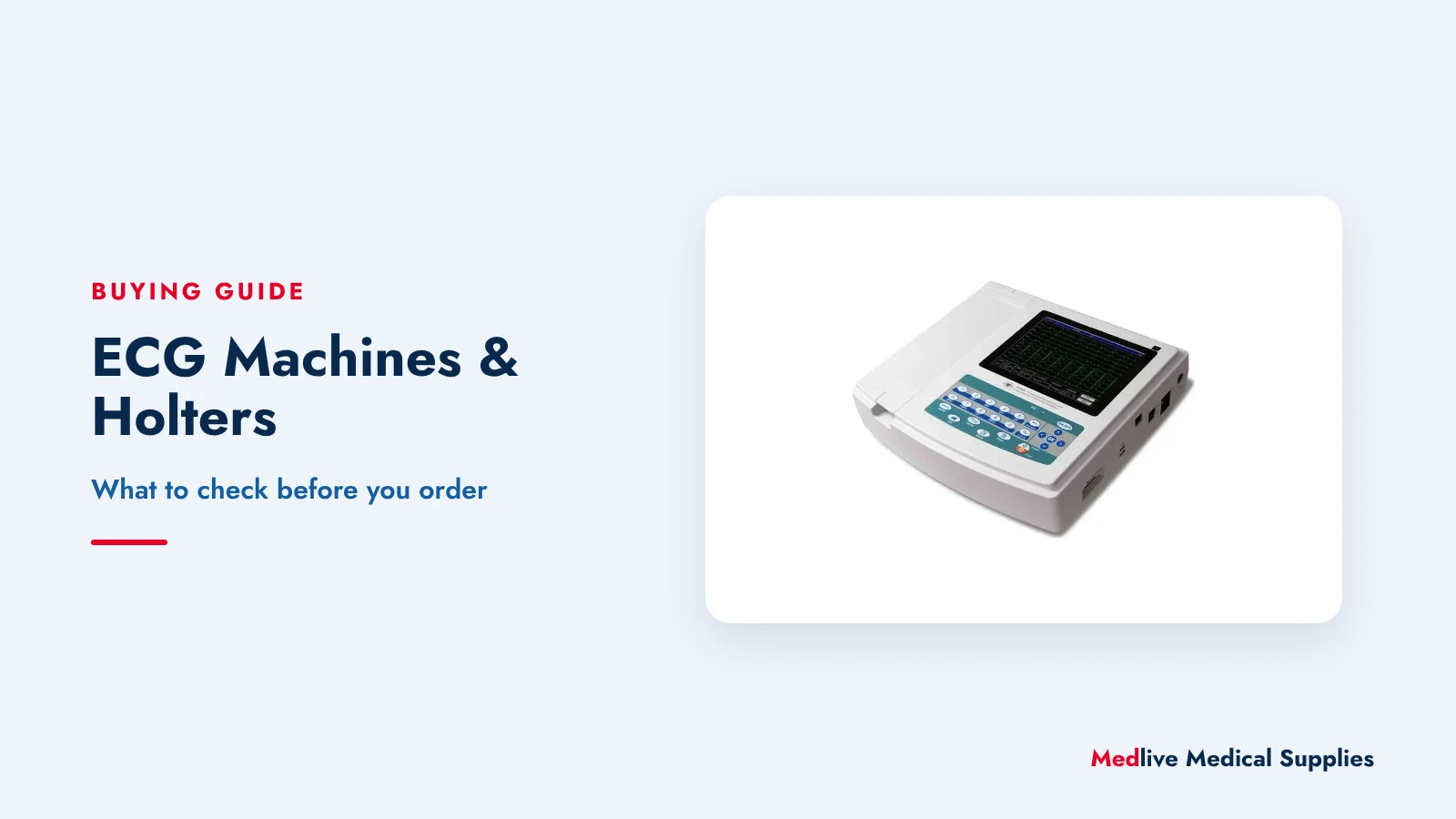
An electrocardiograph (ECG machine) is a core diagnostic purchase for GP practices, clinics, occupational health services, hospitals and outreach programmes. Buyers often find the specifications confusing, especially the difference between channels and leads, and the running costs of paper and electrodes are easy to overlook. This guide explains what to decide before buying from our patient monitors and ECG range.
ECG interpretation and the decision to perform a recording are clinical matters. Follow your facility’s protocols and the manufacturer’s instructions for use. This guide covers purchasing only.
1. Resting ECG machines: channels and leads
A standard diagnostic resting ECG uses 12 leads, which are views of the heart’s electrical activity derived from electrodes on the limbs and chest. Channels describe how many of those leads the machine prints or displays at the same time.
- Single, 3- and 6-channel machines can still acquire 12 leads, but print them in groups rather than all together. They are usually smaller and lower in cost.
- 12-channel machines record and print all 12 leads simultaneously, giving a complete report on one page. Busy practices and hospitals usually prefer them.
The range includes, for example, the ECG 300G, the Contec ECG 1200G – 12 Channel + Interpretation and the Contec E12 Portable 12-Channel ECG/Echocardiography Machine. Check the product details for the number of channels and leads rather than assuming from the model name.
2. Interpretation, screen, battery and printer
- Interpretation software: some machines print an automated interpretation. This is an aid only; a qualified clinician must read and report the ECG.
- Screen: a larger colour screen makes it easier to check electrode contact and trace quality before printing.
- Battery: a built-in rechargeable battery is useful for ward rounds, home visits, outreach and sites with unreliable power. Ask how many recordings a full charge supports.
- Printer and paper width: ECG machines print on thermal paper of a set width and format, either rolls or Z-fold packs. Note the exact paper size and format your model uses, and always order paper to match. The ECG Paper 80mm x 20m Roll is one example; it will only suit machines designed for 80mm rolls.
- Data export and connectivity: ask whether the machine stores recordings, exports them to a PC (for example via USB or network) and whether PC software is included or sold separately.
3. Holter monitors
A Holter monitor is a small recorder worn by the patient to capture the ECG over 24 hours or longer during normal daily activity. The recording is then downloaded and analysed with dedicated software. Examples include the Holter ECG Monitor 12-Lead 24hr and the ECG Holter TLC5000 Dynamic System.
When buying a Holter system, separate two things:
- Recorders: how many patients you want to monitor at the same time. A service with steady demand often needs several recorders for one analysis station.
- Analysis software: whether a licence is included, how many computers it can be installed on and what computer specification it needs.
Also plan for recorder batteries, patient cables, carry pouches and a supply of electrodes suited to longer wear.
4. Portable and personal ECG devices
Portable monitor-recorders, such as the ECG PM10 Portable Monitor/Recorder, and personal handheld devices, such as the AliveCor KardiaMobile 6L, record fewer leads than a full 12-lead machine. They are useful within the scope their manufacturer states, but they do not replace a 12-lead resting ECG. Read the instructions for use carefully and make sure users understand what the device is intended to do.
5. Consumables: electrodes, gel and paper
- Electrodes: choose adult or paediatric sizes, for example ECG Electrodes: Adult. Check the connection type: tab electrodes need clip-type lead wires, while snap electrodes need snap connectors. Match the electrodes to the lead wires you have.
- Gel: some reusable electrodes, such as suction bulbs and limb clamps, need conductive gel, for example ECG Electrode Gel 250ml.
- Paper: order rolls or Z-fold packs by machine model, and keep enough to avoid running out mid-clinic.
Consumables are recurring costs, so estimate monthly usage from the number of recordings and order in volume where it makes sense.
6. Patient monitors and capnographs
Multi-parameter patient monitors, which show ECG alongside SpO2, blood pressure and other measurements, are covered in our guide to choosing a patient monitor for ward, clinic or ICU. Capnographs, such as the Capnograph CA10S, measure exhaled carbon dioxide and are found in the same patient monitors and ECG category.
7. Training, servicing and spares
Before buying, ask about user training, servicing, calibration or performance checks recommended by the manufacturer, and the availability of spare parts. Lead sets and patient cables wear out with daily use and are the most common replacement, so many clinics keep a spare. In South Africa, SAHPRA licenses medical device establishments such as distributors and wholesalers; see how to check a medical device supplier with SAHPRA.
For blood pressure monitors, thermometers and other diagnostic products, see our diagnostic equipment buying guide.
How to order from Medlive
Browse the ECG range or the wider Diagnostic Equipment department. South African customers see verified ZAR prices including VAT where available and can add items to the cart. Customers in other African countries see Price on request (USD) and can request a quotation; freight and import paperwork are confirmed on the quotation. For consumables in volume, use our bulk orders service, and hospitals and public-sector buyers can submit a tender enquiry. Payment is by EFT once the final total has been confirmed in writing.