Rescue and immobilisation equipment is bought by ambulance services, event medical teams, mines and industrial sites, schools, hotels and office buildings. It is used in urgent situations, so the purchasing priorities are clear: equipment your people are trained to use, stored where it can be reached quickly, and kept in working condition. This guide covers the main items in our rescue and safety equipment range. It is purchasing guidance only; all equipment should be used by trained personnel according to their service protocols, current guidelines and the manufacturer’s instructions.
1. Spine boards and head immobilisers
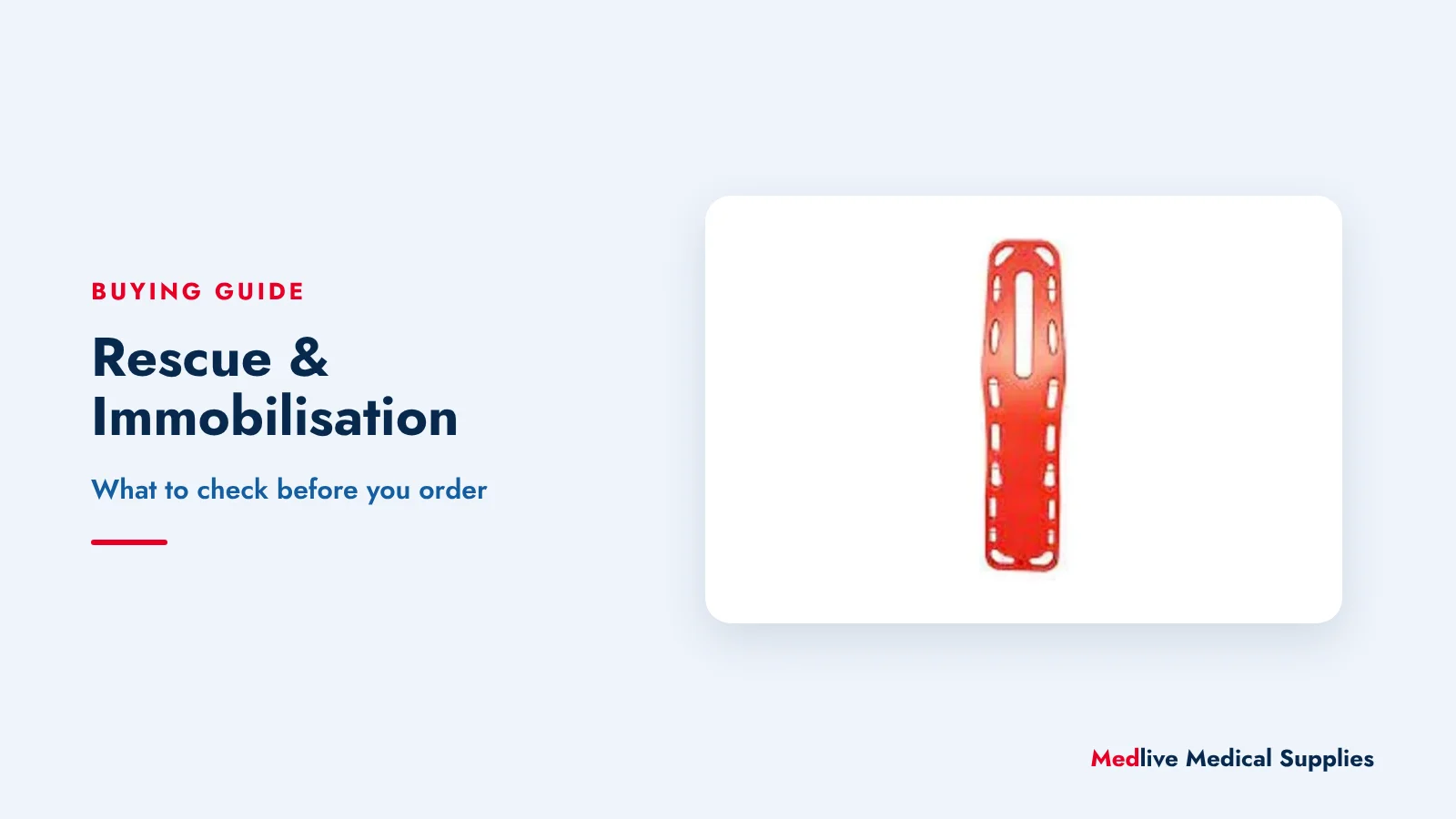
Spine boards are used to move and support a patient. Points to compare:
- One-piece or folding: one-piece boards, such as the Plastic Spine Board, are simple and rigid; folding boards, such as the 4-Fold Plastic Spine Board, take up less space in a vehicle or storeroom.
- Material and cleaning: moulded plastic is easier to clean than porous materials. Check the manufacturer’s cleaning instructions.
- Imaging: some boards are described by the manufacturer as suitable for X-ray or other imaging. Rely on that statement only where the manufacturer makes it.
- Straps and head blocks: confirm whether straps and a head immobiliser are included or sold separately. The Head Immobiliser Blocks Set – Foam is one example of a head immobiliser.
- Weight capacity and handholds: check the stated maximum load and the number and position of handholds.
2. Cervical collars
Collars come as adjustable designs, which can be set to several sizes, and fixed-size designs, which require a set of sizes to be carried. Examples in the range include the Adjustable Stiff Neck Cervical Collar, the Ambu Perfit Adjustable Cervical Collar and the BSN Cervical Collar Large. Adjustable collars reduce the number of items to stock; fixed sizes mean carrying several. Check whether adult and paediatric sizes are needed, and whether the collar is single-use or reusable according to the manufacturer.
3. Extrication devices and evacuation chairs
Extrication devices, such as the Extrication Vest KED – Kendrick Device, are used by trained rescuers to support a patient during removal from a confined space such as a vehicle. Check the included straps, carry bag and cleaning instructions.
Evacuation chairs, for example the Evacuation Chair ST004, are designed to move people who cannot use stairs during a building evacuation. When buying one:
- Plan where it will be stored, usually at the top of a stairwell, and how many are needed for the building’s floors and occupants.
- Check the stated maximum user weight and the stair types it is designed for.
- Arrange training for the staff who will operate it, and include it in evacuation drills.
4. Tourniquets and rescue blankets
Tourniquets, such as the Haemostatic Tourniquet CAT Combat – Black, should be issued only to people trained in their use under current first aid or pre-hospital guidelines. Store them where they can be reached quickly and check packaging and condition regularly.
Foil rescue blankets, for example the Hypothermia Rescue Blanket – Aluminium Foil, are light and compact, making them easy to include in every kit and vehicle. Keep stock in sealed packs until needed.
For the kits these items often go into, see our first aid kits buying guide. For scoop stretchers and trolleys, see the stretchers and trolleys buying guide.
5. Fire blankets and extinguishers
Many sites buy fire safety equipment alongside first aid and rescue equipment. The range includes, for example, the Fire Blanket 1.2×1.2m Fibreglass and the Fire Extinguisher 4.5kg DCP.
- Fire classes: extinguishers are rated for particular types of fire, shown on the label. Check the label against the risks in each area, such as kitchens, workshops or electrical rooms, and take advice from your fire safety adviser.
- Size and placement: larger extinguishers hold more agent but are heavier to carry. Your building’s fire plan and local fire authority determine how many are required and where.
- Servicing: extinguishers need regular inspection and servicing. In South Africa, servicing is carried out by companies certified to SANS 1475, using registered technicians. In other countries, follow the local fire regulations.
- Fire blankets: mount them where they can be reached quickly, for example near cooking areas, and follow the instructions printed on the pack.
6. Cleaning, inspection and replacement
- Clean reusable boards, blocks, collars and devices after each use, following the manufacturer’s instructions and your infection control policy.
- Inspect straps, buckles and fastenings regularly; replace worn or damaged straps.
- Keep a simple log of checks for each item, especially evacuation chairs and extinguishers.
- Replace single-use items after use and check expiry dates on sealed products.
How to order from Medlive
Browse the full rescue and safety equipment range or the wider Emergency & First Aid department. For the complete range, see our emergency and first aid equipment buying guide. Customers in South Africa see verified ZAR prices including VAT on eligible products and can add them to the cart. Customers in other African countries see Price on request (USD) and can request a quotation; freight and any import paperwork are confirmed on the quotation. Services equipping several vehicles or sites can use bulk orders, and institutional or government buyers can submit a tender enquiry. Payment is by EFT once the final total, including freight, has been confirmed in writing.