Medical furniture is easy to overlook when equipping a ward or clinic, yet it shapes how staff move, how patients are kept comfortable and private, and how easily rooms can be cleaned. This guide explains how to choose the main items in our medical furniture range, which materials suit clinical areas and how to plan a larger fit-out.
1. Ward furniture: lockers and overbed tables
Bedside lockers give each patient storage beside the bed. The Bedside Locker ABS/Metal – D-10 is one example in the range. Check the number of drawers and shelves, whether the top surface is easy to wipe, and whether castors are fitted so the locker can be moved for cleaning.
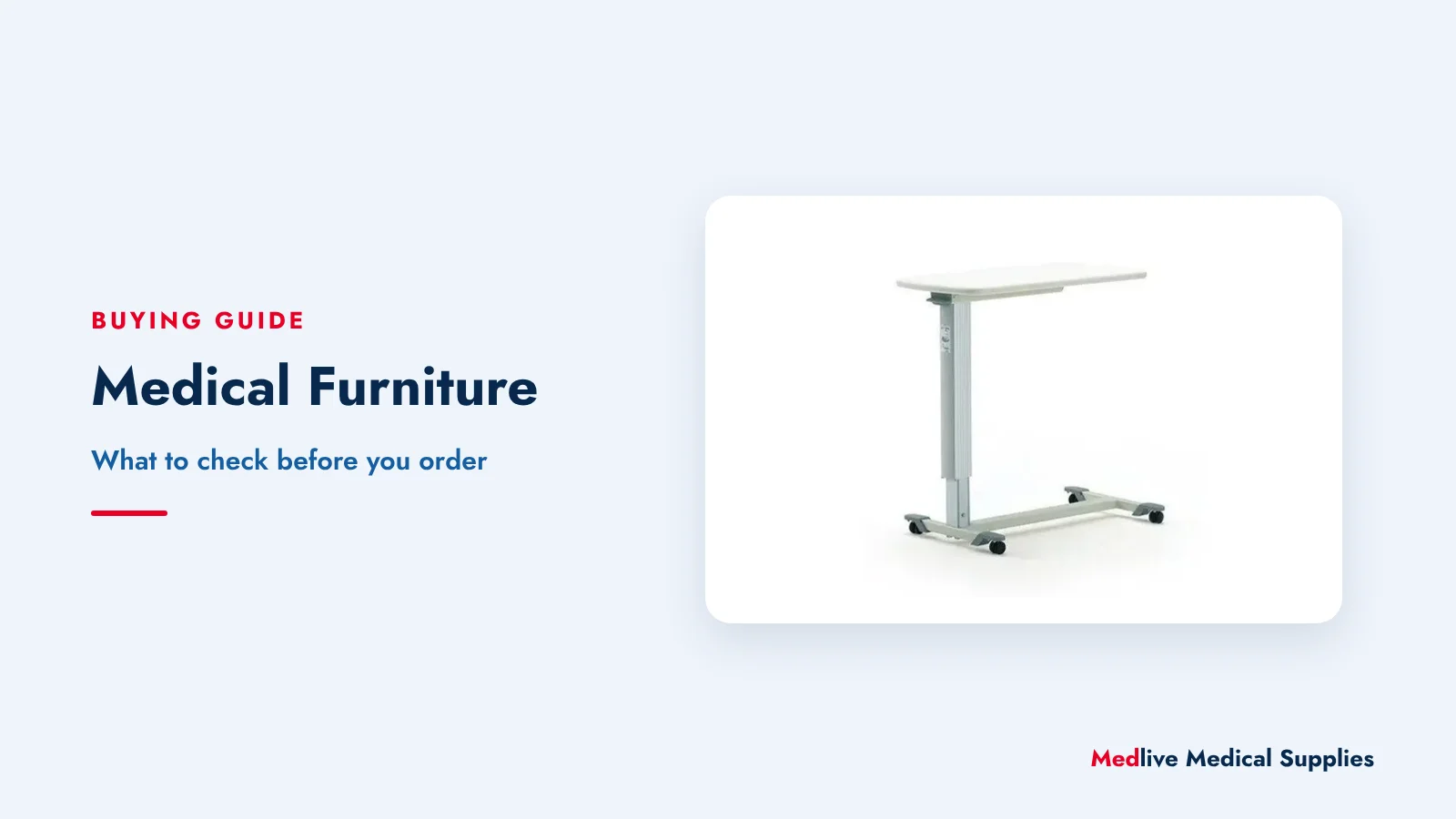
Overbed tables are used for meals, reading and personal items. When choosing a model such as the Overbed Table – Height Adjustable, confirm:
- Height range: it should reach comfortably over the beds you use, at their lowest and highest positions. See our hospital beds buying guide if you are buying beds at the same time.
- Base design: the base must fit under the bed or alongside it without catching on the bed frame.
- Castors: smooth movement, with brakes where the table needs to stay in place.
2. Privacy screens
Screens provide privacy during examinations and personal care where fixed curtain tracks are not available. The range includes, for example, the Bed Screen 3-Fold and the 4 Fold Folding Screen. Consider the number of panels (more panels cover a wider area), whether the screen folds flat for storage, whether it has castors, and whether the panel fabric or material can be wiped down or removed for laundering.
3. Stools, chairs and patient seating
- Clinician stools: height-adjustable stools with hydraulic or gas lift suit examination and procedure rooms. The Operation Stool – Adjustable Hydraulic is one example. Saddle stools, such as the Saddle Stool with Backrest, are popular with clinicians who work close to the patient.
- Patient chairs: transfusion and treatment recliners are used where patients sit for longer procedures. The IV Recliner Transfusion Chair F-43 with IV Stand is one example. Check the number of reclining positions, armrest design, maximum user weight stated by the manufacturer and whether the upholstery is washable and compatible with your disinfectants.
4. IV stands, bed steps and bowl stands
- IV stands: check the number of hooks, the height adjustment, and the base size and number of castors, as a wide, stable base matters when pumps are attached. The IV Infusion Stand – 5-Hook Stainless is an example.
- Bed steps: help patients get on and off high beds and examination couches; look for a non-slip surface, for example the Bed Step Single Steel.
- Bowl stands: hold bowls during procedures and dressings; the Bowl Stand Mobile Double Stainless Steel is one example.
For trolleys and patient transport, see the stretchers and trolleys buying guide.
5. Storage cabinets and lockable medicine storage
General storage cabinets, such as the Medical Cabinet 4-Door Appliance Cupboard G-31, hold linen, consumables and equipment. For medicines, lockable cabinets such as the Poison Cabinet Flat Top Steel Lockable are used where secure storage is required. Medicine storage rules, including those for scheduled substances, differ between countries and facility types, so confirm your requirements with your pharmacist or the pharmacy regulations that apply to your facility before choosing a cabinet. Check the lock type, number of keys, internal shelving and whether the cabinet can be fixed to a wall or floor.
6. Materials, cleaning and delivery
| Material | What to consider |
|---|---|
| Stainless steel | Durable and easy to clean; often chosen for procedure areas and IV stands |
| Powder-coated steel | Strong and widely used for cabinets and lockers; check for chips that expose bare metal |
| ABS plastic | Light and smooth; common for locker tops and drawers |
Whatever the material, check the manufacturer’s guidance on compatible cleaning and disinfecting products, as some chemicals can damage plastics, upholstery and coatings over time.
Furniture is bulky. Ask whether items are supplied flat-packed or assembled, since this affects both freight volume and the work needed on site. Freight is calculated per order and confirmed on the quotation, so a complete list in one request usually gives the clearest picture.
7. Fitting out a new ward or clinic
- Work room by room: list beds, lockers, overbed tables, screens, seating, IV stands and storage for each space.
- Measure door widths, corridors and the space around each bed before ordering.
- Standardise models across wards to simplify cleaning, spare parts and staff familiarity.
- Allow for lockable storage where medicines are kept, following the applicable rules.
How to order from Medlive
Browse the full medical furniture range or the wider Hospital & Critical Care department. For beds, monitors and other ward equipment, see our hospital and critical care buying guide. Customers in South Africa see verified ZAR prices including VAT on eligible products and can add them to the cart. Customers in other African countries see Price on request (USD) and can request a quotation; freight and any import paperwork are confirmed on the quotation. For a full fit-out, send your room-by-room list through bulk orders, or use a tender enquiry for institutional and government requirements. Payment is by EFT once the final total, including freight, has been confirmed in writing.