Theatre equipment is major capital spending and usually stays in service for many years. A good purchase starts with clinical requirements and the room itself, and plans installation, training and service from the beginning. This guide covers surgical lights, operating tables, anaesthesia machines and endoscopy and laparoscopy systems. You can browse the range in our theatre equipment category.
1. Start with procedures, case mix and the room
Before comparing models, write down which procedures the theatre will host, the expected case load and the patient groups (adult, paediatric, bariatric). Involve surgeons, anaesthetists, theatre nursing staff and your clinical engineering or facilities team. Measure the room: floor area, door widths, ceiling height and the position of power outlets, medical gas outlets and any existing ceiling structures. These measurements decide what can physically be installed.
2. Surgical lights
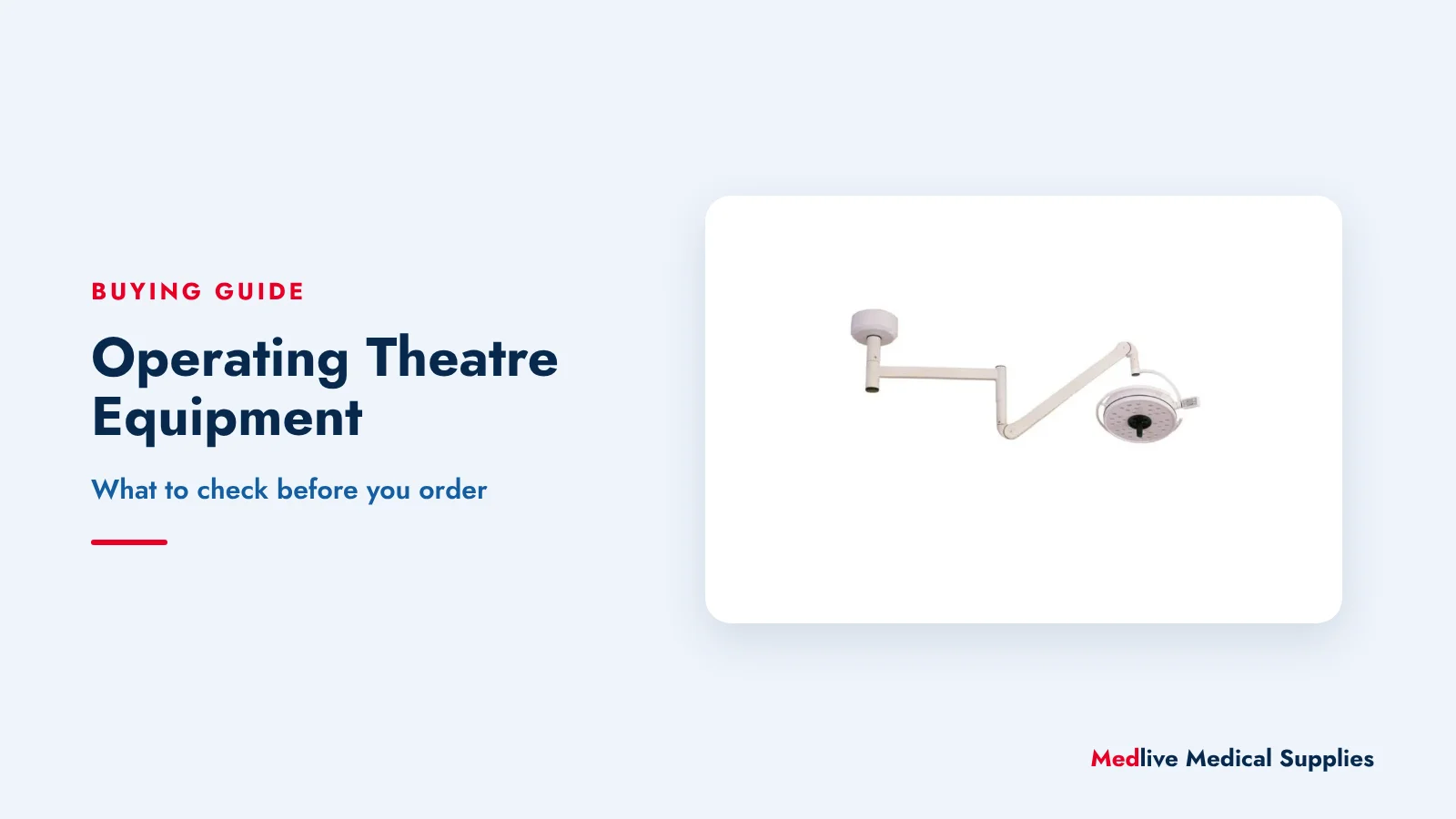
Surgical lights are either ceiling-mounted or mobile on a wheeled stand. Ceiling mounting needs a structural and engineering assessment of the ceiling and services before ordering, and installation by qualified people. Mobile lights need no building work and can move between rooms, which suits minor procedure rooms and facilities planning a later upgrade.
The range includes, for example, the Surgical Theatre Light – LED Single Dome and the Surgical Light KD-2036B-2. When comparing lights, use only the figures the manufacturer publishes for light output, illuminated field size, colour temperature and adjustability, and compare them on the same basis. LED lights are now common; ask about expected lamp life and what parts would need replacing.
3. Operating tables
An electric table, for example the Electric Operating Table General Surgery, adjusts height, tilt and sections with a control, reducing manual effort for staff; check how it behaves during a power cut and whether it has a battery or manual backup. Hydraulic tables use a pump and do not rely on mains power. Compare:
- Patient weight capacity as stated by the manufacturer.
- Number of sections, range of movement and whether the head and leg sections are removable.
- Available positioning accessories such as arm boards, leg supports and side rails, and whether they are included or extra.
- Radiolucency if imaging will be used during procedures.
- Mattress material and how it is cleaned.
4. Anaesthesia machines
An anaesthesia machine must be specified by your anaesthetists and installed and commissioned by qualified technicians. Points to settle at specification stage include:
- Gas supply: whether the machine will run from piped medical gases, cylinders or both, and that connectors suit your installation.
- Vaporisers: how many mounts and which anaesthetic agents. For example, the range includes the Anaesthesia Machine Basic 2-Vaporiser.
- Ventilator: whether one is integrated and which modes the anaesthetists require.
- Monitoring: which parameters are built in and what separate patient monitoring is needed. See our patient monitor guide.
5. Endoscopy and laparoscopy systems
A laparoscopy tower typically combines a camera, light source, insufflator, monitor and recording, often on a single trolley. For example, the Laparoscopy Tower Full HD – Complete System. Smaller portable systems, for example the Portable ENT Endoscope 24-Inch Medical and the Endoscope Camera Portable 4-in-1, suit clinics and specialist rooms. Check that scopes, light cables and instruments are compatible with the camera and light source, and ask exactly which components are included. Scopes and reusable instruments must be cleaned, disinfected or sterilised according to the manufacturer’s instructions for use; confirm your reprocessing equipment can handle them, and see our autoclave buying guide. Theatres will also need diathermy; see our electrosurgical diathermy unit buying guide.
6. Installation, training and service
Include these in the purchase plan, not as an afterthought: delivery access, installation and commissioning, user training for theatre staff, service arrangements, availability of spares and consumables, and warranty terms. These vary by product and manufacturer, so ask for them to be set out in the quotation and confirmed in writing. Standardising models across theatres simplifies training and spares. Ask, too, how preventive maintenance and electrical safety testing will be handled by qualified technicians over the life of the equipment, and budget for consumables such as single-use instrument parts, light cables and replacement lamps or modules.
How to order from Medlive
Browse the theatre equipment range and the wider Surgical Supplies department, and see our surgical supplies buying guide for instruments and consumables. Most theatre equipment is supplied on quotation: request a quotation with your specification, room details and quantities. Customers in South Africa see ZAR prices including VAT where a verified price is available; customers in other African countries see Price on request (USD), and freight and import paperwork are confirmed on the quotation. For several rooms or a full fit-out, use bulk orders, and hospitals, NGOs and government departments can submit a tender enquiry. Payment is by EFT once the final total is confirmed in writing.