The training manikins and simulators category serves two quite different groups of buyers. First aid and resuscitation trainers need manikins that let learners practise skills. Biomedical and clinical engineering teams need simulators that generate signals so they can check that patient monitors are working. This guide covers both. For the wider range of emergency equipment, see our emergency and first aid equipment buying guide.
1. CPR training manikins: who are you training?
CPR manikins are used by first aid training providers, schools, workplaces, clinics and hospital training departments. Start with the courses you run:
- Adult, child or infant. Courses that teach child and infant CPR need manikins of the matching size. Check what each model represents before ordering.
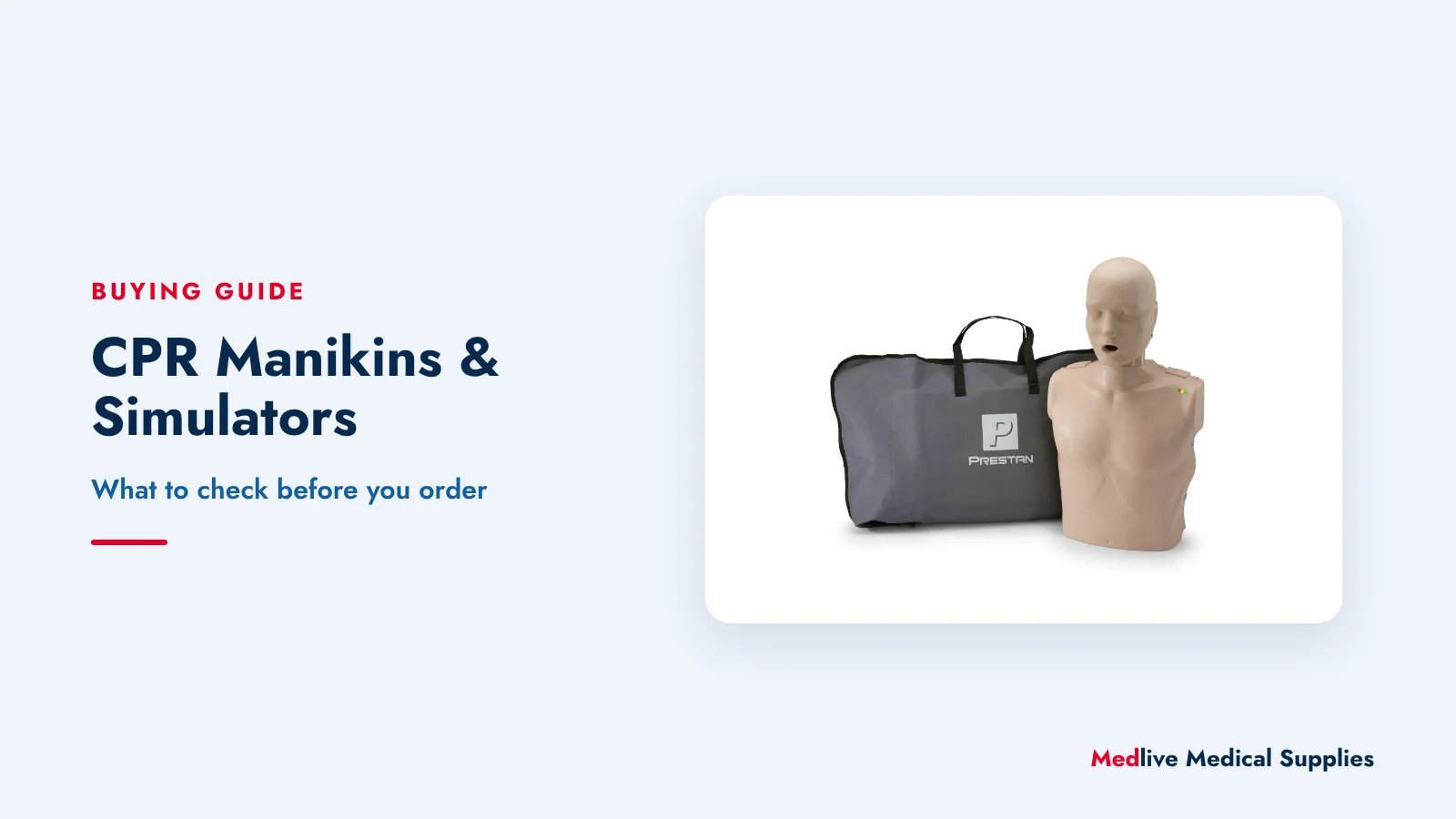
- Feedback. Some manikins give learners feedback during practice. For example, the Prestan Adult CPR Manikin with Rate Monitor includes a rate monitor, as its name indicates. Ask us for the manufacturer’s information on exactly what feedback a model gives.
- Durability. Manikins used in many classes each week need to withstand repeated use and transport.
The range also includes, for example, the Practi-Man CPR Training Manikin. If you run courses at different venues, think about weight, packing size and how many manikins one instructor can carry. Training providers who already own manikins should check whether new units will share spare parts with their existing fleet, as this simplifies stock control and keeps classes consistent for learners and instructors.
2. Class size, hygiene and spare parts
The number of manikins you need depends on class sizes and the learner-to-manikin and instructor ratios your training body or course requires. Follow those requirements, as accreditation of first aid training providers depends on the relevant body’s rules rather than on the equipment alone.
Hygiene matters when several learners share a manikin. Before buying, ask:
- Which parts are replaceable, such as face shields, airways or lungs, and how they are bought.
- How the manufacturer says the manikin should be cleaned between learners and after classes.
- Whether a carry bag or case is included for transport between venues.
Plan consumable parts as a running cost, not a one-off purchase.
3. Wound simulation kits
Wound simulation, sometimes called moulage, adds realism to first aid and emergency scenarios. The range includes, for example, the Wound Simulation Training Kit. Ask what the kit contains, how pieces are attached and cleaned, and how many scenarios it can support. These kits are often used alongside airway and bleeding-control training; our airway management and resuscitation buying guide covers related equipment. Many courses also teach the use of a defibrillator, and our AED defibrillator buying guide explains the options for training and live units.
4. Patient simulators for testing equipment
Patient simulators generate signals that a patient monitor reads as if they came from a patient. Biomedical and clinical engineering teams use them to check monitors after repair, during planned maintenance or when new equipment arrives. Examples in the simulators range include:
- SpO2 Patient Simulator MS100, for checking pulse oximetry.
- NIBP Patient Simulator MS200, for checking non-invasive blood pressure.
- Patient Simulator MS400, a multi-parameter simulator.
Points to check before ordering:
- Compatibility. Confirm that the simulator works with the makes and models of monitor you maintain, including the sensor types, connectors and adaptors needed.
- Functions. Ask for the manufacturer’s specification sheet listing the parameters and settings the simulator supports.
- Checking versus calibration. A simulator helps you check that a monitor responds as expected. Do not treat it as a calibration reference unless the manufacturer states that it is suitable for that purpose, and follow your maintenance procedures and the monitor manufacturer’s service instructions.
If you are also buying monitors, our guide to choosing a patient monitor explains the main options.
5. Common mistakes to avoid
- Buying only adult manikins for courses that also teach child or infant CPR.
- Not budgeting for replacement face shields, lungs and other hygiene parts.
- Ordering a simulator without confirming connectors and compatibility with your monitors.
- Using a simulator check as a substitute for the monitor manufacturer’s service procedures.
6. How to order from Medlive
Browse the emergency and first aid department and the training manikins and simulators category. Customers in South Africa see verified ZAR prices including VAT where available and can add items to the cart. Customers in other African countries see Price on request (USD) and can request a quotation; freight and import paperwork are confirmed on the quotation. Training providers equipping several classes can use bulk orders, and hospitals, universities and government departments can submit requirements through a tender enquiry. Payment is by EFT once the final total, including freight, has been confirmed in writing.