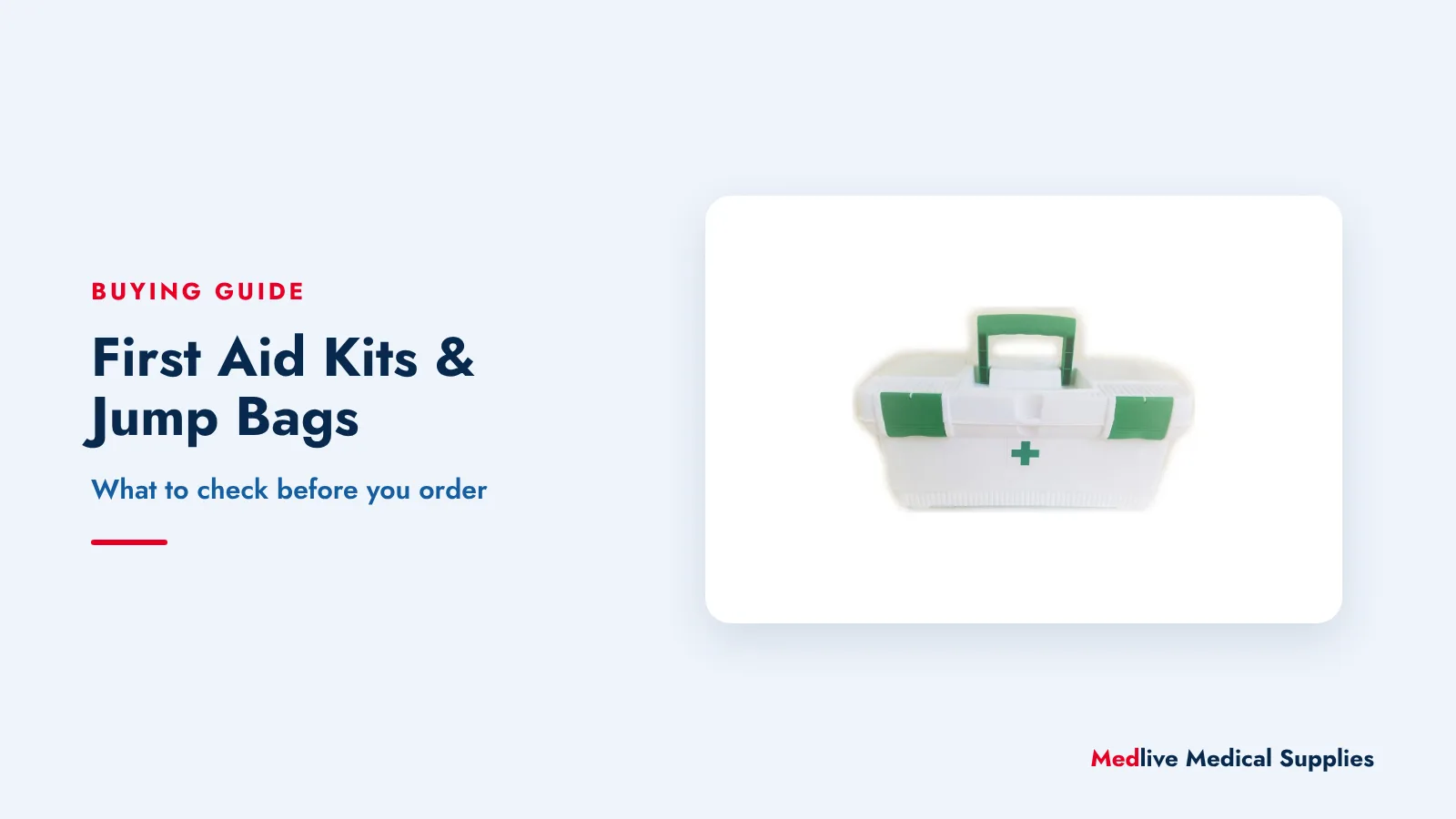
A first aid kit is bought once but relied on for years, often by someone under pressure who has never opened it before. The right kit depends on where it will be kept, who will use it and what could realistically happen there. This guide explains the main types of first aid kit and jump bag, how to choose a container and how to keep a kit complete once it is in place.
1. Decide where the kit will be used
Start with the setting rather than the product:
- Workplace: offices, shops, factories, workshops, farms and construction sites.
- Home: everyday cuts, grazes and minor burns.
- Vehicle or boat: a compact kit that travels with the driver, crew or team.
- Clinics, schools and event teams: kits that may be used several times a day and need frequent restocking.
- Trained responders: jump bags for medics, paramedics, mine rescue and event medical teams.
Also think about how many people the kit serves, how far you are from emergency services and what training the people using it hold.
2. Workplace first aid kits in South Africa
Our First Aid Kits & Jump Bags range includes workplace kits such as the Factory First Aid Kit – Regulation 3 (Plastic Box), the Factory First Aid Kit – Regulation 3 (Carry Bag) and the Factory First Aid Kit – Regulation 7 (Metal Box).
In South Africa, Regulation 3 of the General Safety Regulations under the Occupational Health and Safety Act requires employers to provide a first aid box where more than five employees work, and an annexure lists the minimum contents. The number of boxes depends on the employer’s own assessment of the work, the likely injuries and the number of employees. “Regulation 7” kits take their name from draft regulations that proposed additional items, such as spillage-handling items; those draft changes did not come into effect, so a Regulation 7 kit is best understood as a Regulation 3 kit with extra items, which some employers choose as good practice.
Before ordering, check with your health and safety officer what your workplace actually requires. Outside South Africa, first aid requirements are set by each country’s own workplace laws, so confirm the required contents locally.
3. Home, vehicle and body fluid kits
- Home kits: the First Aid Kit – Home Kit is an example of a general household kit. Keep it somewhere adults can reach quickly and children cannot.
- Vehicle kits: the First Aid Kit Motor Vehicle is an example of a compact kit for cars, bakkies and fleet vehicles. Secure it so it does not move about, and remember that heat inside a parked vehicle can affect some contents, so check them more often.
- Body fluid kits: the First Aid Kit – Body Fluid Kit is an example of a kit for cleaning up spills of blood or other body fluids. Schools, clinics, hospitality venues and transport operators often keep one alongside the main first aid kit. Use it according to your infection-prevention procedures and the instructions supplied.
4. Jump bags for trained responders
A jump bag is an organised, portable kit for people with first aid or medical training. There are two broad options:
- Stocked bags: supplied with contents, for example the ParaGear BLS Jump Bag – Stocked Basic Life Support. Ask for the contents list and check it against what your team is trained and authorised to use.
- Empty bags: supplied without contents so that you can stock them to your own protocol, for example the Advanced Life Support Jump Bag Only Black. Advanced airway or medicine items belong only where your clinical governance allows them.
Compare compartment layout, labelling, material, cleanability, weight when full and how the bag is carried.
5. Choosing the container
| Container | Typical use |
|---|---|
| Metal box | Wall-mounted in fixed workshops, factories and stores |
| Plastic box | Damp or dusty areas, offices and sites where a lighter box is easier to carry |
| Carry bag | Vehicles, field teams, outdoor work and events |
Whatever the container, mark the location clearly and keep it accessible during all working hours.
6. Restocking and expiry checks
A kit is only useful if it is complete. Appoint a responsible person to:
- Check contents against the contents list on a fixed schedule and after every use.
- Replace items with expiry dates, such as sterile dressings and solutions, before they expire.
- Replace damaged packaging, as opened or torn sterile packs should not be relied on.
- Keep a simple log of checks and items replaced.
Refill items such as plasters, bandages and dressings are available in our Wound Care & Dressings range, and resuscitation face shields and airway items in Airway & Resuscitation.
7. Common mistakes to avoid
- Assuming a kit’s name settles what your workplace requires without checking with your safety officer.
- Buying one kit for a site with several buildings, floors or shifts.
- Locking the kit in an office that is closed when it is needed.
- Stocking a jump bag with items the team is not trained to use.
- Never restocking after use.
For AEDs, resuscitators, immobilisation and training manikins, see our Emergency & First Aid equipment buying guide.
8. How to order from Medlive
Browse the first aid kits and jump bags range or the full Emergency & First Aid department. In South Africa, products with verified prices show ZAR prices including VAT and can be added to the cart. Customers in our other markets see “Price on request (USD)” and can submit a Request a Quotation.
Equipping several sites, a vehicle fleet or a response team? Use Bulk Orders for volume quotations, or Tender Enquiry for institutional and government requirements. Freight is confirmed for each order, and payment is by EFT once the final total has been confirmed in writing. For buyers in other African countries, freight and import paperwork are confirmed on the quotation; see ordering medical supplies outside South Africa.