Infusion and syringe pumps deliver fluids, medicines and nutrition at a controlled rate, so they are among the most safety-critical devices on a ward. Choosing well is less about a single model and more about fitting the right pump types to your clinical areas, consumables, staff training and servicing arrangements. This guide explains the main equipment in our Infusion & Syringe Pumps range and what to check before you order. It is purchasing guidance only: all infusion settings follow your facility’s clinical protocols and the manufacturer’s instructions for use.
1. Types of pump and related equipment
- Volumetric infusion pumps: deliver fluid from a bag or bottle through a giving set (administration set). They are typically used for larger volumes. The range includes, for example, the Infusion Pump KL-8052N.
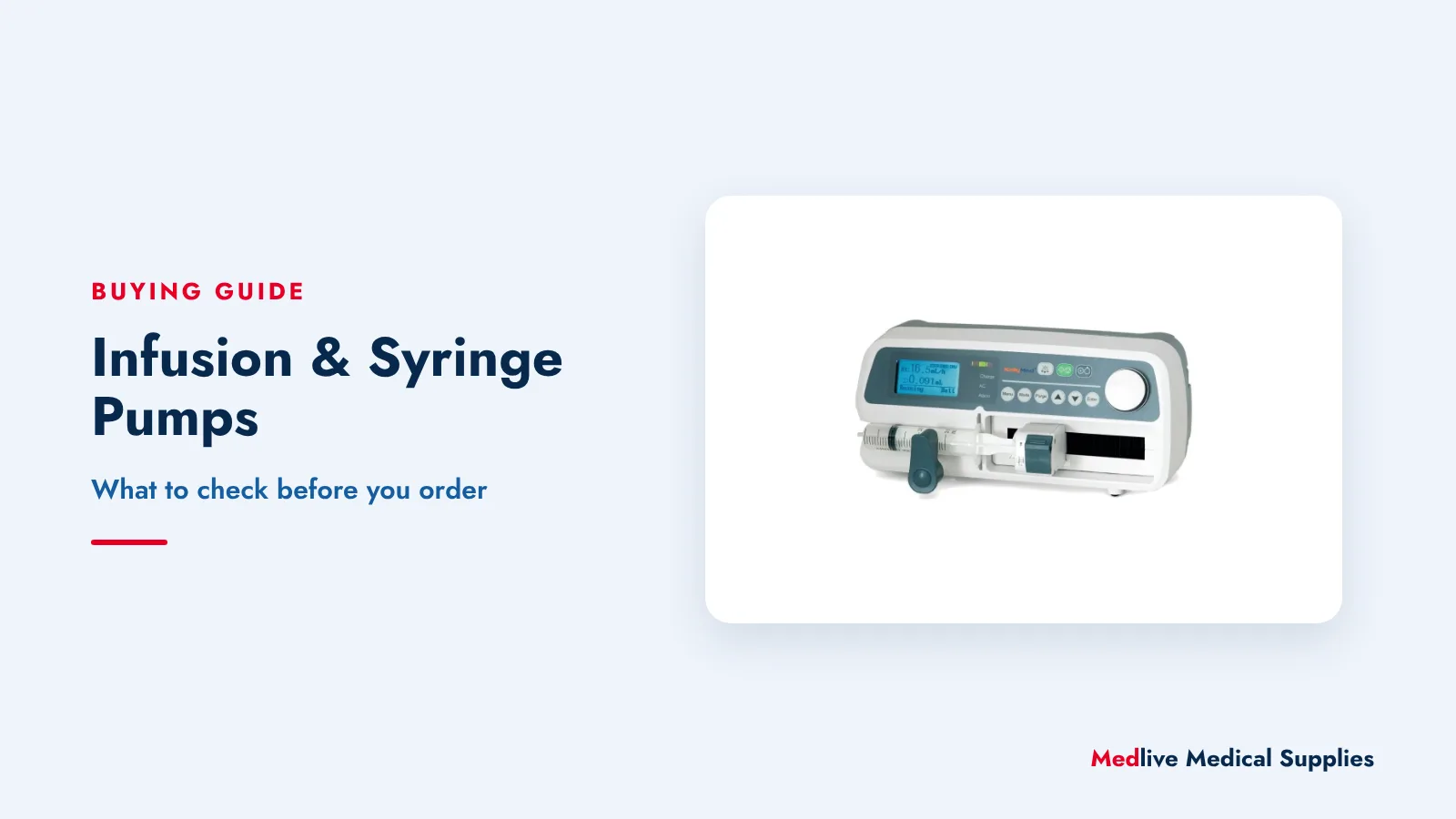
- Syringe pumps (syringe drivers): push the plunger of a syringe at a controlled rate and are typically used for smaller volumes. Examples in the range include the Syringe Pump KL-602, the Infusion Pump Syringe Driver KL-605T and the Syringe Pump SP950.
- Enteral feeding pumps: deliver enteral nutrition and use dedicated enteral feeding sets, for example the Feeding Pump KL5021A. Keep enteral and intravenous equipment clearly separate.
- Infusion workstations: docking or stacking systems that hold several pumps together, often with shared power and mounting, for example the Infusion Workstation HAWK-WS2. Confirm which pump models the workstation accepts.
- Fluid and blood warmers: warm fluids or blood during administration, for example the Fluid & Blood Warmer HAWK-FW1. Check which disposable warming sets or line types it requires.
2. Consumables and compatibility
This is the most common source of problems after purchase. A pump is only as useful as the consumables you can reliably buy for it.
- Volumetric pumps: ask whether the pump needs a dedicated giving set or works with standard sets, and which brands and types it has been calibrated for. Using an unapproved set can affect accuracy.
- Syringe pumps: ask which syringe sizes the pump accepts and which syringe brands it recognises or has been calibrated for. Check that those syringes are available to you in the quantities you need.
- Feeding pumps and warmers: confirm the matching feeding sets and warming sets, and their ongoing availability.
Request the manufacturer’s specification sheet and instructions for use before you quote, and share them with the clinical and biomedical teams who will use and maintain the equipment.
3. Alarms, safety features and drug libraries
Most infusion devices include alarms that alert staff to problems. When comparing models, check which of these are provided:
- Occlusion alarm: warns of a blockage in the line.
- Air-in-line detection: warns when air is detected in the line (mainly relevant to volumetric pumps).
- End-of-infusion or near-empty alarms: warn that the bag or syringe is almost finished.
- Low battery and power alarms, and alerts for doors or syringes not correctly loaded.
Some pumps, often called smart pumps, can hold a drug library: a facility-defined list of medicines with limits that warn the user if a programmed value falls outside them. If a drug library matters to you, ask who builds and updates it, how updates are loaded and what training is involved. Alarm volume and visibility matter too, especially in busy or open-plan wards.
The international standard IEC 60601-2-24 sets particular requirements for the basic safety and essential performance of infusion pumps and controllers, including syringe, volumetric and enteral pumps. You can ask the manufacturer which standards a model has been tested against.
4. Power, portability and mounting
- Check the battery type and stated running time, and how the pump behaves when it switches from mains to battery.
- In areas with unreliable power, battery performance and charging arrangements are important.
- Consider pole clamps, stacking and whether pumps will move with patients between departments.
5. Training, servicing and standardisation
- Standardise models: using the same pump models across a ward or facility makes training simpler, makes consumables easier to manage and generally helps reduce programming errors when staff move between areas.
- Training: plan user training before the pumps go into service, and for new staff afterwards.
- Servicing and calibration: ask about the manufacturer’s recommended preventive maintenance, calibration checks, spare parts and who can carry out repairs. Record each pump in your equipment register.
- Cleaning: follow the manufacturer’s cleaning instructions and your infection-prevention protocol between patients.
6. Common mistakes to avoid
- Buying pumps before confirming that compatible giving sets or syringes can be sourced.
- Mixing several pump models on one ward.
- Overlooking servicing, calibration and spare parts in the budget.
- Not checking the supplier. Read how to check a medical device supplier with SAHPRA.
For monitors, ventilators and other critical-care equipment, browse ICU & High Care and see our hospital and critical care buying guide. To compare models side by side, use our product comparison tool.
7. How to order from Medlive
Browse the infusion and syringe pumps range or the full Hospital & Critical Care department. In South Africa, products with verified prices show ZAR prices including VAT and can be added to the cart; others are quoted on request. Customers in our other markets see “Price on request (USD)” and can submit a Request a Quotation; freight and import paperwork are confirmed on the quotation.
Equipping a ward or several facilities? Use Bulk Orders for volume quotations, or Tender Enquiry for institutional and government requirements. Payment is by EFT once the final total has been confirmed in writing.