Assessment and measurement tools let physiotherapists, biokineticists, occupational therapists and sports scientists record range of motion, strength and body composition in a consistent way. Because the value of a measurement lies in comparing it over time, the most important buying decision is often not the lowest-cost or most advanced device, but one your team will use the same way every time. This guide covers the main tools in our assessment and measurement range and what to check before ordering.
1. Range-of-motion tools: goniometers and inclinometers
Universal goniometers are two arms joined at a protractor. Points to consider:
- Material: plastic goniometers are light, inexpensive and suit students or high-volume use; stainless steel models are heavier and typically more durable. Clear plastic lets the clinician see the joint through the protractor.
- Arm length: shorter arms suit smaller joints such as the wrist and elbow; longer arms suit the hip and knee. Many practices keep more than one size. The 15cm Plastic Goniometer is one example in the range.
- Finger goniometers: small, specialised tools for the fingers and toes, for example the Baseline Plastic Finger Goniometer.
Digital goniometers and inclinometers display the angle on a screen, which removes the need to read a scale. Examples include the EasyAngle Digital Goniometer and the Baseline Digital Inclinometer. Check battery type, display readability, whether readings can be stored or exported, and how the device is zeroed according to the manufacturer’s instructions.
2. Strength: dynamometers and pinch gauges
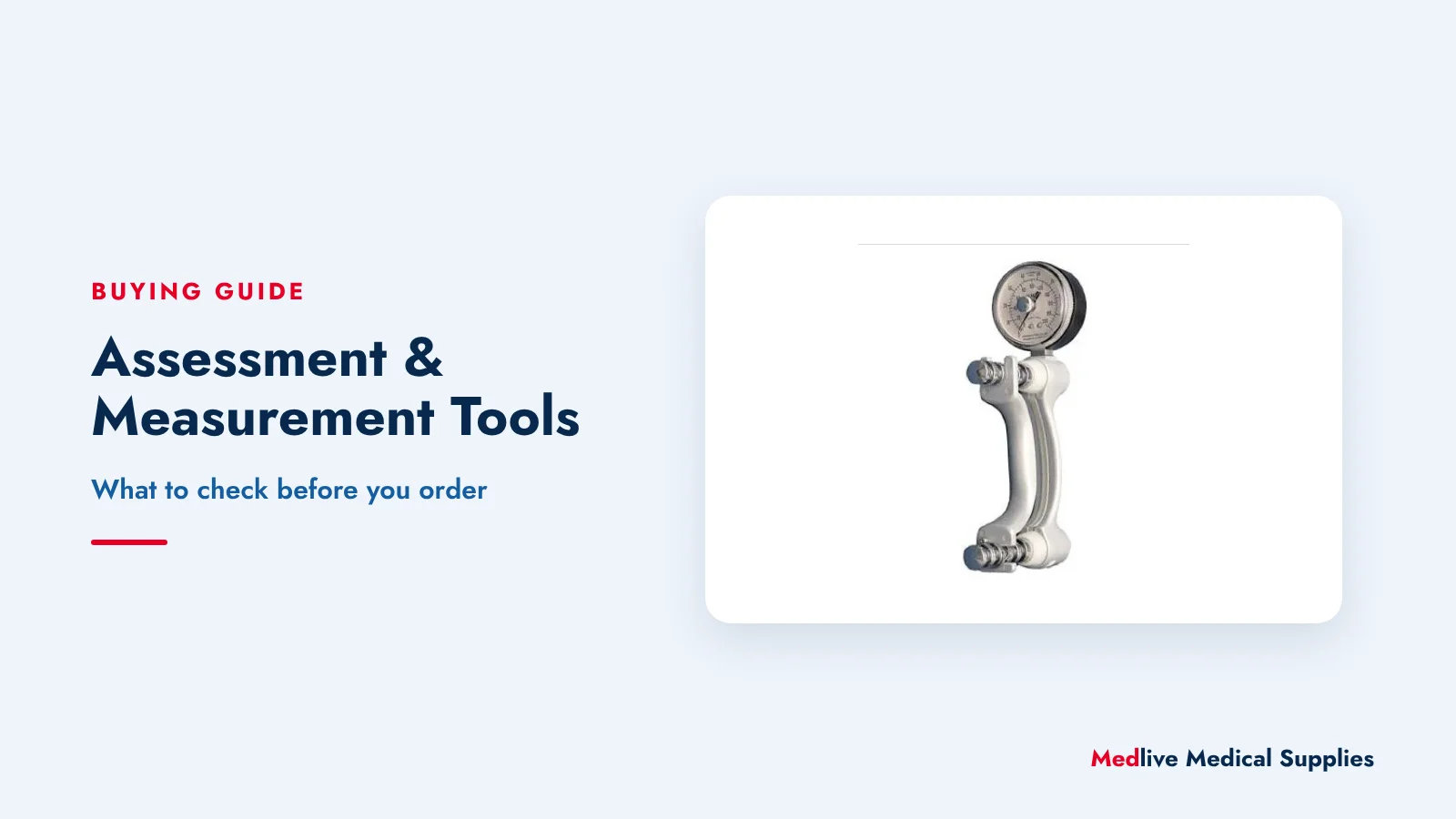
Hand dynamometers measure grip force. Hydraulic models, such as the Saehan Hydraulic Hand Dynamometer, use an analogue dial; digital models, such as the Baseline BIMS Digital Hand/Grip Dynamometer, show the reading on a display and may store results. Pinch gauges, for example the Saehan Pinch Gauge, measure finger pinch force. Handheld dynamometers used against a limb are another option for larger muscle groups.
When buying strength-testing devices:
- Use the same device and protocol for repeat measures. Readings from different models, or from the same model used with different positions and instructions, may not be directly comparable.
- Check calibration requirements. Follow the manufacturer’s guidance on calibration checks and servicing, and keep a record for each device.
- Check units and handle settings. Confirm the measurement units and whether the handle position is adjustable for different hand sizes.
3. Connected systems: force plates and sensors
Connected systems use sensors linked to a tablet, phone or computer application. Examples include the Kinvent K-Force Plates and the Kinvent K-Grip. They can record and graph results over time, which suits sports science, research and practices that want digital records. Before ordering, confirm:
- Device compatibility: which operating systems and device models the app supports.
- Software access: whether the software is included or requires a subscription or licence, how many users or devices it covers and what happens when it lapses. Ask us to confirm this on the quotation. Related software items are listed under rehab software subscriptions.
- Data handling: where client data is stored and whether that fits your organisation’s privacy policies.
4. Body composition and other assessment tools
Skinfold calipers, for example the Harpenden Skinfold Caliper and the Slim Guide Skinfold Caliper, measure skinfold thickness at set sites. Results depend heavily on the measurer’s technique, so they should be used by people trained in a recognised measurement protocol, and the same measurer should ideally repeat measurements for a client.
Pressure biofeedback units, such as the Pressure Air Biofeedback (PAB) Basic, use an inflatable cushion and gauge to show pressure changes during exercise. Use them as directed by the treating clinician and the manufacturer’s instructions.
Reflex hammers are a simple but essential part of a neurological examination kit; choose the style your clinicians were trained with.
For weight, height and BMI measurement, see our medical scales and height measures buying guide.
5. Buying for a practice versus a training programme
| Buyer | Typical priorities |
|---|---|
| Single practice | One reliable device per measurement, durability, calibration records, possibly digital data export |
| Hospital department | Standardised models across wards, cleaning between patients, asset tracking |
| University or training programme | Multiple identical units so students learn on the same device, robust plastic tools for practical classes, spare parts |
| Sports team or research group | Portable connected systems, software licences, data export |
For training programmes, buying identical units in one order helps keep teaching and assessment consistent; use bulk orders for class sets.
6. Common mistakes to avoid
- Mixing different dynamometer models across sites and then comparing results.
- Buying a connected system without checking app compatibility and ongoing software costs.
- Skipping calibration checks recommended by the manufacturer.
- Buying skinfold calipers for staff who have not been trained in a measurement protocol.
How to order from Medlive
Browse the full assessment and measurement tools or the wider Diagnostic Equipment department. For other diagnostic devices, see our diagnostic equipment buying guide. Customers in South Africa see verified ZAR prices including VAT on eligible products and can add them to the cart. Customers in other African countries see Price on request (USD) and can request a quotation; freight and any import paperwork are confirmed on the quotation. Universities, hospitals and government buyers can use bulk orders or submit a tender enquiry. Payment is by EFT once the final total, including freight, has been confirmed in writing.