Mines, construction sites, transport and fleet operators, security companies, event organisers, schools and clinics all use alcohol breathalysers and rapid drug screening tests. The right equipment depends on how many people you test, how you record results and what your substance policy requires. This guide explains the main choices. It is purchasing guidance only, not legal advice: speak to your HR adviser or legal adviser about how testing should be run in your organisation.
You can browse the range on our alcohol and drug testing page.
1. Personal or workplace screening device
Breathalysers fall broadly into two groups:
- Personal and single-use testers are intended for individuals checking themselves. The Alcohol Tester Disposable is an example of a single-use product.
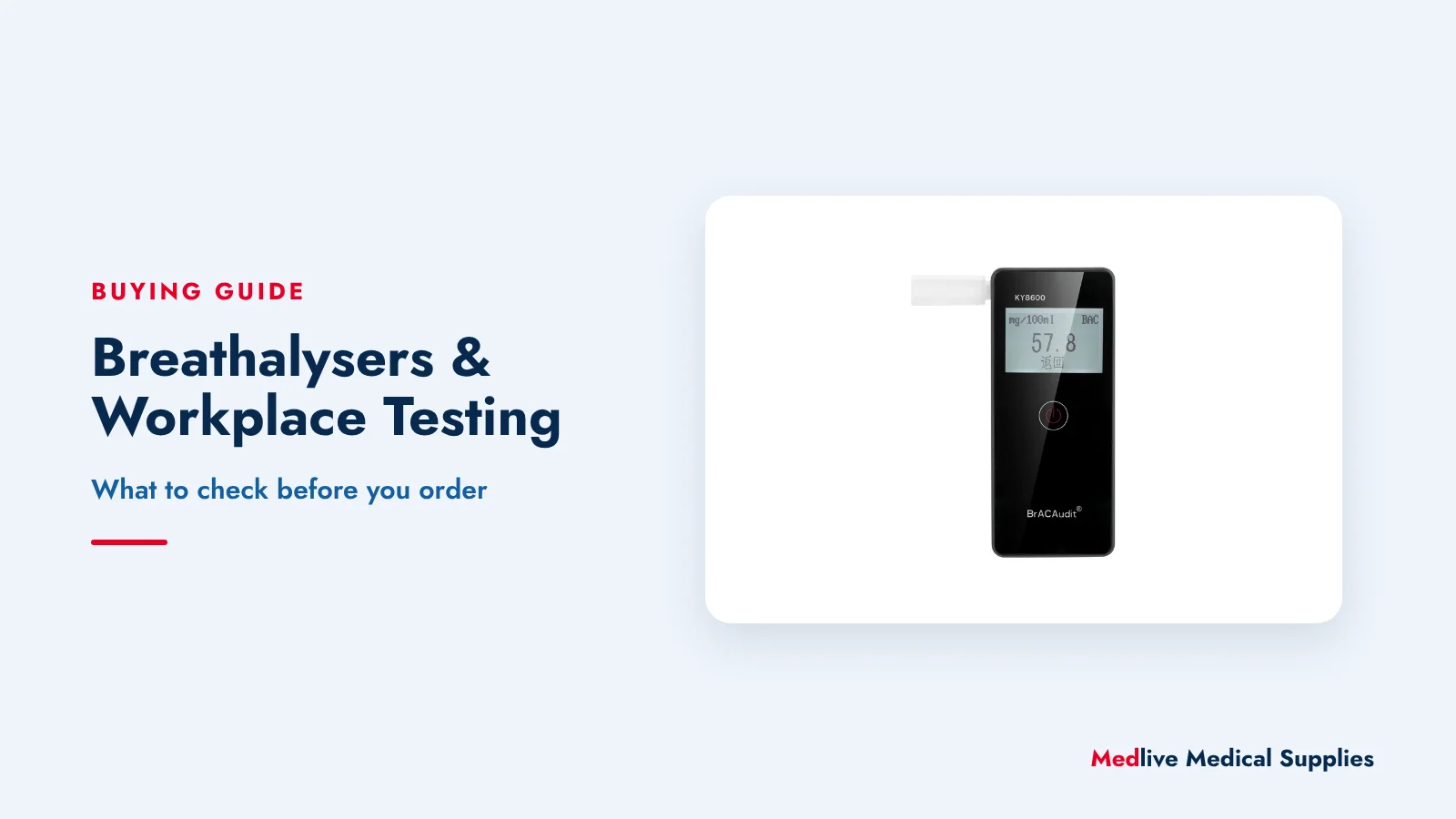
- Professional screening devices are built for repeated testing of many people, often with replaceable mouthpieces, higher daily test capacity and features for record keeping. Examples in our range include the Alcohol Breathalyser KY-8600 Professional, Alcohol Breathalyser KY-8300 with Printer, Alcohol Tester AL-2500 Prime, Alcohol Breathalyser AL6000 Lite and AT6880 Digital Alcohol Breathalyser.
Workplace screening devices are not the same as the evidential instruments used by traffic authorities for prosecution. A workplace screening result is normally a first step, and a positive result is usually followed by a confirmation procedure set out in the employer’s policy.
2. Sensor type
The sensor is the most important specification. In general terms:
- Fuel cell sensors react specifically to alcohol, tend to give more consistent results and are commonly used in professional and workplace devices.
- Semiconductor sensors are generally lower in cost and are common in personal devices, but they can respond to substances other than alcohol and may drift more over time.
Check the sensor type in the product description or ask us to confirm it for the model you are considering before you order.
3. Features to compare
- Tests per day: estimate how many people will be tested at the busiest shift change and check that the device and its warm-up and recovery time can keep up. Large sites may need several devices.
- Printer and records: a built-in or connected printer, as on the KY-8300 with Printer, gives a paper record at the point of test. Check how results are stored and whether they can be exported.
- Mouthpieces: use a new mouthpiece for every person for hygiene. Confirm that the mouthpieces fit your model and order them in bulk, for example the Breathalyser Mouthpieces 100 Pack.
- Calibration and servicing: every breathalyser sensor needs periodic recalibration or servicing. Follow the interval and test-count limits in the manufacturer’s instructions, and budget for this from the start.
- Power: check battery type, battery life and charging options, especially for remote sites, vehicles and outdoor events.
4. Saliva drug screening tests
Rapid saliva tests, such as the 6-in-1 Saliva Rapid Drug Test, screen for several substance groups from one sample. They are screening tests only. A non-negative result should be confirmed by laboratory testing according to your policy. Check which substances the test covers, its expiry date and storage conditions, and follow the instructions for use exactly, including the reading time.
5. Policy, consent and privacy
Equipment is only one part of a testing programme. In South Africa, the General Safety Regulations under the Occupational Health and Safety Act include a regulation on intoxication (regulation 2A), which provides that an employer or user shall not permit a person who is, or appears to be, under the influence of intoxicating liquor or drugs to enter or remain at a workplace. How an organisation meets that and its other obligations is a matter for its own advisers. Other countries have their own rules.
Before buying, most organisations put the following in place:
- A written alcohol and substance policy that explains when testing happens, who conducts it and what follows a positive screening result.
- A consent process agreed with employees, and where relevant their representatives.
- Secure handling of results. Test results are personal and health-related information, and in South Africa the Protection of Personal Information Act applies to how they are processed. Limit access to those who need it.
- Training for the staff who carry out the tests.
6. Common mistakes to avoid
- Buying a personal device for a workplace that tests hundreds of people a day.
- Forgetting to budget for recalibration and mouthpieces.
- Treating a screening result as final without the confirmation step in your policy.
- Starting testing before the policy and consent process are agreed.
- Ordering saliva tests in quantities that expire before they are used.
How to order from Medlive
Compare devices and supplies on our alcohol and drug testing page, or explore the wider Diagnostic Equipment department. Our diagnostic equipment buying guide covers the rest of the department.
Customers in South Africa see verified prices including VAT and can add products to the cart. Customers in other African countries see Price on request (USD); use Request a Quotation and we will confirm pricing, freight and import paperwork on the quotation. Fleets, mines and multi-site employers can request volume pricing for devices, mouthpieces and tests through bulk orders, and public-sector or formal procurement can use our tender enquiry service. Payment is by EFT once the final total has been confirmed in writing.