Blood glucose meters, cholesterol meters and rapid test strips are some of the most frequently bought diagnostic items, by individuals at home, by pharmacies and wellness clinics, and by primary care clinics running screening days. The meter itself is often the smaller part of the cost: strips, lancets and control solutions are bought again and again. This guide explains what to compare before you buy and how to keep point-of-care testing organised. Interpreting results and deciding on care are always matters for a healthcare professional and your facility’s protocols.
Browse the full range on our rapid tests and meters page.
1. Blood glucose meters: start with the strips
Test strips are specific to the meter they were designed for. A strip from one brand, or even from a different model of the same brand, will not necessarily work in your meter, so always order strips that the manufacturer lists as compatible with your model.
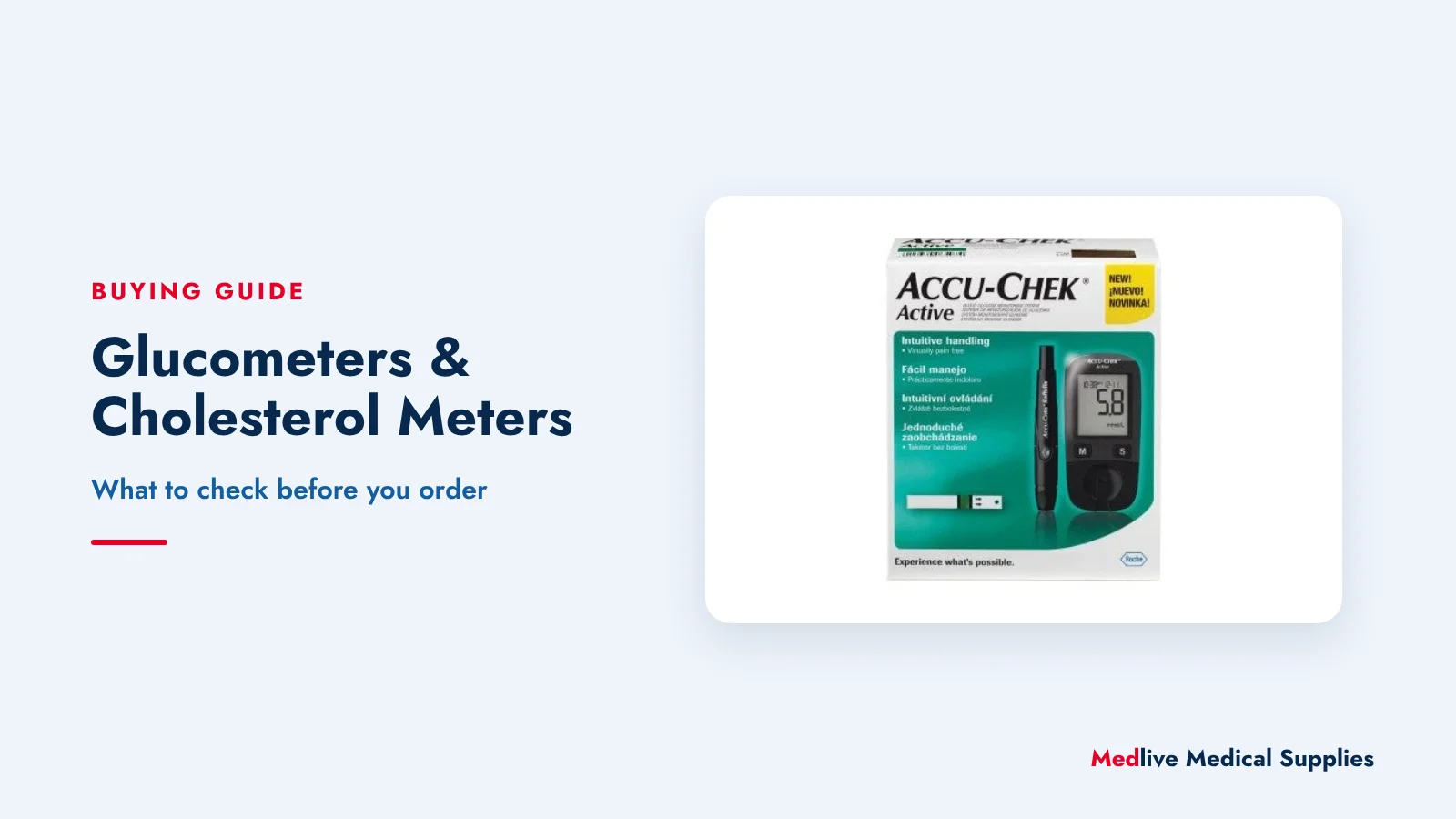
Our range includes, for example, the Accu-Chek Active Glucometer Kit, Accu-Chek Instant Glucometer Kit Bluetooth, Contour Plus Blood Glucose Monitoring System and VivaChek Ino Blood Glucose Meter. When comparing meters, look at:
- Cost per test: work out the strip price per test over a year of expected use, not just the price of the starter kit.
- Strip expiry and storage: check the expiry date and how long strips last once the container is opened, and store them as the manufacturer instructs, away from heat and humidity.
- Coding: some meters need a code entered or a code chip inserted for each new batch of strips, while others do not. Check which applies before you buy.
- Memory and connectivity: consider how many results the meter stores, and whether it connects to an app or computer by Bluetooth or cable if the user or clinic wants to keep digital records.
- Ease of use: screen size, button layout and strip handling matter for older users and those with limited dexterity.
2. Lancets, lancing devices and control solutions
A personal lancing device is a reusable pen that fires a disposable lancet, such as the lancets in the Accu-Chek Softclix Lancets 25 Pack. Lancing devices are designed for one person only and must never be shared between patients.
Clinics, pharmacies and screening events that test many people generally use single-use safety lancets, which retract after use and are discarded. Follow your facility’s infection-control policy, and order sharps containers alongside your lancets.
Control solutions let users and staff check that the meter and strips are working correctly. Use the control solution specified by the meter manufacturer, at the intervals and in the situations its instructions describe.
3. Continuous glucose monitoring sensors and readers
Continuous glucose monitoring systems use a small sensor worn on the body and a reader or app that displays the readings. Examples in our range are the Abbott Freestyle Libre 2 Reader and FreeStyle Libre 2 Sensor. These are normally used under the guidance of the person’s doctor or diabetes care team. When buying, check that the sensor and reader are compatible, note how long each sensor is designed to be worn according to the manufacturer, and plan reorders so that a replacement sensor is always to hand.
4. Cholesterol, lipid and multi-parameter meters
Pharmacies, wellness clinics, corporate health days and community screening programmes often use portable meters that measure cholesterol, lipids or several parameters from a fingerstick sample. Examples include the Accutrend Plus Cholesterol Meter, Cholesterol Lipid Panel Meter – Mission 3-in-1 and Nesco NW-07 MultiCheck Meter (Haemoglobin, Cholesterol, Glucose).
- Check which parameters each meter measures and which strips each parameter needs. Multi-parameter meters often use a different strip for each test.
- Estimate how many people you expect to test per session and order strips with expiry dates that suit that volume.
- Results from these meters are for screening. Refer people for confirmatory testing according to your protocol.
5. Urine test strips and pregnancy tests
Urine test strips are described by the number of parameters on each strip. A pack such as the Urine Test Strips 10-Parameter – 100s gives ten test pads per strip. Choose the parameter count your protocol actually requires, check the reading time and colour chart on the container, and keep the lid closed tightly to protect the strips from moisture.
Pregnancy tests come in cassette, strip and midstream formats. The Cassette Pregnancy Test – Single is an example of the cassette format used in many clinics. Ovulation tests are a separate product with their own instructions. Read and follow the instructions for use for each test.
6. Quality control and record keeping in clinics
When a clinic runs point-of-care testing, a little organisation goes a long way:
- Keep a register of meters in use, with serial numbers and the date each was put into service.
- Record control solution checks and strip lot numbers as your quality procedures require.
- Log opening dates on strip containers and discard strips past their expiry or open-container life.
- Make sure staff are trained on each meter model, and keep the instructions for use with the device.
- Record results in the patient record according to your facility’s policy.
Common mistakes include buying a cheap meter whose strips are expensive or hard to source, mixing strips between meter models, sharing lancing devices, and ordering more strips than can be used before they expire.
How to order from Medlive
Choose meters, strips and lancets on our rapid tests and meters page, or explore the wider Diagnostic Equipment department. Our diagnostic equipment buying guide covers the rest of the department.
Customers in South Africa see verified prices including VAT and can add products to the cart. Customers in other African countries see Price on request (USD); use Request a Quotation and we will confirm pricing, freight and import paperwork on the quotation. For clinic, pharmacy or programme volumes of strips and lancets, use our bulk orders page. Payment is by EFT once the final total has been confirmed in writing.