Hand hygiene products are among the most frequently reordered items in any clinic, ward or theatre. Getting the mix right means staff always have the correct product within reach, skin stays in good condition, and you are not left with expensive stock that nobody likes using. This guide covers hand rubs, hand soaps and surgical hand scrubs. You can see the full range in our washroom and hand hygiene category.
1. Hand rubs and soap: you need both
The World Health Organization’s hand hygiene materials, including its “Your 5 Moments for Hand Hygiene” approach, describe alcohol-based hand rub as the routine option when hands are not visibly soiled, and washing with soap and water when hands are visibly dirty or soiled with blood or other body fluids, and after using the toilet. In practice this means every facility needs both: hand rub at the point of care, and soap at hand-wash basins. Your infection prevention and control (IPC) policy should set out which product is used where.
2. Hand rubs: label, gel, liquid or spray
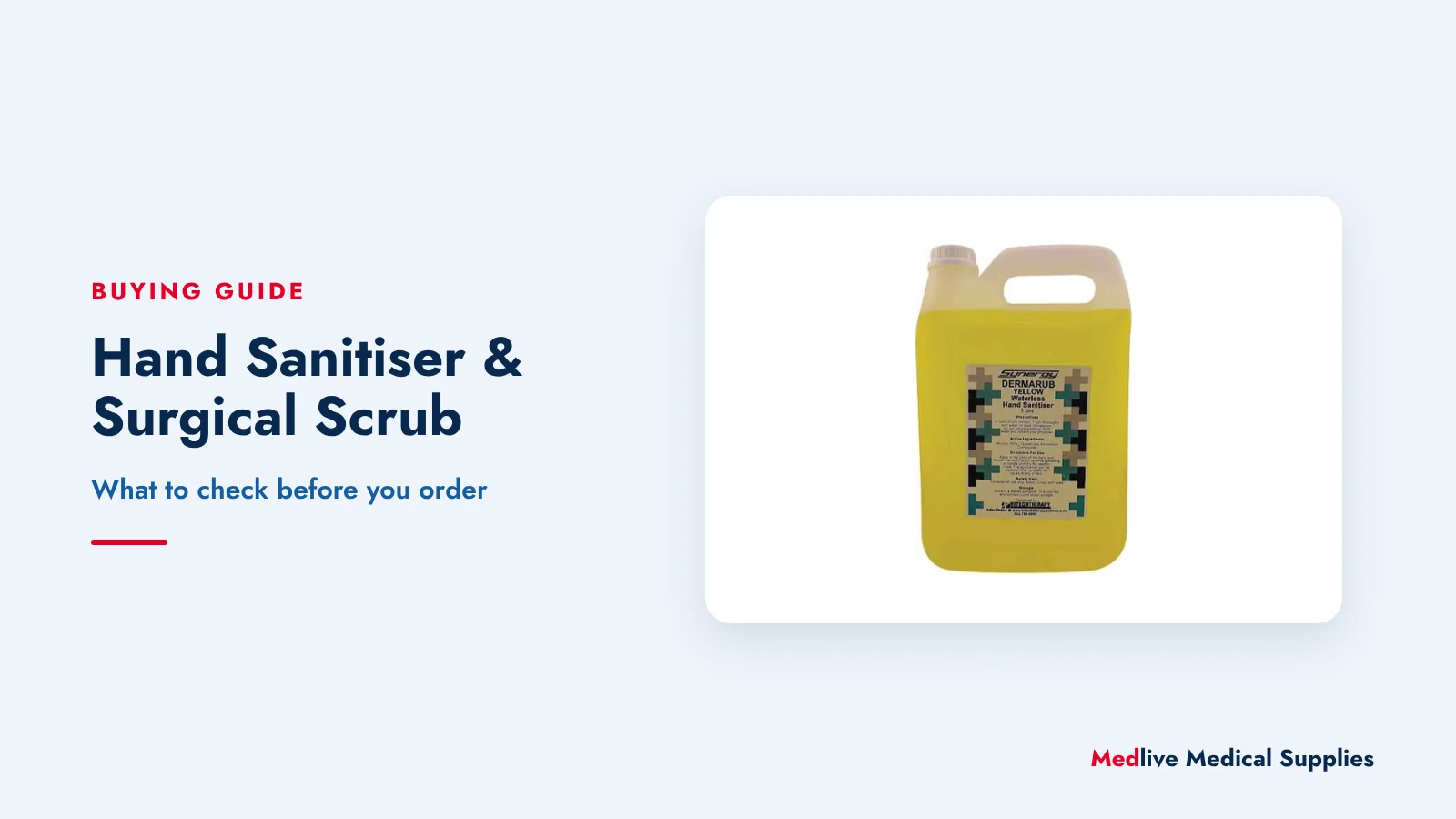
Hand rubs differ in alcohol type and concentration, added skin conditioners and format. Check the alcohol content stated on the label and ask for the product’s technical data and safety data sheet (SDS) if your IPC team needs them. The range includes, for example, the 1L Synergy 70% Liquid Hand Sanitiser and 5L Synergy 70% Liquid Hand Sanitiser, as well as DERMABAC – Waterless Hand Sanitiser in 1L and 5L. Compare products on the information the manufacturer provides rather than on marketing descriptions.
- Gel is easy to dispense without dripping and suits pocket bottles and wall dispensers. For example, Hand Sanitiser Gel 100ml.
- Liquid spreads quickly and is common in pump bottles and bulk refills.
- Spray is convenient for some reception, transport and outreach settings. For example, Hand Sanitiser Spray 250ml.
Staff acceptance matters. A product that people find sticky or drying is used less, so consider a trial before committing to a large order.
3. Pack sizes, dispensers and refilling
Small personal bottles suit community health workers, home-care staff and clinicians who move between rooms. Pump bottles suit bedside tables, nursing stations and consulting rooms. 5-litre containers are economical for refilling, but decanting must be done hygienically. Follow the manufacturer’s instructions and your IPC policy on refilling; many policies do not allow topping up partly used dispensers, and require cleaned or new containers instead. Where your facility uses wall dispensers, confirm that the product format is suitable for them.
Place hand rub at the point of care, within reach of where care is given, as well as at ward entrances and waiting areas. Hand rub is one part of infection control alongside gloves and other protective equipment; see our PPE and Infection Control department.
4. Hand soaps
For basins in clinical areas, washrooms and kitchens, choose a liquid soap in a pump or dispenser rather than bar soap. Bulk 5-litre containers keep cost per wash down for busy facilities. Pair soap with single-use paper towels and a foot-operated or no-touch bin where your IPC policy requires it.
5. Surgical hand scrubs for theatre
Theatres use specific surgical hand antisepsis products before gowning and gloving. The range includes, for example, B Braun Bioscrub Surgical Scrub 5L, B Braun Bioscrub with Pump 500ml and AcuSanX Surgical Hand Scrub 500ml with Pump. The choice of product and the scrub procedure are set by the theatre’s protocol and the manufacturer’s instructions, so involve the theatre manager and IPC team before switching products. Check scrub sinks have suitable elbow- or foot-operated dispensers for the pack you choose.
6. Skin care, storage and how much to order
Frequent hand hygiene can dry the skin, and sore hands lead to poor compliance. Ask whether the product contains emollients, and consider providing a compatible hand cream approved by your IPC team. Alcohol-based products are flammable: store bulk stock away from heat and ignition sources, in line with the product’s SDS and your facility’s fire safety arrangements.
Estimate consumption from your own records where possible: count how many pump bottles or litres each ward, room or outreach team used over recent months, then add a margin for busier periods and outbreaks. Track usage per department; a sudden drop can indicate that a dispenser is empty or that compliance has fallen. For waste, surface disinfection and sharps, see our disinfectants, sharps and waste buying guide.
How to order from Medlive
Browse the washroom and hand hygiene range and the wider Sterilisation and Hygiene department, and see our sterilisation and hygiene buying guide for the bigger picture. Customers in South Africa see ZAR prices including VAT where verified and can add items to the cart; customers in other African countries see Price on request (USD), with freight and import paperwork confirmed on the quotation. For mixed product lists, request a quotation; for regular case quantities across several sites, use bulk orders. Hospitals, NGOs and government departments can send requirements through a tender enquiry. Payment is by EFT once the final total is confirmed in writing.