A labour ward or delivery room needs dependable furniture, a steady supply of sterile single-use items and enough stock to cope with busy nights. Whether you are fitting out a hospital maternity unit, a midwife-led clinic or an outreach programme, this guide explains what to decide and what to check before you order. Browse the full range in our delivery and maternity category. All clinical care follows your facility’s midwifery and obstetric protocols and the manufacturer’s instructions for use.
1. Delivery beds: electric, hydraulic or fixed height
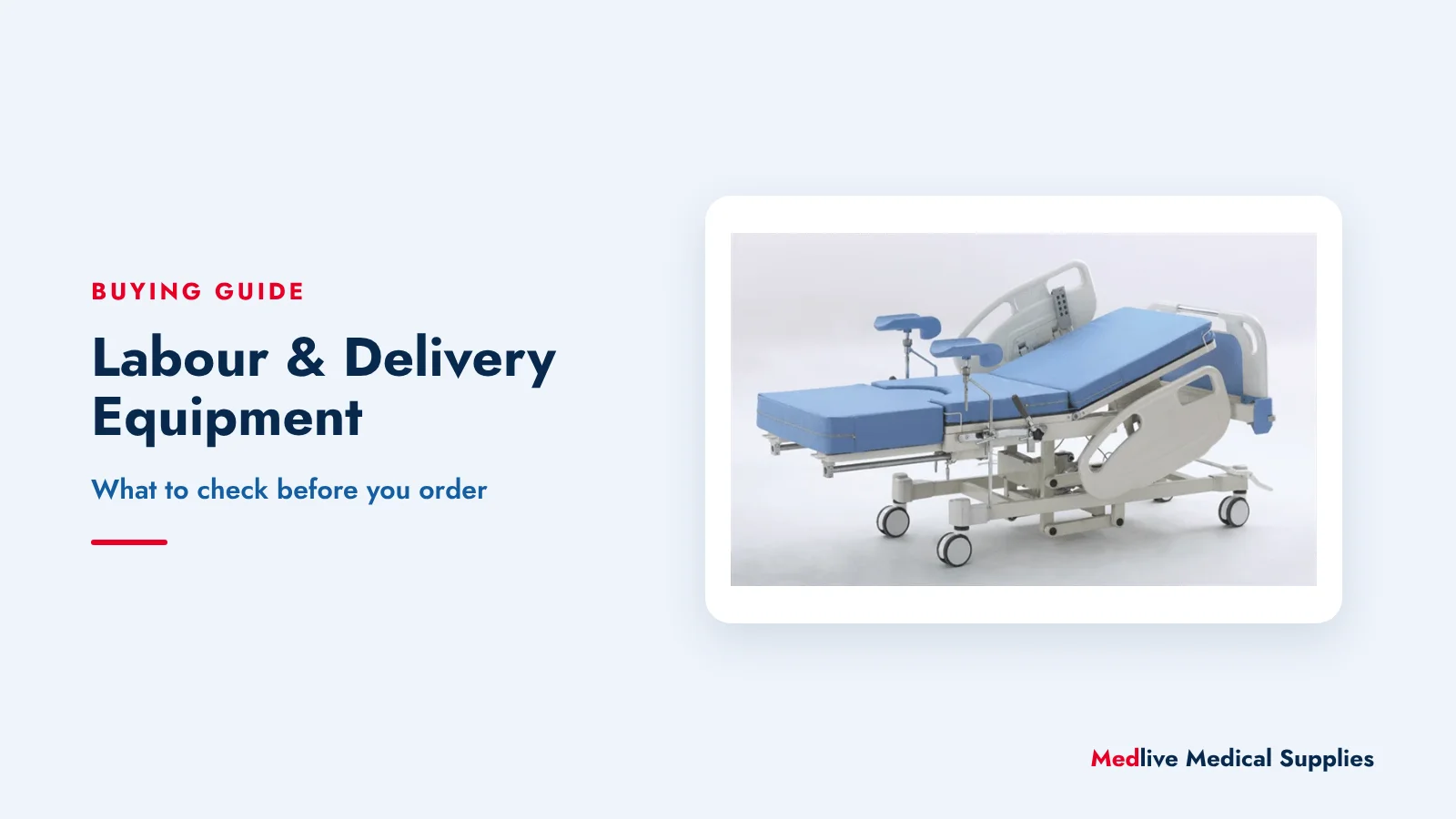
The delivery bed is the largest purchase and the one staff use most. The main choice is how the bed is adjusted:
- Electric beds adjust height and sections with a hand or foot control, which reduces manual effort for staff. They need a reliable power supply and a plan for power outages, so check whether the bed has a battery backup or manual override. For example, the Obstetric / Delivery Bed Electric.
- Hydraulic beds use a foot pump and do not depend on mains power, which suits facilities with unreliable electricity. For example, the Obstetric Bed Hydraulic B48-H – Labour Ward.
- Fixed-height or simple manual beds cost less but give staff fewer options to adjust working height.
Multi-function beds, for example the Obstetric Delivery Bed B-45 Multi-Function, combine several positions in one frame. Whichever type you consider, ask for the manufacturer’s specification and compare:
- Number of sections and how the back and seat sections adjust.
- Leg supports or stirrups, hand grips and whether the foot section retracts or removes.
- Safe working load as stated by the manufacturer.
- Mattress cover material and whether it can be cleaned and disinfected with your facility’s approved products.
- Overall footprint, castors and brakes, and whether the bed fits through doors and lifts.
Ask midwives and obstetricians which positions and features they need before choosing. A bed that staff find awkward will not be used to its full potential.
2. Delivery packs and kits
Pre-assembled delivery packs save time and help standardise preparation. The range includes, for example, the Delivery Kit Pack – 10 Piece. Packs differ in what they contain, so always read the listed contents and compare them with your facility’s protocol before ordering in quantity. If a pack lacks an item your protocol requires, plan to stock that item separately. Check whether contents are sterile, the packaging condition on arrival and the expiry date, and rotate stock so the oldest packs are used first.
3. Cord clamps, scissors and amniotic hooks
Sterile single-use items make up much of the routine stock in a delivery room. Examples in our delivery and maternity range include Umbilical Cord Clamp – Box 100, Umbilical Cord Scissors and Amniotic Hook Disposable Curved – Box 100. When ordering:
- Confirm whether an item is single-use or reusable. Reusable instruments need cleaning and sterilisation according to the manufacturer’s instructions and your sterile services department’s procedures.
- Check that sterile packaging is intact and within its expiry date.
- Store boxes in a clean, dry area and keep a small working supply in each delivery room.
4. Planning stock per expected delivery
The simplest way to plan consumables is to start from the number of deliveries you expect per month. Work out how many of each item your protocol uses per delivery, multiply by expected deliveries, then add a buffer for busy periods and for items that are opened but not used. Review actual use against the estimate every few months. Facilities with seasonal peaks, and outreach or NGO programmes distributing kits to several sites, benefit from ordering in larger planned batches rather than many small emergency orders.
5. Breast pumps
Breast pumps support mothers who are separated from their babies or who need help with feeding. In general terms:
- Manual pumps are simple, quiet and do not need power. For example, the Breast Pump – Mamilat.
- Electric pumps reduce effort for frequent use. Some are designed for a single user, while others are designed by the manufacturer for multiple users with individual collection kits.
Only share a pump between mothers if the manufacturer states it is designed for multiple users, and follow the instructions and your facility’s infection-control policy on cleaning and personal parts. Feeding advice is for midwives, lactation staff and clinicians.
6. Equipping the rest of the delivery area
A delivery room is part of a wider maternity set-up. Fetal monitoring equipment is covered in our fetal dopplers and monitors buying guide, and newborn equipment such as warmers and incubators is in our infant care and incubators category. For an overview of the department, see our maternal and infant care equipment buying guide.
How to order from Medlive
Browse the Maternal and Infant Care department. Customers in South Africa see ZAR prices including VAT where a verified price is available; customers in other African countries see Price on request (USD), and freight and import paperwork are confirmed on the quotation. For delivery beds and mixed lists, request a quotation. For programme quantities of delivery packs and clamps, use bulk orders. Hospitals, NGOs and health departments can submit a tender enquiry. Payment is by EFT once the final total is confirmed in writing.