An ultrasound scanner is one of the larger equipment purchases a clinic or hospital department will make, and the scanner itself is only part of the decision. The probes, software, storage, printer, consumables, training and service arrangements all determine whether it will be useful day to day. This guide explains the main choices in our ultrasound and imaging range, from scanners to gel.
1. Start with the applications
Before comparing models, write down what the scanner will be used for: for example, abdominal, obstetric and gynaecological, vascular, musculoskeletal, cardiac or procedural guidance. This list drives every later decision, especially which probes you need. A facility that only needs basic abdominal and obstetric scanning has very different requirements from an emergency department or a vascular clinic. Involve the clinicians and sonographers who will use the system before you request quotations.
2. Scanner formats
- Cart-based systems sit on a wheeled trolley with a larger screen, multiple probe ports and more storage. They suit departments where scanning happens in one or two rooms.
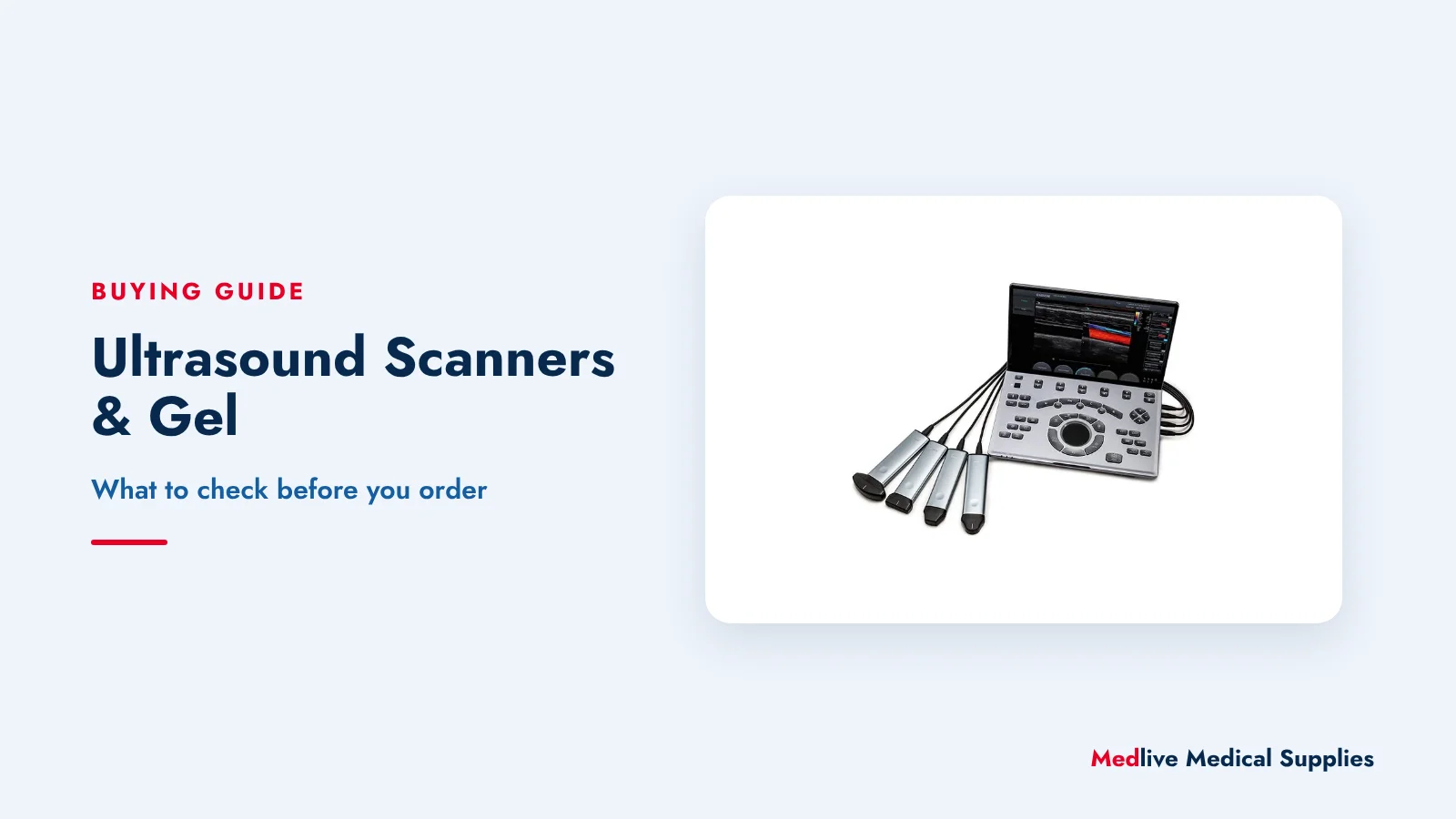
- Portable, laptop-style systems fold into a case and can move between wards, theatres and outreach sites. The Ultrasound Scanner CMS600P2 Plus, the Ultrasound Scanner CMS1600B and the Ultrasound Scanner WED-180 – Portable B/W are examples of scanners in the range.
- Handheld and compact systems, such as the Chison SonoAir 30 Portable Ultrasound, prioritise portability for point-of-care use.
Scanners also differ in imaging modes. Black-and-white (B-mode) scanners provide grey-scale images; colour Doppler systems add blood flow information. Check the specification of each model rather than assuming a mode is included, and ask us to confirm it on the quotation.
3. Probes (transducers)
Probes are chosen by application:
- Convex probes for abdominal and obstetric imaging.
- Linear probes for superficial structures, vascular access and musculoskeletal work.
- Transvaginal (endocavity) probes for gynaecological and early pregnancy scanning.
- Cardiac (phased array) probes for heart imaging.
Probes are often priced separately from the scanner, and a quotation for “a scanner” may include only one. List the probes you need when you request a quotation, and confirm on the quote exactly which probes, software packages and accessories are included. Probes are delicate: dropping one or damaging the cable is a common and costly repair, so store them in holders and handle cables with care.
4. Screen, battery, storage and printing
- Screen: size and viewing angle matter when images are reviewed with colleagues or patients.
- Battery: for portable systems, ask about running time, charging time and whether a spare battery is available.
- Image storage and export: ask how images are stored, how they are exported (for example USB), and whether DICOM export or connection to an image archive is supported if your facility needs it.
- Printing: many facilities still print images for patient files. A medical thermal printer such as the Sony UP-X898MD Ultrasound Thermal Printer A6 is an example. Buy the paper type specified by the printer manufacturer for that model.
5. Training, scope and maintenance
Ultrasound is operator-dependent: the quality of the result depends heavily on the skill of the person scanning. Budget for training, and follow your country’s professional and regulatory rules on who may perform and report ultrasound examinations. Clean probes after each patient using only the methods and products the manufacturer’s instructions allow, as the wrong disinfectant can damage the probe surface. Ask about servicing, software updates and how repairs are handled before you buy.
6. Vascular dopplers
Handheld vascular dopplers, such as the Vascular Doppler BV-520T and the Vascular Doppler – Handheld, detect blood flow sounds in arteries and veins and are widely used in wound care and vascular assessment. Their probes are specified by frequency (in MHz): as a general rule, lower frequencies reach deeper vessels and higher frequencies suit superficial ones. Check which probe frequencies come with the unit and what the manufacturer recommends them for. For pregnancy monitoring devices, see our fetal doppler and monitor buying guide.
7. Consumables
- Ultrasound gel: small bottles, such as the 250ml Clear Ultrasound Gel Bottle, are convenient at the bedside; bulk containers such as the Ultrasound Gel Conductive 5L are used to refill bottles and reduce cost per scan. Clear and blue gels are both available; choose according to user preference and your protocols.
- Printer paper: match the paper to the printer model.
- Viewing equipment: an X-Ray Viewing Box Single is useful where film images are still reviewed.
For the wider range, see our diagnostic equipment buying guide.
How to order from Medlive
Browse the ultrasound range or the full diagnostic equipment department. Scanners are best ordered through a quotation so probes, software and accessories can be confirmed; customers outside South Africa see “Price on request (USD)”, with freight and import paperwork confirmed on the quote. Gel and other consumables for several sites can be ordered through bulk orders, and hospitals and government buyers can submit a tender enquiry. Payment is by EFT once the final total is confirmed in writing.