A stethoscope is usually the first diagnostic instrument a nurse, doctor or student buys, and often the one they use most. Models range from basic dual-head units for training to cardiology and electronic stethoscopes. This guide explains the main types in our Stethoscopes range, what the features mean and what to consider when buying for yourself, a clinic team or a group of students.
1. Start with the user and the setting
- Who will use it: a student learning examination technique, a nurse taking routine observations, a general practitioner or a clinician with a particular interest in heart and lung sounds.
- Where: a quiet consulting room, a busy ward or emergency area, or outreach and home visits.
- Patients: adults only, or also children and infants, who may need a smaller chest piece.
- Budget and quantity: one premium instrument for personal use, or many affordable units for a training intake or several clinics.
2. Chest pieces: single head, dual head, diaphragm and bell
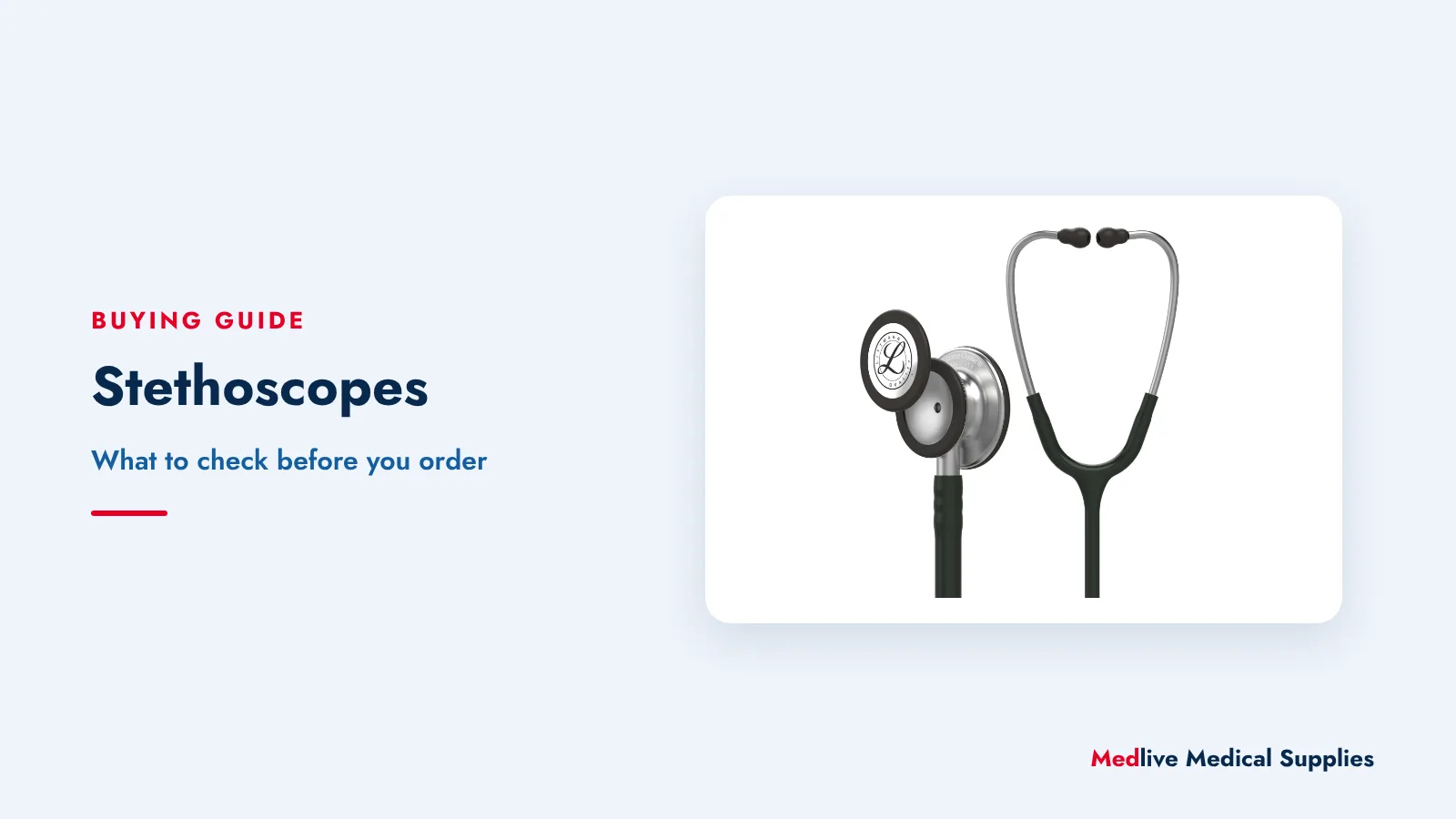
The chest piece is the part placed on the patient. In general terms:
- Diaphragm: the larger, flat side covered by a membrane, commonly used for higher-pitched sounds.
- Bell: the smaller, open cup, commonly used for lower-pitched sounds.
- Dual head: a chest piece with both a diaphragm and a bell that you rotate between. The range includes, for example, the Stethoscope Dual Head Adult and the Stethoscope Budget Dual Head – Student.
- Single head: one side only. Some single-head designs use a tunable diaphragm, which lets the user favour lower- or higher-pitched sounds by changing the pressure applied, rather than turning the chest piece.
Paediatric and infant chest pieces are smaller so that they sit properly on a small chest. If your clinic sees children regularly, consider whether staff need a separate paediatric stethoscope or a model with interchangeable chest pieces.
3. Types of stethoscope
- Student and budget models: suitable for training, occasional use and as spare instruments in consulting rooms. They are often bought in quantity for nursing and medical student intakes.
- General assessment models: designed for everyday use by nurses and doctors, for example the Littmann Classic III Stethoscope – Black.
- Cardiology models: intended for clinicians who listen closely to heart sounds, for example the Littmann Cardiology IV Stethoscope. They usually cost more, so they are generally chosen by individual clinicians rather than issued in bulk.
- Rappaport-type stethoscopes: these use double tubing and usually come with a set of interchangeable chest pieces and ear tips. The range includes, for example, the Rappaport Green Stethoscope. They are often used for training and general assessment.
- Electronic stethoscopes: these amplify body sounds electronically and, depending on the model, may offer volume control, filtering or recording. The range includes, for example, the Electronic Stethoscope – Contec. They can be useful in noisy environments, for users with some hearing loss or for teaching. Check the battery type, battery life and, if recording is offered, how recordings are stored and transferred in line with your organisation’s privacy requirements.
Manufacturers describe acoustic performance in different ways. If sound quality is a priority, ask colleagues who use the same model, or request the manufacturer’s specification sheet before you decide.
4. Tubing, headset and comfort
- Tubing length: longer tubing gives more reach and distance from the patient; shorter tubing keeps the instrument compact. Choose what suits the user’s examination style.
- Ear tips: a good seal in the ear makes a noticeable difference to what the user can hear and to comfort over a long shift. Soft ear tips in more than one size help.
- Headset tension: the binaurals (metal ear tubes) should sit comfortably without pressing too hard.
- Spare parts: ear tips, diaphragms and arms wear out or get lost. The range includes, for example, Stethoscope Spare Budget Arms and Earpiece. Ask which spare parts fit the model you buy.
5. Cleaning between patients
A stethoscope touches many patients a day, so it should be part of your infection-prevention routine. Clean and disinfect the chest piece and other contact surfaces between patients in line with your facility’s protocol, using products the manufacturer’s instructions say are compatible with the materials. Some cleaning agents can damage tubing or diaphragms, so check before standardising a disinfectant. Replace ear tips and diaphragms when they become worn or cracked.
6. Buying for students and clinic staff in bulk
- Agree a standard model for each user group, for example a budget dual-head model for first-year students and a general assessment model for qualified staff.
- Order spare ear tips and diaphragms with the instruments.
- Consider colour or labelling so that personal instruments are easy to identify on a shared ward.
- Check that the supplier can provide the same model again for future intakes.
- Read how to check a medical device supplier with SAHPRA before placing a large order.
To compare models side by side, use our product comparison tool. For blood pressure monitors, pulse oximeters and other examination equipment, see our diagnostic equipment buying guide.
7. How to order from Medlive
Browse the stethoscopes range or the full Diagnostic Equipment department. In South Africa, products with verified prices show ZAR prices including VAT and can be added to the cart. Customers in our other markets see “Price on request (USD)” and can submit a Request a Quotation; freight and import paperwork are confirmed on the quotation.
Ordering for a training intake or several clinics? Use Bulk Orders for volume quotations, or Tender Enquiry for institutional and government requirements. Payment is by EFT once the final total has been confirmed in writing.