Pulse oximeters and thermometers are among the most frequently used devices in any clinic, ward, school sickroom or home-care kit. They look simple, but the right choice depends on who will use them, how often, and whether you need a quick spot check or ongoing observation. This guide explains the main types in our Pulse Oximeters & Thermometers range, what affects their readings and what to check before you order.
1. Types of pulse oximeter
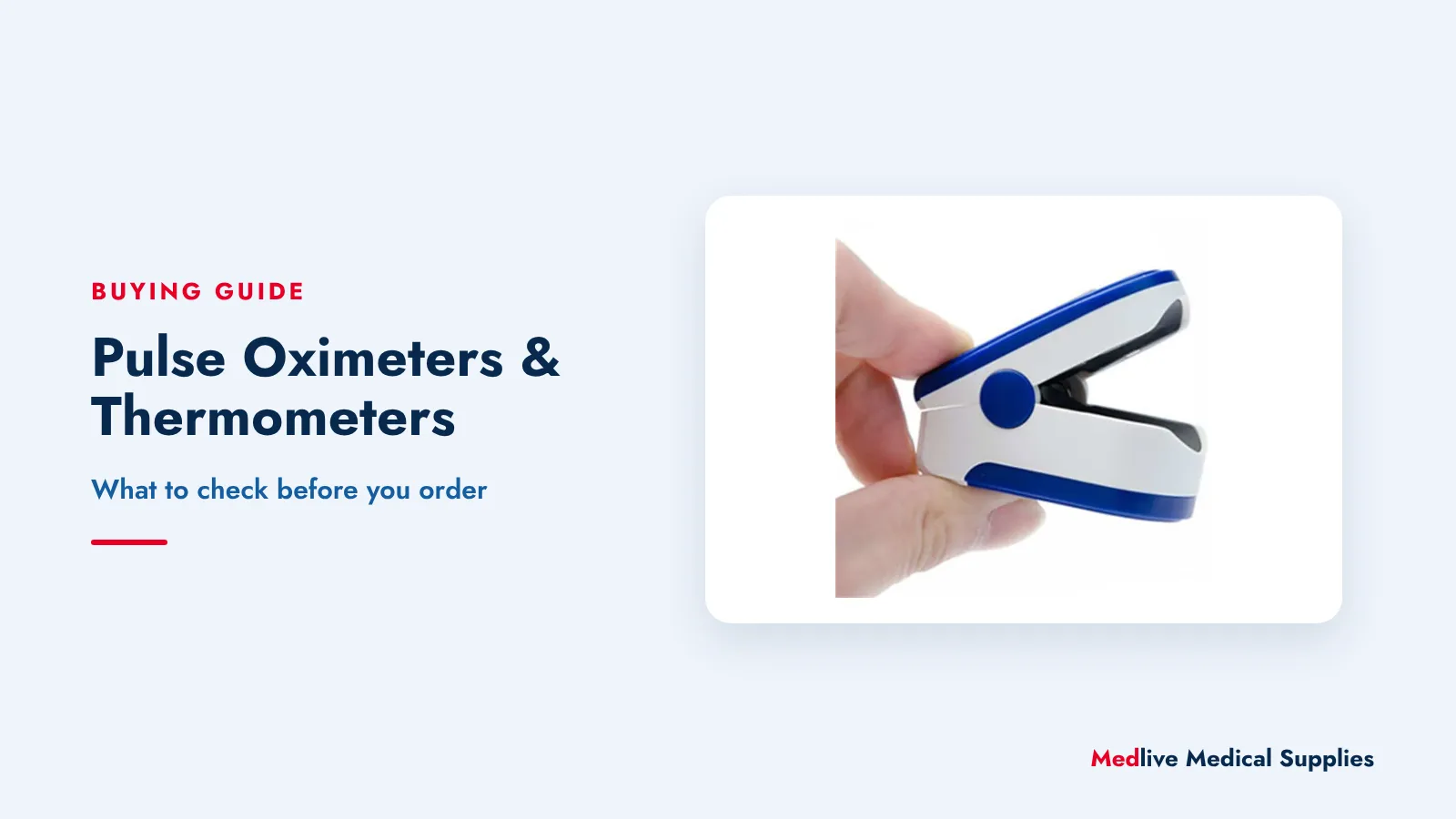
A pulse oximeter shines light through a fingertip or other site and estimates oxygen saturation (SpO2) and pulse rate. The main formats are:
- Fingertip oximeters: small, battery-powered units that clip onto a finger. They suit spot checks in consulting rooms, outreach work and home care. The range includes, for example, the Pulse Oximeter Contec CMS50D Adult and the Contec CMS50D-BT Bluetooth Fingertip Pulse Oximeter.
- Handheld oximeters: a display unit connected to a separate probe by a cable, for example the Pulse Oximeter CMS-60C. Separate probes make it easier to measure patients of different sizes, if the correct probes are available.
- Desktop or bedside oximeters: larger units, for example the Pulse Oximeter CMS-70A Desktop, intended to stay at a bedside or in a treatment room. Check whether the model you are considering offers alarms, trend storage and mains or rechargeable power.
2. Spot checks or continuous monitoring
Decide first whether staff need occasional readings or continuous observation. A fingertip unit is designed for quick checks and is not a substitute for a monitor with adjustable alarms. Where patients need continuous observation of several parameters, a patient monitor is usually the better choice; see our guide to choosing a patient monitor for a ward, clinic or ICU. How often patients are monitored, and with what equipment, should follow your facility’s clinical protocols.
Other points to check:
- Paediatric and neonatal use: adult fingertip units are not designed for small fingers. If you treat children or infants, confirm that paediatric or neonatal probes are available and compatible with the handheld or desktop model you choose.
- Display: a clear display that can be read from different angles and in bright light helps in busy or outdoor settings.
- Data: some models store readings or transfer them by Bluetooth or cable. If you plan to record readings electronically, ask what software or app the model uses and whether it fits your record-keeping process.
- Power: note the battery type and how easily replacements can be bought locally.
3. Factors that can affect oximeter readings
Every pulse oximeter has limitations, and users should know them. The US Food and Drug Administration (FDA) has noted that factors including poor circulation, skin pigmentation, skin thickness, skin temperature, current tobacco use and fingernail polish can affect accuracy. Movement during measurement can also interfere with readings. The FDA also distinguishes medical-grade oximeters from over-the-counter units sold for general wellness or sports use, which are not intended for medical purposes.
For buyers, this means training staff to read results alongside the patient’s overall condition, following the manufacturer’s instructions for use and your facility’s protocols, and choosing devices intended for medical use when they will inform clinical decisions.
4. Types of thermometer
- Digital contact thermometers: used orally, under the arm (axillary) or at other sites stated by the manufacturer. A flexible tip, as on the Digital Thermometer – Flexi-Tip, can be more comfortable for some patients.
- Predictive thermometers: estimate the final temperature before full equilibrium, which shortens measurement time on busy wards. The range includes, for example, the Contec TP100 Predictive Thermometer. Check probe cover supply before you buy.
- Non-contact infrared thermometers: measure from the forehead without touching the patient, for example the Digital Infrared Thermometer – Non-contact. They are often used for screening at entrances and in schools.
- Single-use thermometers: disposable strips or dot thermometers, for example the Feverscan Single-Use Thermometer, used once and discarded, which can help with infection control in isolation areas or outreach work.
5. Using thermometers accurately and hygienically
The FDA’s advice for non-contact infrared thermometers is to follow the manufacturer’s instructions for the specific model, because the correct measuring distance and conditions vary between devices. It recommends using them in a draft-free area away from direct sunlight and heat sources, allowing the thermometer to adjust to room temperature before use, and making sure the forehead is clean, dry and uncovered.
- For contact thermometers, order enough compatible probe covers and follow the manufacturer’s cleaning instructions between patients.
- Ask whether the model can be checked or calibrated, and how your biomedical or maintenance team should verify its accuracy over time.
- Keep spare batteries and replace damaged units rather than repairing them informally.
6. Common mistakes to avoid
- Buying adult fingertip oximeters for a paediatric clinic without suitable probes.
- Relying on a spot-check device where continuous monitoring with alarms is needed.
- Forgetting running costs: probe covers, batteries and replacement probes.
- Mixing many different models, which complicates training and consumables.
- Not checking the supplier. Read how to check a medical device supplier with SAHPRA.
To compare models side by side, use our product comparison tool. For blood pressure monitors, stethoscopes and other equipment, see our diagnostic equipment buying guide.
7. How to order from Medlive
Browse the pulse oximeters and thermometers range or the full Diagnostic Equipment department. In South Africa, products with verified prices show ZAR prices including VAT and can be added to the cart. Customers in our other markets see “Price on request (USD)” and can submit a Request a Quotation; freight and import paperwork are confirmed on the quotation. Read ordering medical supplies outside South Africa for more detail.
Equipping several wards, clinics or screening points? Use Bulk Orders for volume quotations, or Tender Enquiry for institutional and government requirements. Payment is by EFT once the final total has been confirmed in writing.